The Chalet Corroso finish
Not all Chalet pieces have a smooth, glossy surface. Some have textured “skins.” This was achieved three different ways – through mold imprints and hand finishing, through adding compounds and elements to the molten glass mix and hand finishing or by treating the finished glass with water or chemicals. The subject of this article is the Chalet corroso pieces (achieved through the third method). The corroso finish is a surface finish. However, before examining this and seeing examples of forms that were given this finish, I think we should briefly explore some others so that the differences between techniques and end results are clear.
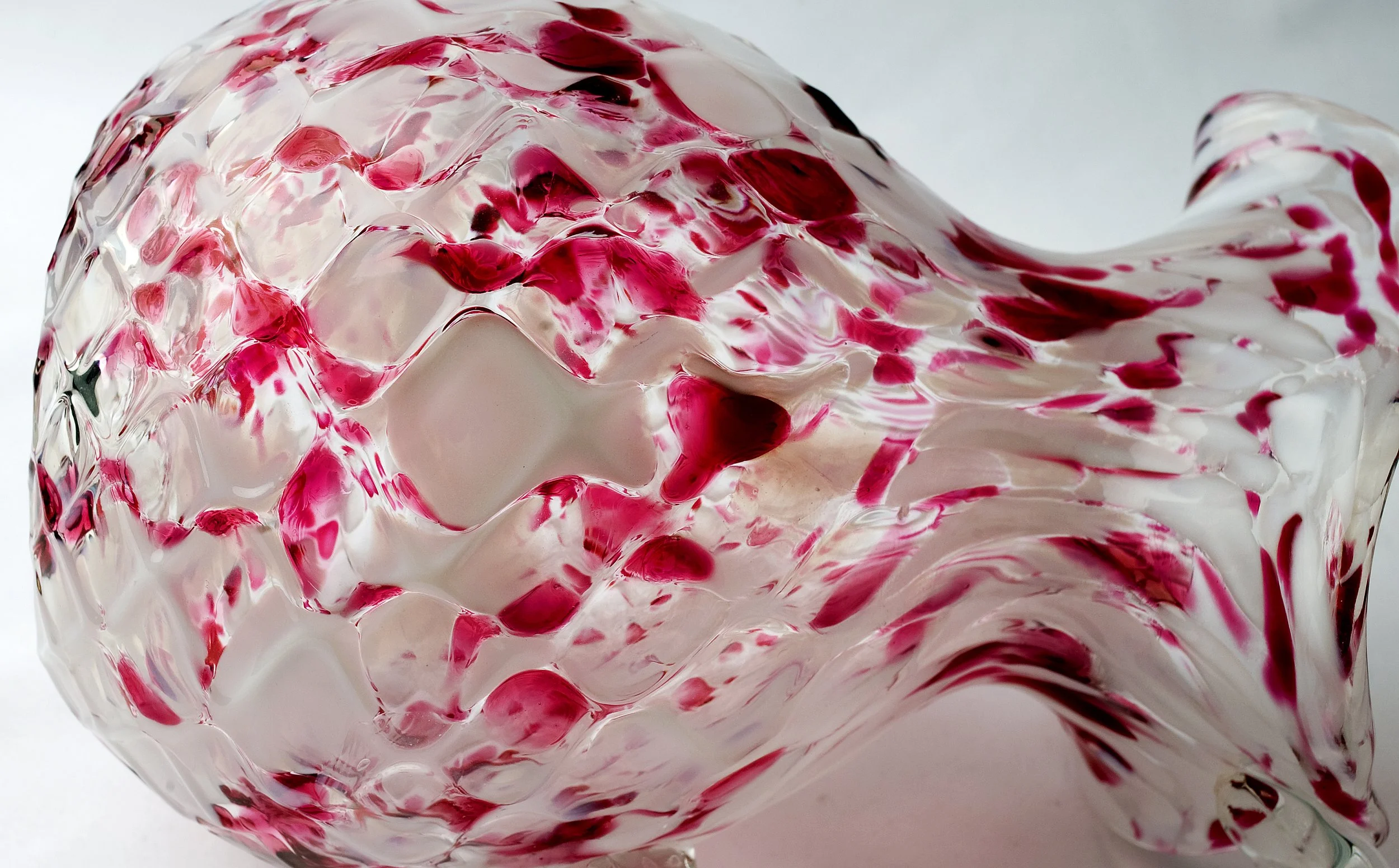
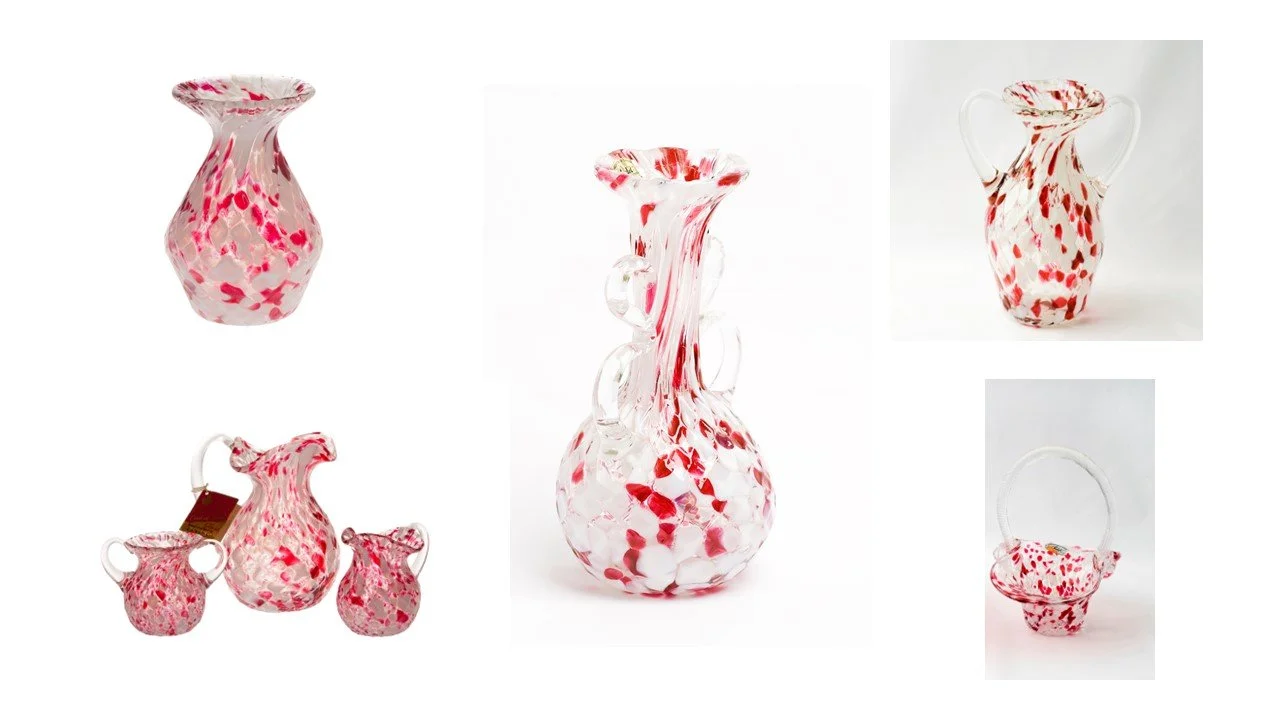
Pieces from Chalet’s “End of Day” line are probably the best-known textured pieces. Opal and cranberry glass was melded to clear crystal hand-molded pieces resulting in highly textured and colourful forms.
Artists began by blowing clear crystal glass into a mold. The pieces are then finished by hand working “overshot” onto the surface of the form. Each piece would be rolled over a steel plate covered with thousands of exceedingly small pieces of cranberry and opaline glass. For the opal overshot, opacifers were added to a separate mix of molten crystal glass. These are substances added to reduce transparency and increase density, making the glass opaque or milky. By having a high refractive index compared to the base material, they scatter and refract light to hide underlying surfaces.
The opal shards adhered to the larger clear crystal form. They and the cranberry pieces were very sharp — sharp enough to cut hands at the slightest touch. The piece was then returned to the oven to be reheated, which melted the small pieces of glass, causing them to lose their sharpness. The piece was then reworked and refined which produced a separation between the pieces of opal and cranberry glass. This separation varies — depending on the size of the piece. The finished surface of these pieces is smooth yet textured, and the cranberry remains distinct from the opaline glass.
Up close and personal!
Some typical pieces from this line:
Textured surfaces on both mouth-blown and hand-molded pieces of clear crystal have also been discovered.
I was shown these clear crystal mouth-blown pieces of fruit by Chalet artist Antonio Tedesco in 2010 during the Chalet exhibit at his Cornwall home.
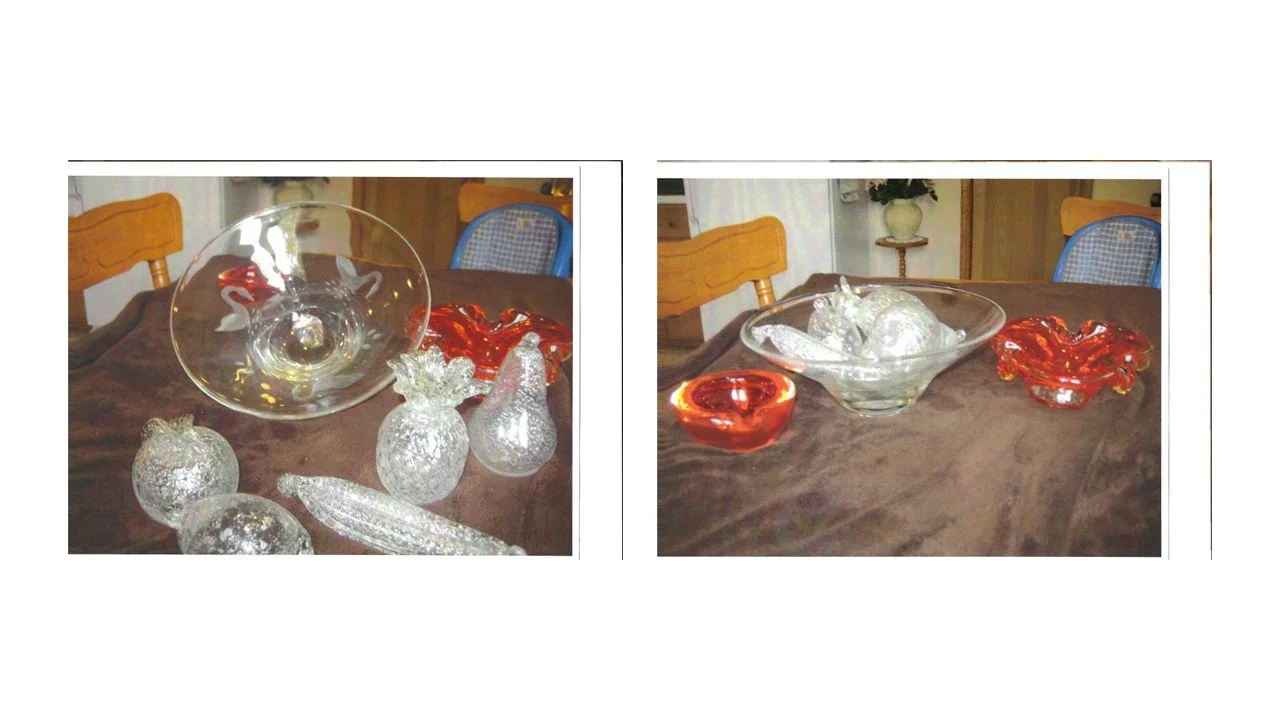
Photographs courtesy of Chalet artist Antonio Tedesco.
I learned that the textured skin mouth-blown fruit forms Antonio showed me were produced in colours as well. We have film evidence of these forms as well as a piece which retains its original Chalet marking.
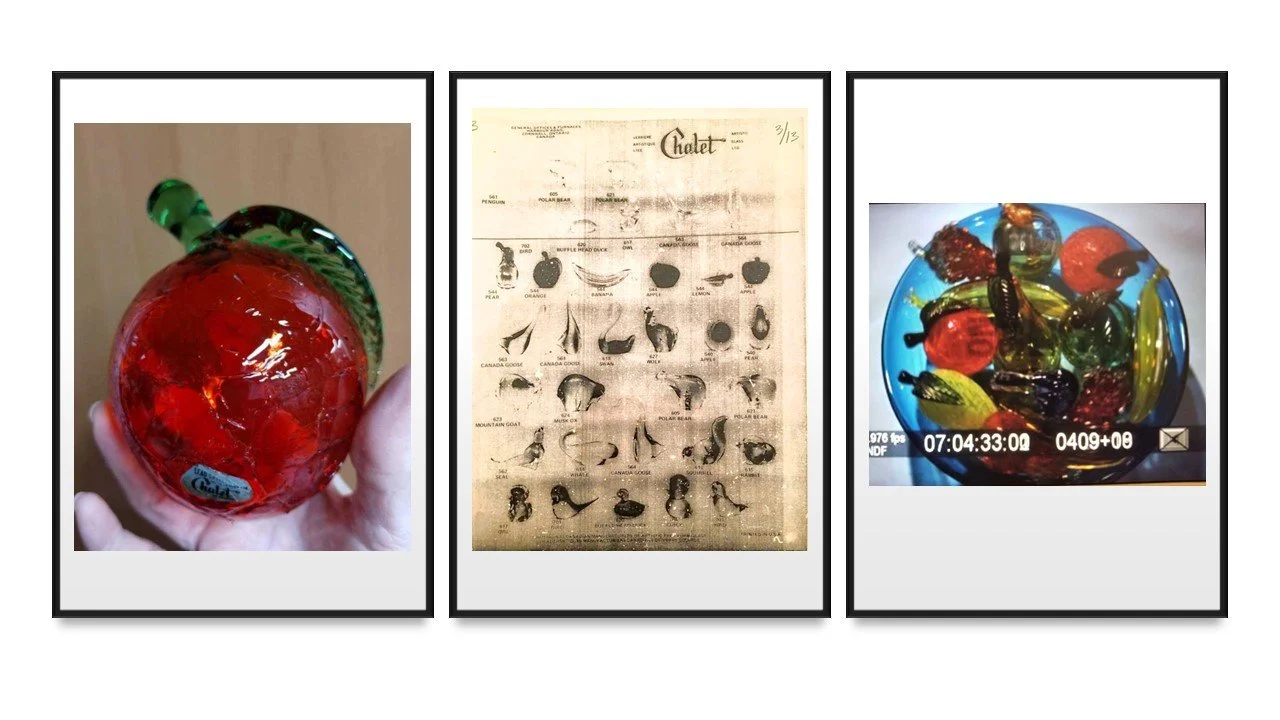
The photograph of the fruit in bowl was captured from the 1971 National Film Board film “Here is Canada.” In this bowl, we see the fruit listed on the Chalet catalogue page as well as some that are not listed and for which we have no other information. Specifically, a pear in the middle and a form at the top left at the 11:00 position. The colour and clarity of this photo make it hard to specifics, but it does add to our overall knowledge. Chalet apple from the collection of 50 Shades member Jo Highland.
Specialized molds could create texture:
The textured skin of this pineapple was created by the molten glass being blown into a hinged, 2-pieces “clamshell” mold which had a patterned interior.
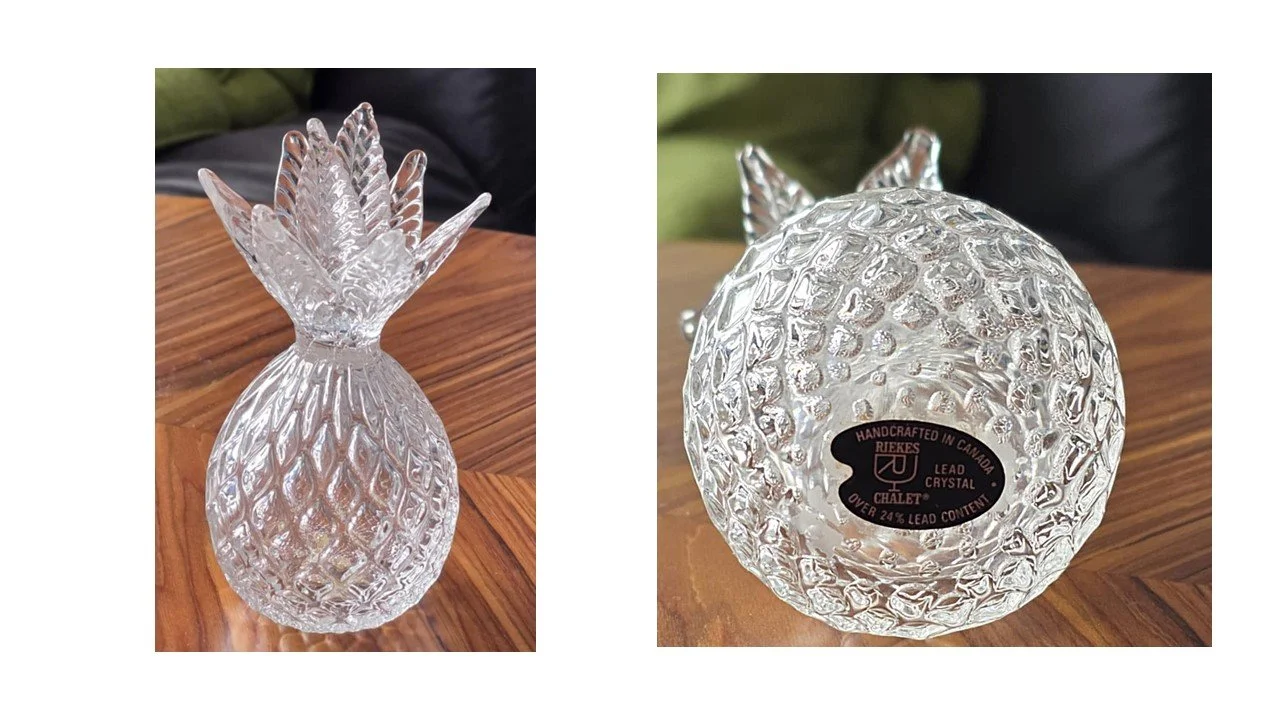
From the collection of Gionny Gueli.
Another hand-molded piece with a textured surface:
This Chalet elephant figurine has a “dimpled” skin surface. Created by a steel mold. Note the colour – a second – making it the perfect test piece. I know of only one other with this surface, which is also an elephant in this same pose and colour.
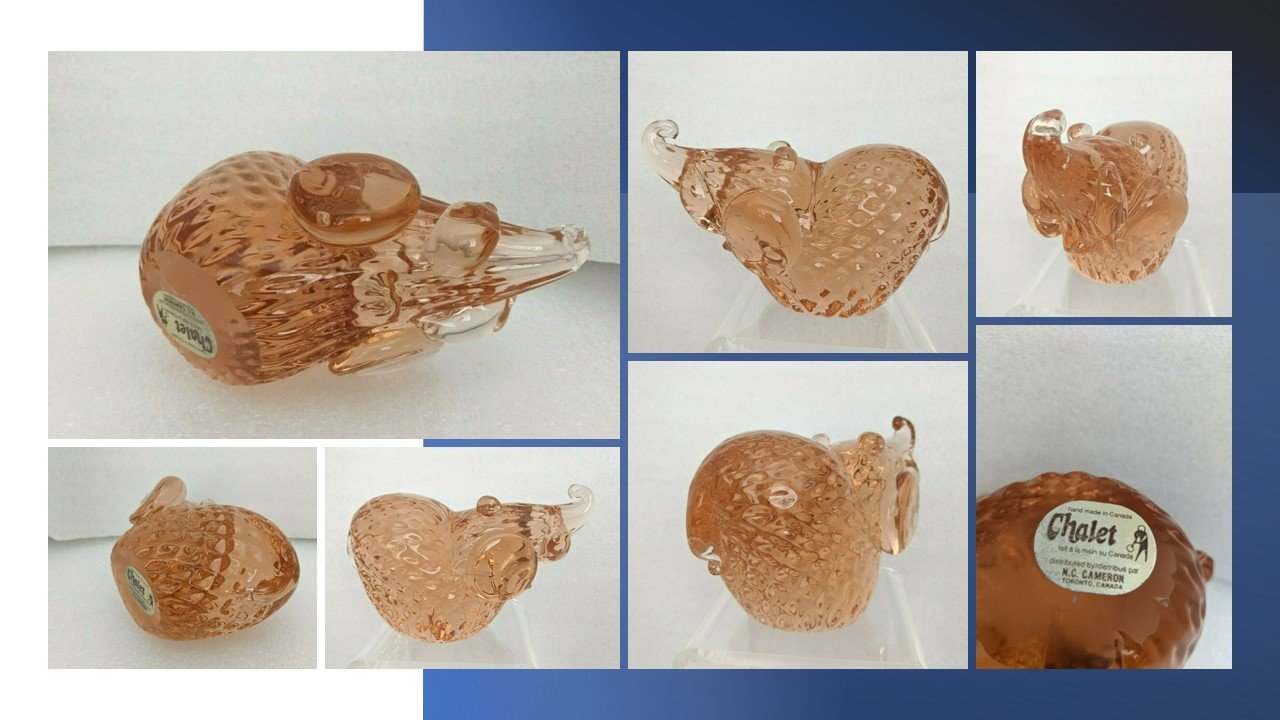
From the collection of John and Kevin Hall.
Adding chemical compounds to the molten mix also produced surface finishes.
An irradato treatment gives the skin of the glass an iridescent finish while the glass remains translucent. This results in an overall colourful, shimmering effect. traditionally Traditionally, this finish was achieved by drenching a piece at the final stages with kerosene and then burning off the oil. Today’s methods involve treating a piece while still hot with metal chlorides or metallic oxide.
Irradato treatments were not given to the larger hand-blown or hand-molded Chalet pieces. This is found only on the bomboniere forms.
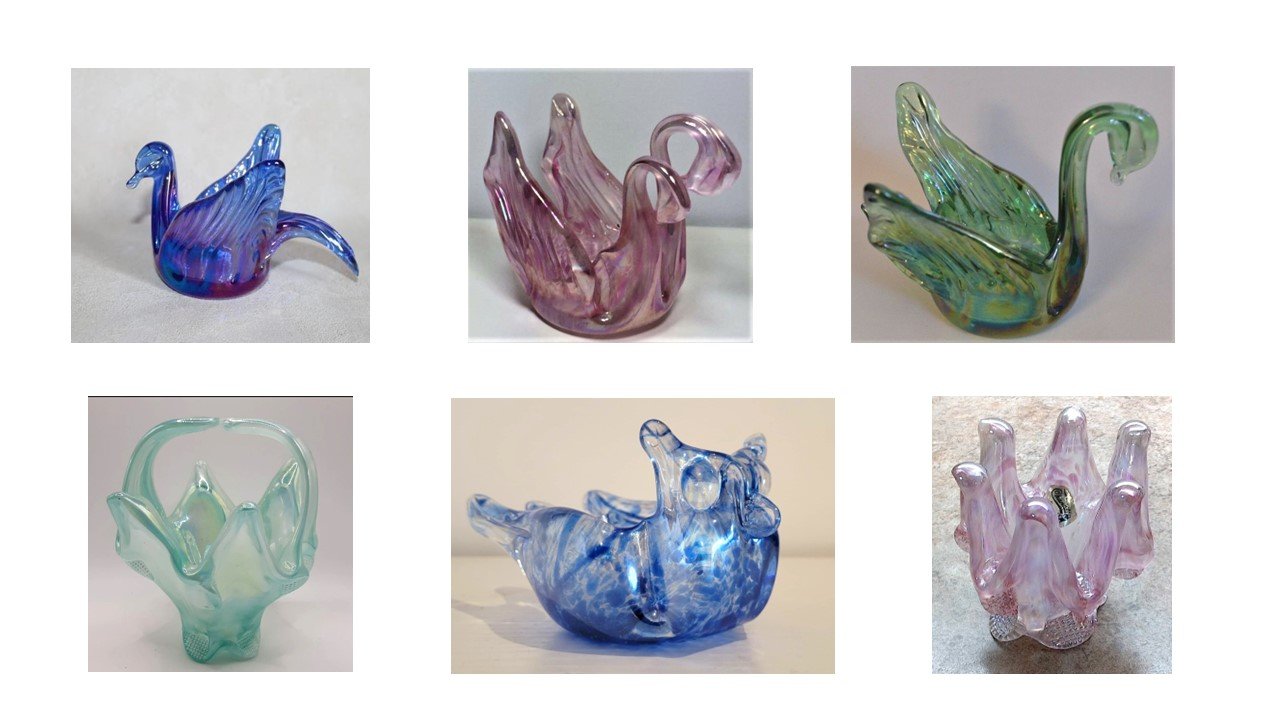
At top left, bomboniere from the collection of Kim Tersteeg. At bottom middle, owl bomboniere from the collection of Gionny Gueli. Bomboniere vase on bottom right from the collection of Betty Clarke.
You may also find Chalet opal irradato pieces. What is Chalet opal or opaline glass? Opal or opaline Chalet is clear glass that was made opaque through the addition of opacifers to the molten mix. An example:
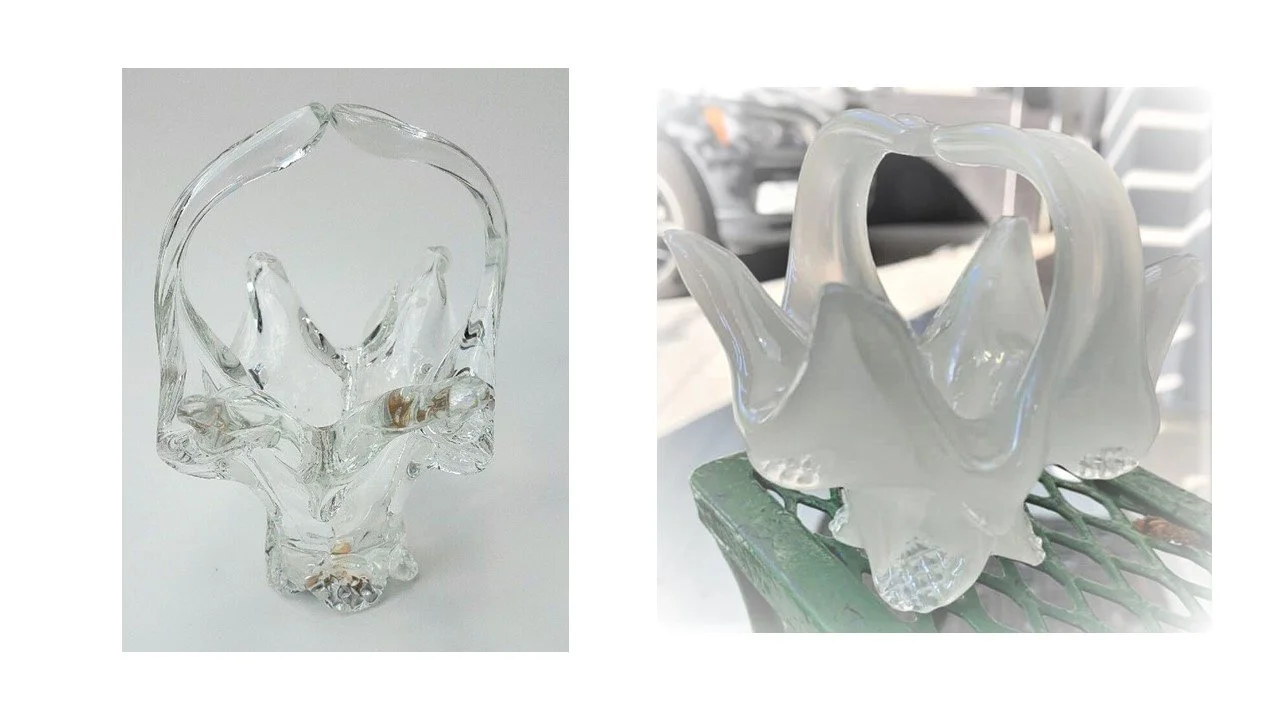
Clear to opal. Photograph of opal basket at right courtesy of Jackie Lyn.
Sometimes an irradato treatment/finish was then applied and the result was the irradato opal bomboniere. Simply put, an irradato finish on opaque not transparent glass.
An example of this:
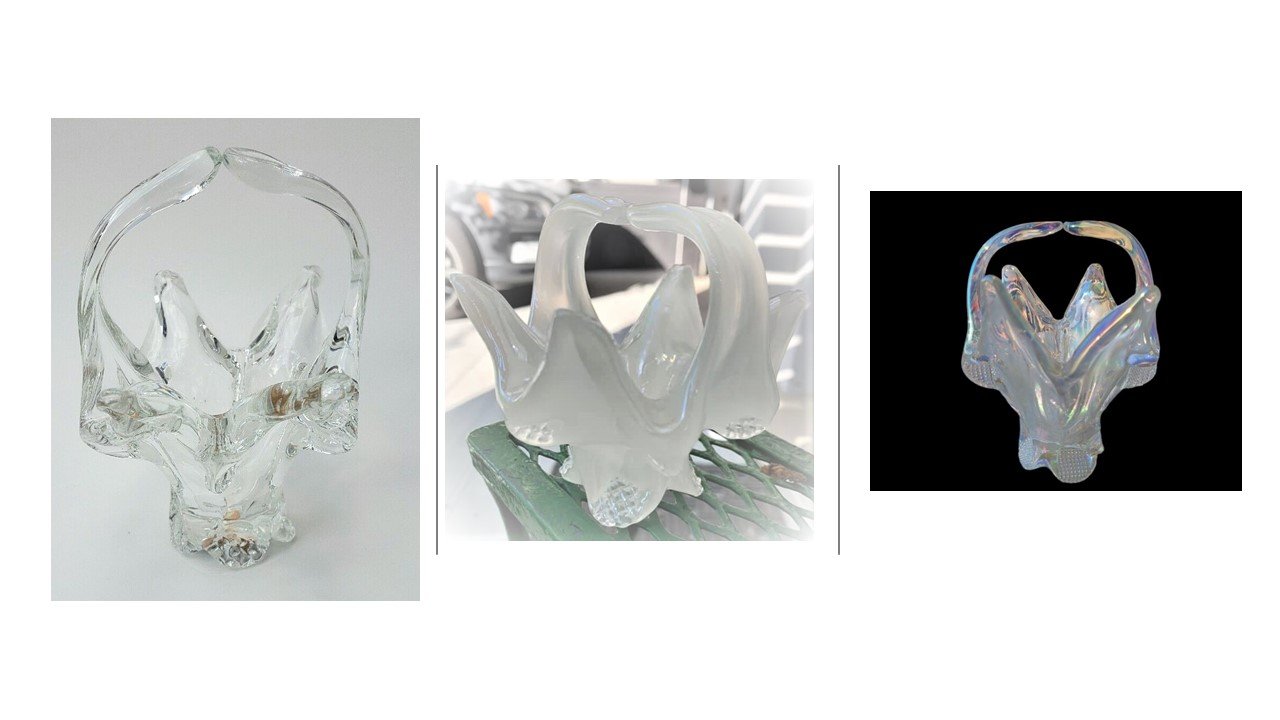
Clear to opal-to-opal irradato.
As stated above, the third method of achieving a textured skin was by treating the finished glass with water or chemicals.
Through the use of water:
a ghiaccio: a crackled effect finish. Achieved by “icing” hot glass in cold water. The reaction of extreme hot meeting extreme cold causes radical, random fissures in the glass. The piece is then reheated and further blown to heal the surface fissures. Resembles the shattering of frozen water or alligator skin.
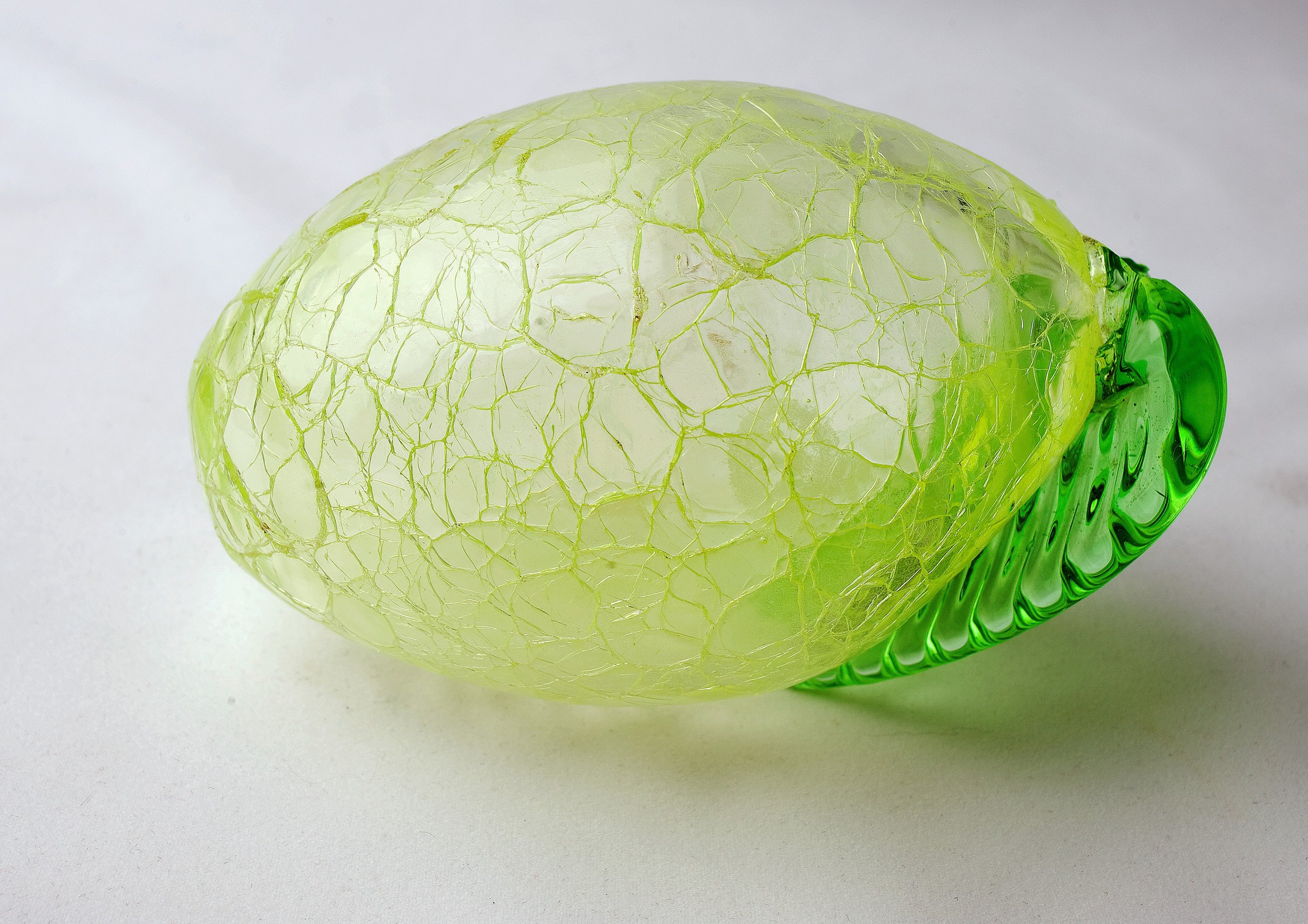
A mouth-blown Chalet lemon. I was given this piece by Chalet Maestro Giulio Gatto. To date, this is the only piece I have seen with this finish. The lemon form was also done in clear crystal with smooth, glossy skin. The Chalet orange (in the fruit bowl shot seen earlier from the documentary) very well could have a similar finish but it is impossible to say with 100% accuracy if the skin of that piece was crackled as the picture is not of high enough quality to make out such precise details. I have also not seen any large Chalet pieces with this finish.
With chemicals. And now we are getting to the subject of this article:
corroso: an acid roughened finish. Achieved by washing or submerging a piece in acid at the final stages. This obliterates the polished finish and leaves a dull, etched finish in its place. Although the glass does remain transparent, this technique obliterates the polished finish and leaves a dull, etched finish in its place – many collectors mistake it for water damage or scratches. It appears that this finish was limited to only the interiors of the Chalet corroso – leaving the exterior surfaces glossy and smooth. Therefore, the Chalet pieces would have been washed not submerged. This would have been labour intensive and time consuming so it is not surprising that this was not put into production.
We have found approximately 2 dozen ashtrays, baskets, various centerpieces and vases with the surface corroso finish. Excepting 1 blue “spike and curls” centerpiece, all corroso Chalet forms have been pink. There is a wide range of variety in the tones of pink colour. The only Chalet marking/branding found, to date, on these pieces has been the etched “Chalet Canada” signature.
The colour exception.
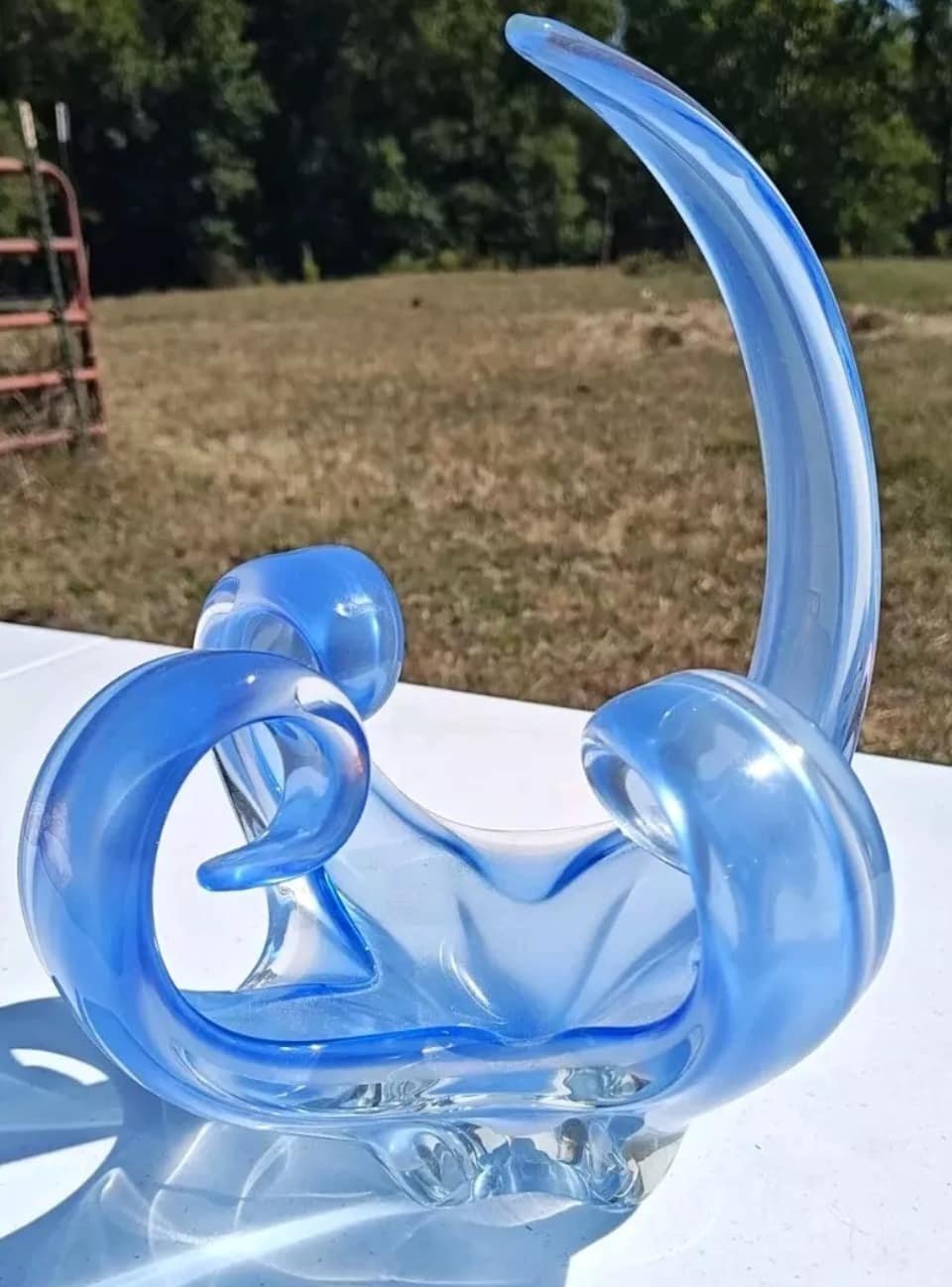
Photograph courtesy of Dan Lof.
On a pink centerpiece.
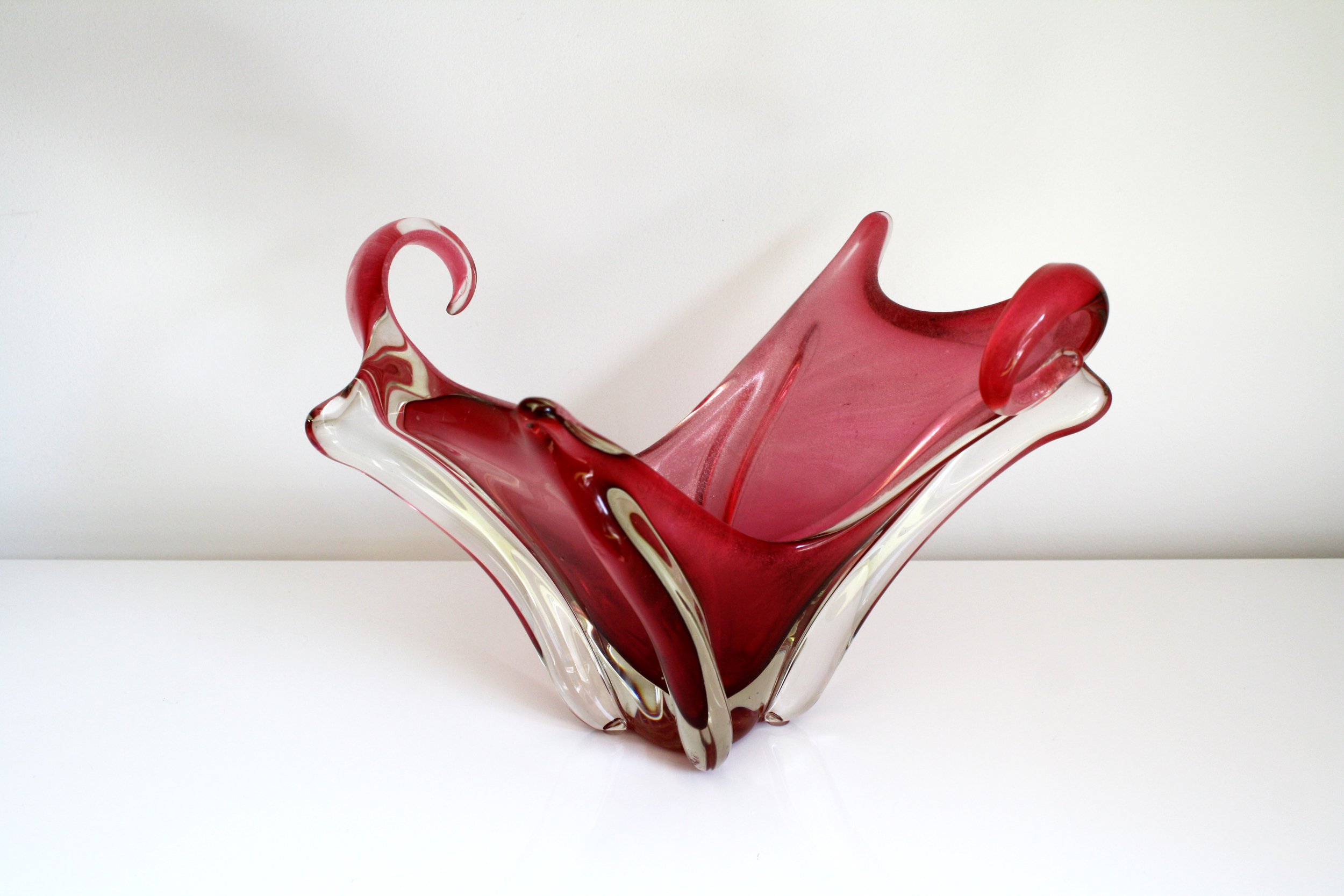
Etched “Chalet Canada” centerpiece. From my collection.
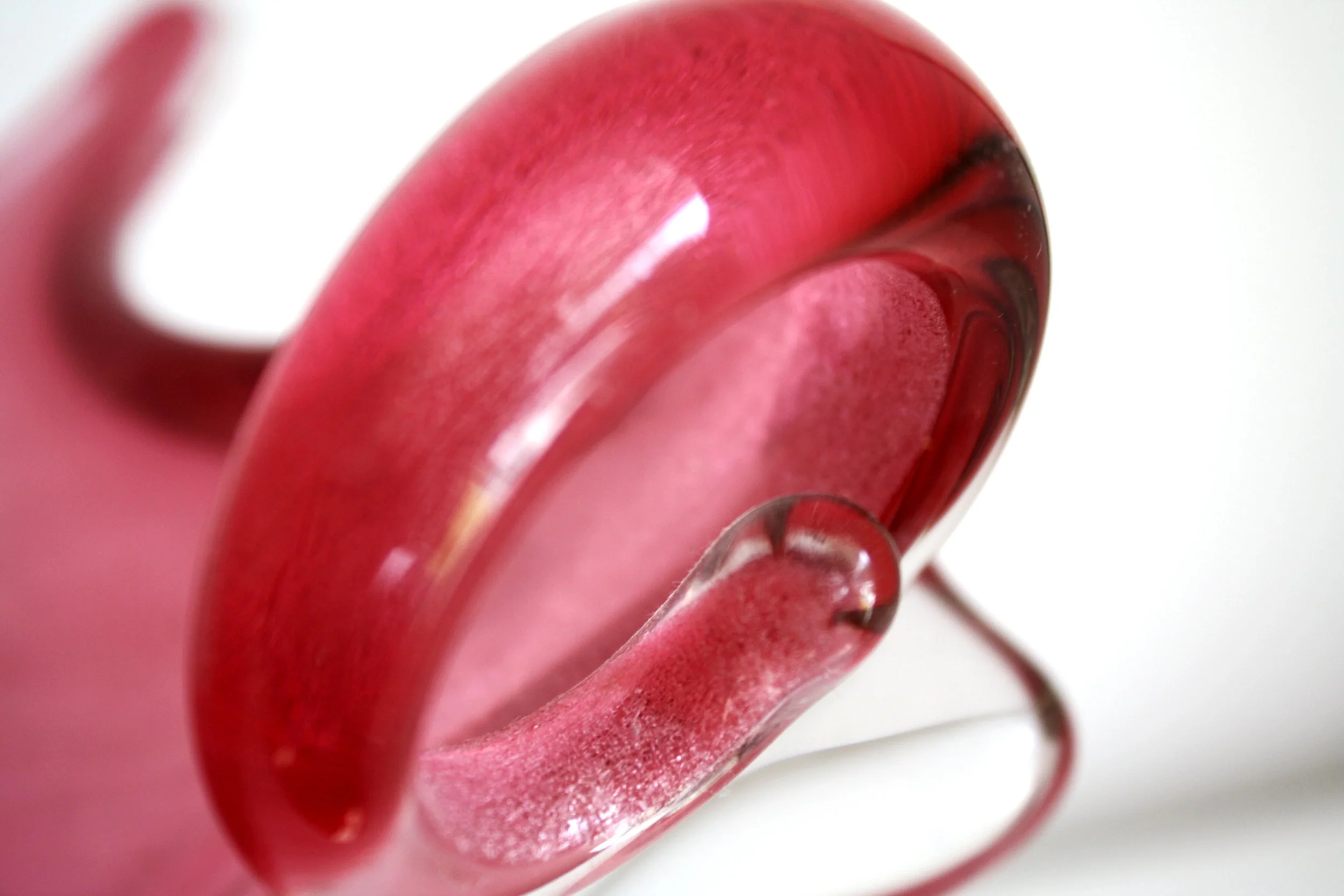
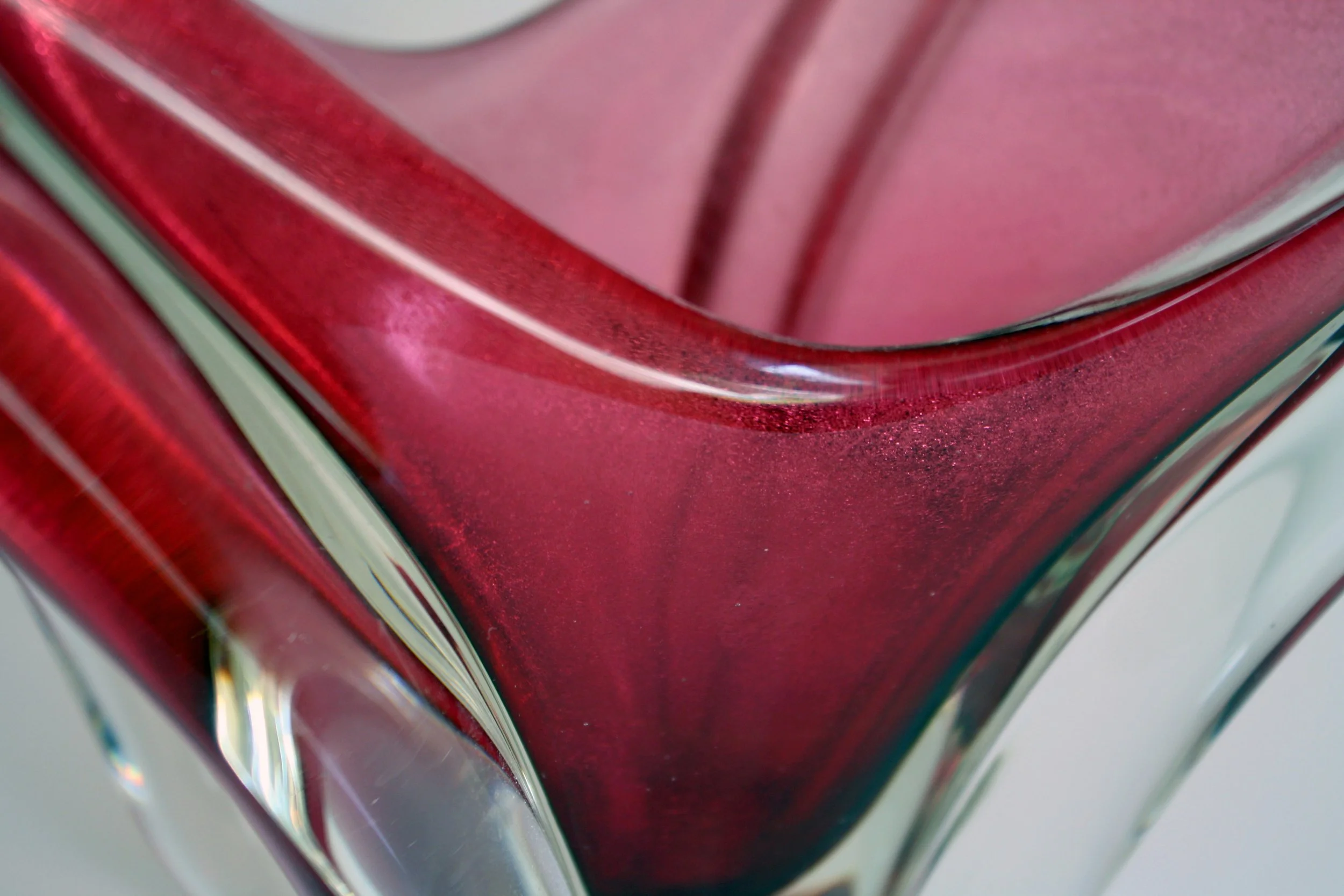
Another exception – not in its colour – but in its glass transparency. The glass of this corroso finished vase is opaque. This can occur if the glass is “overcooked.” We have seen a second corroso pink “twist” vase like this one. However, it had extensive damage. There is no way to tell if the damage occurred after production or if it was because of the acid wash combined with excessive heat.
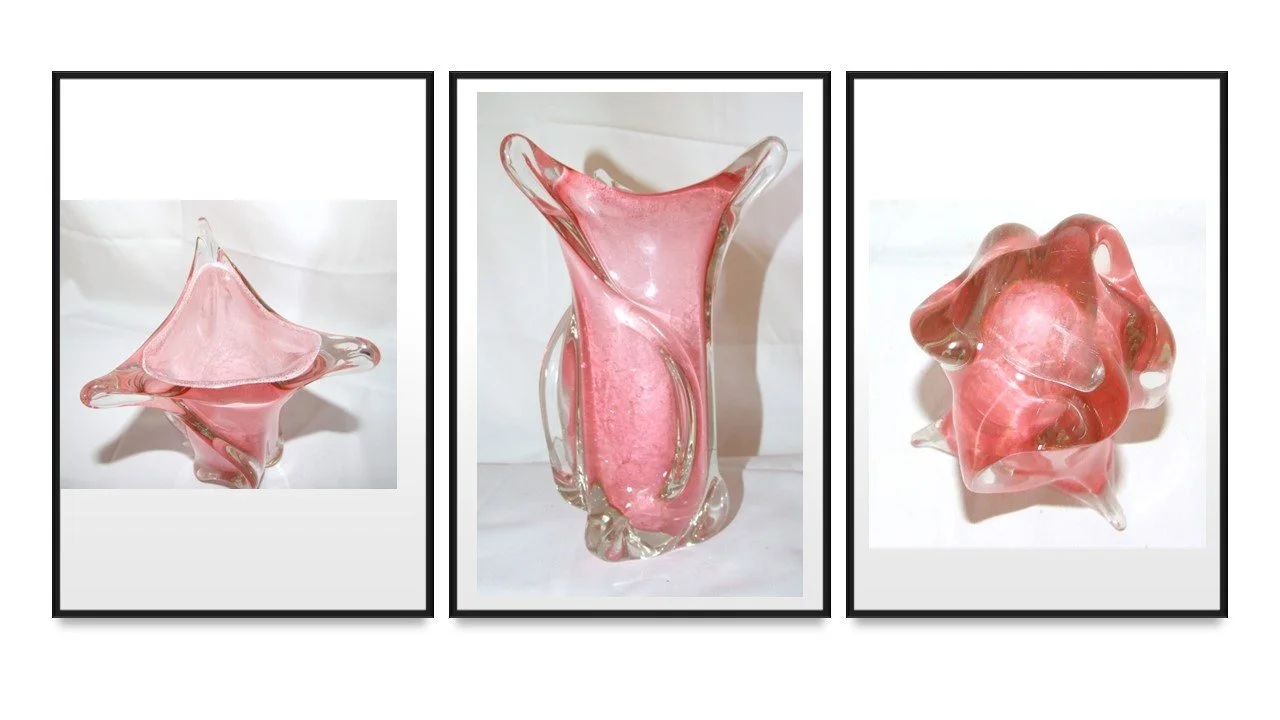
As mentioned previously, we have found this finish on different forms. A few of this style of “long arm stretch” Chalet centerpieces have been found.
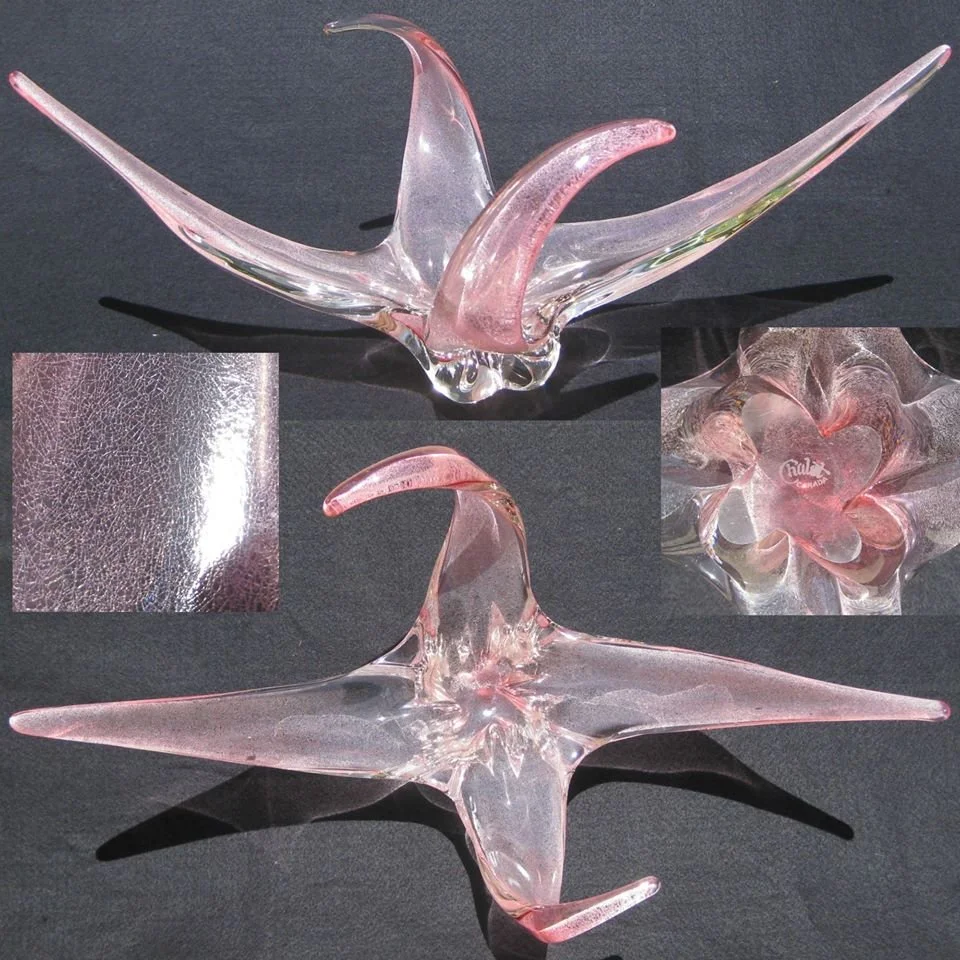
Photograph courtesy of Ray Nelson.
This style of basket:
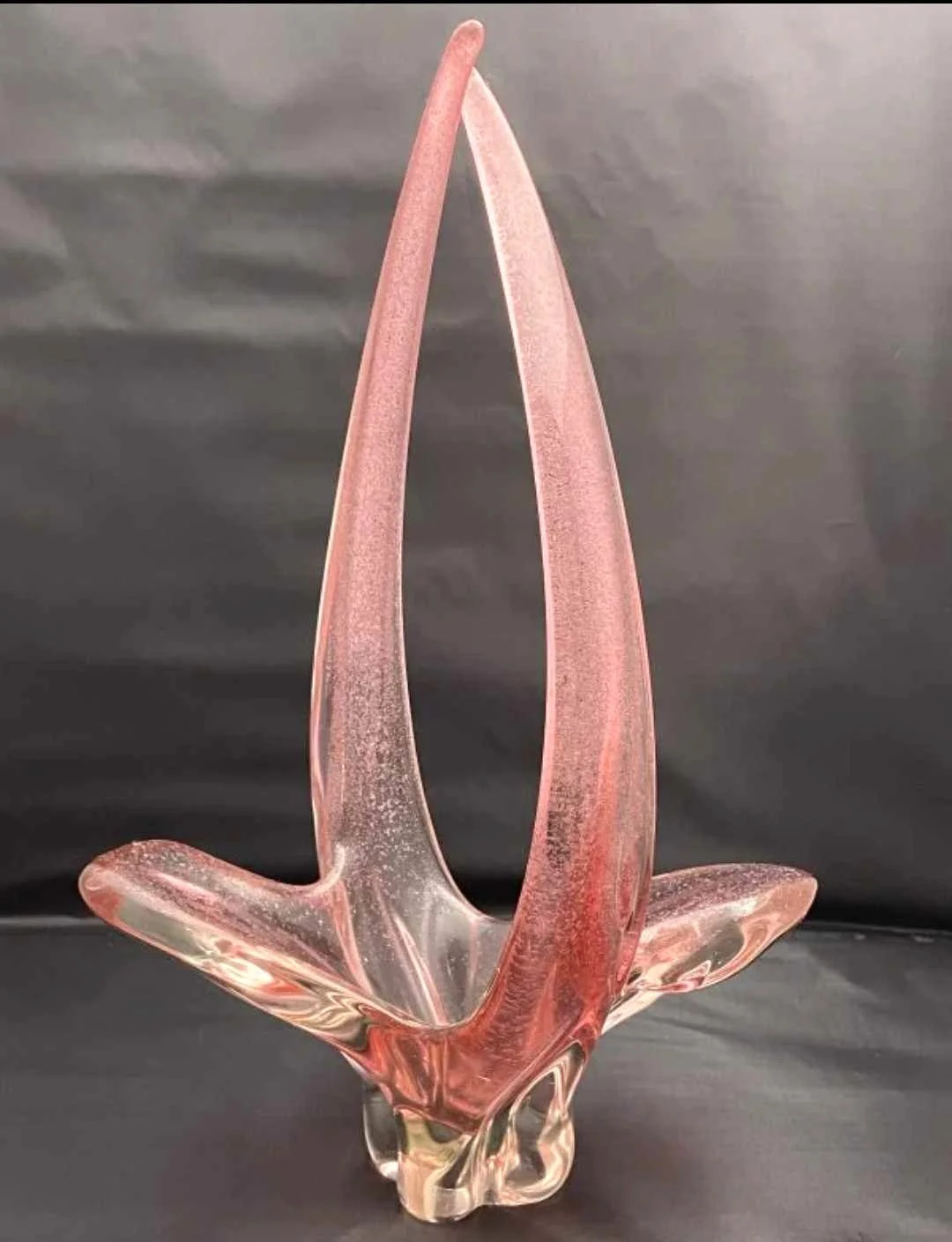
We have discovered about half a dozen of this style basket with the corroso finish. This piece from the collection of Cindy Bishop Laughlin.
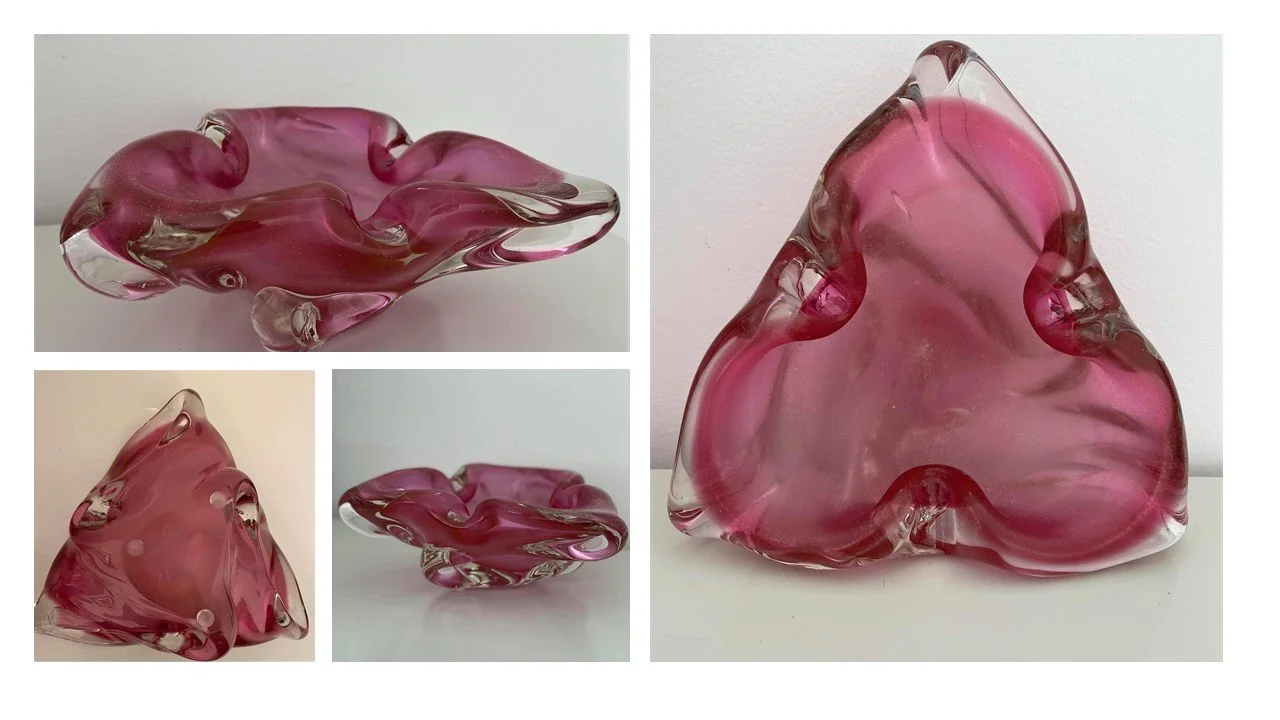
From the collection of Malla Birns.
Same style but note the marked difference in colour from its cousin shown above:
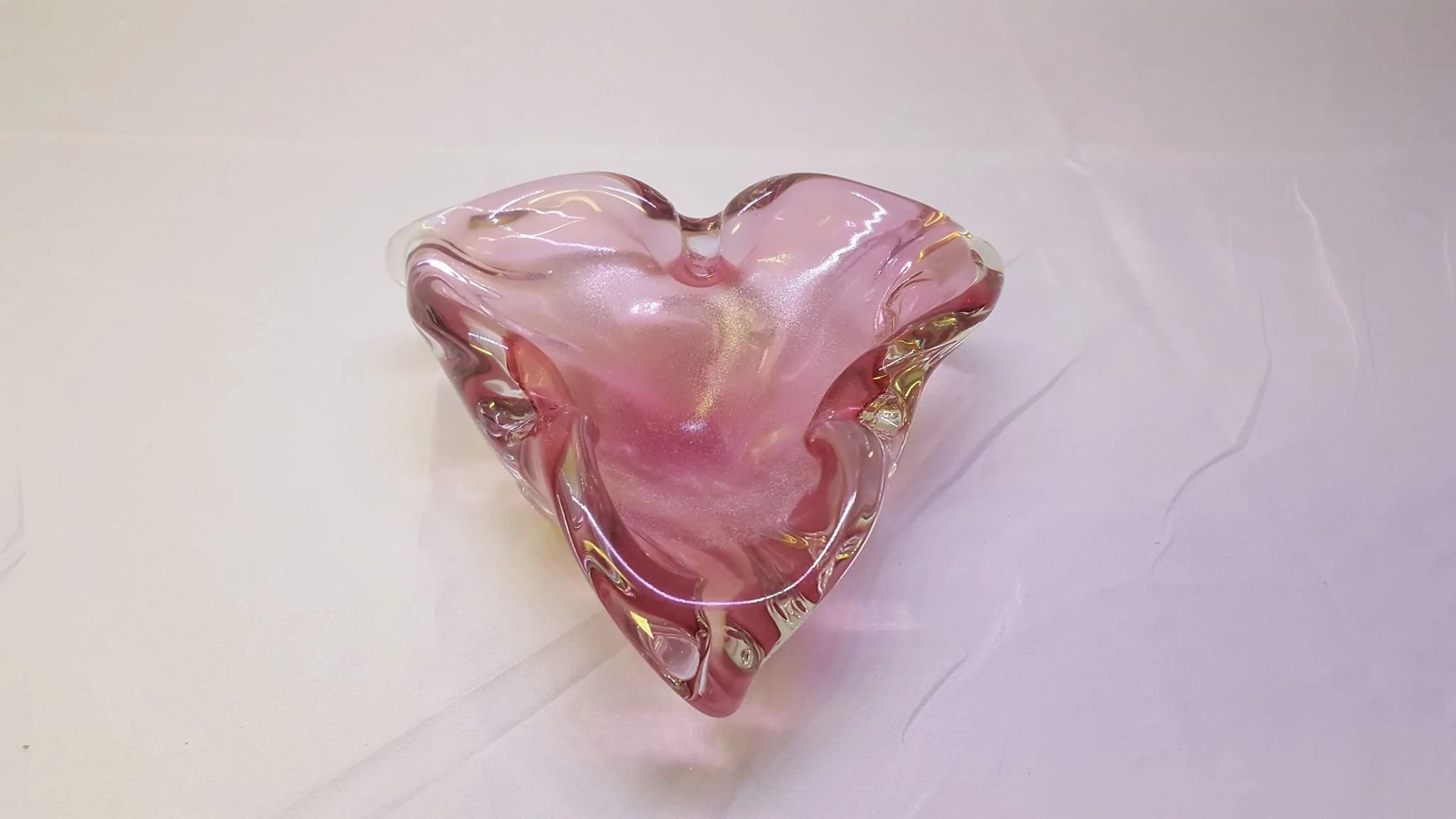
Photograph courtesy of Ryan Robertson.
The “splash” vase and ashtray have both been seen.
The vase:
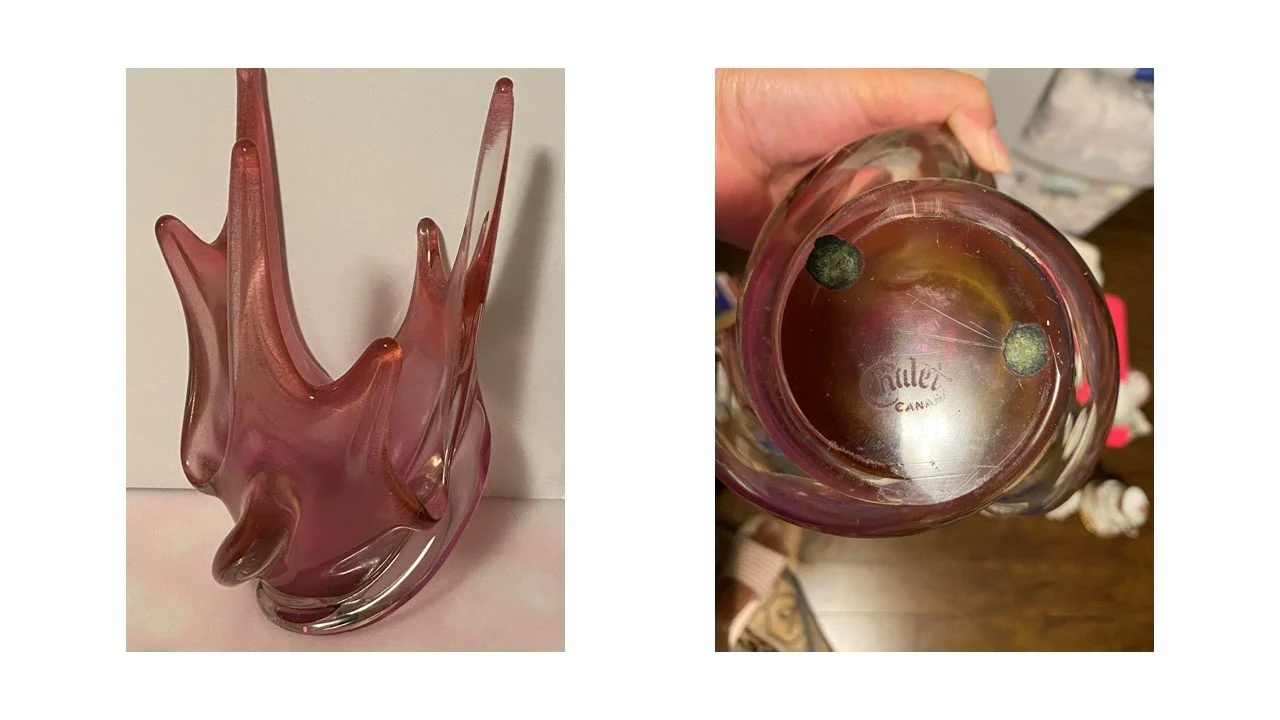
Corroso “splash” vase from the collection of Lisa Han Xiaohong.
The ashtray:
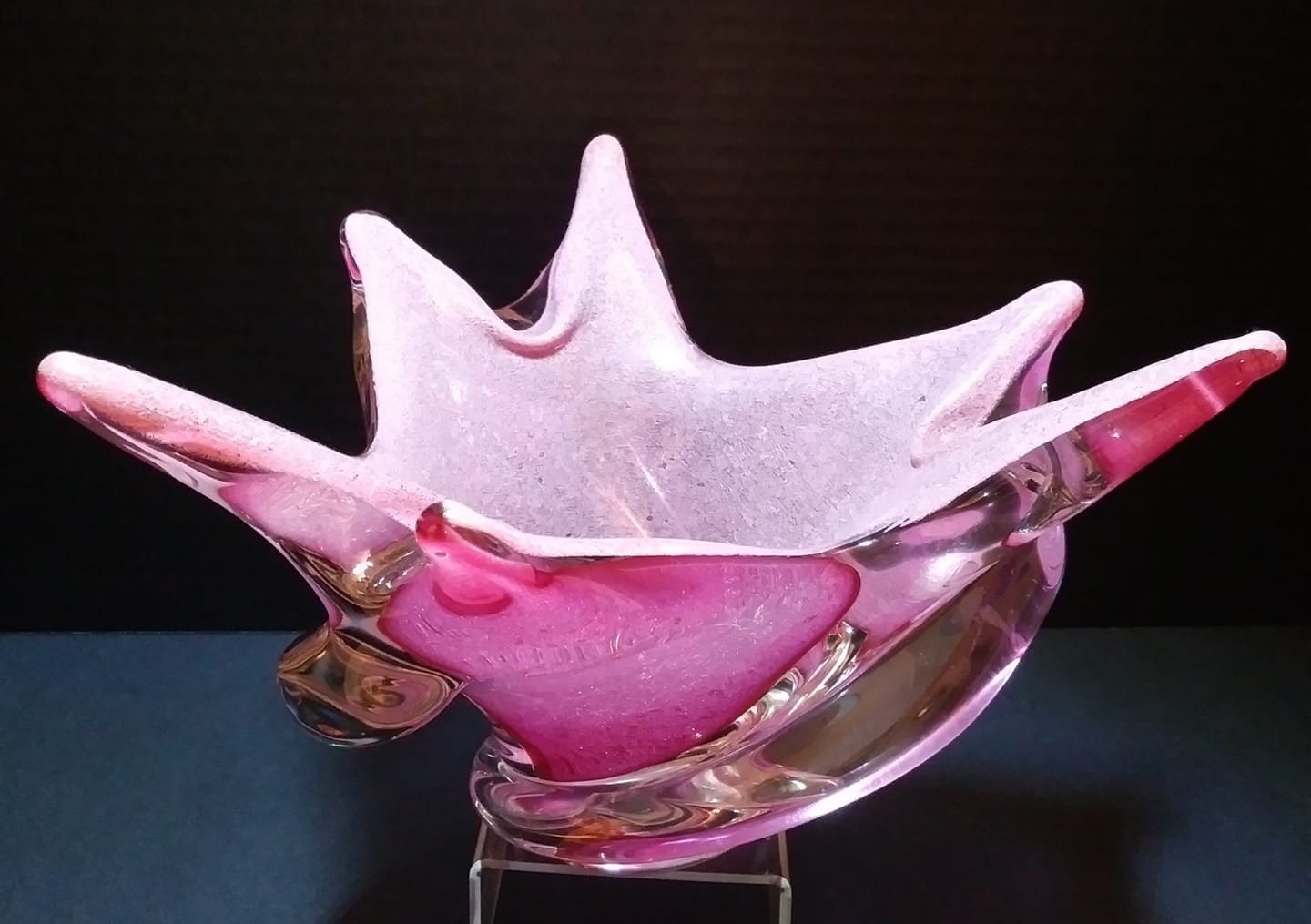
This beauty from the collection of Cindy Bishop Laughlin.
Two more iconic Chalet centerpiece styles.
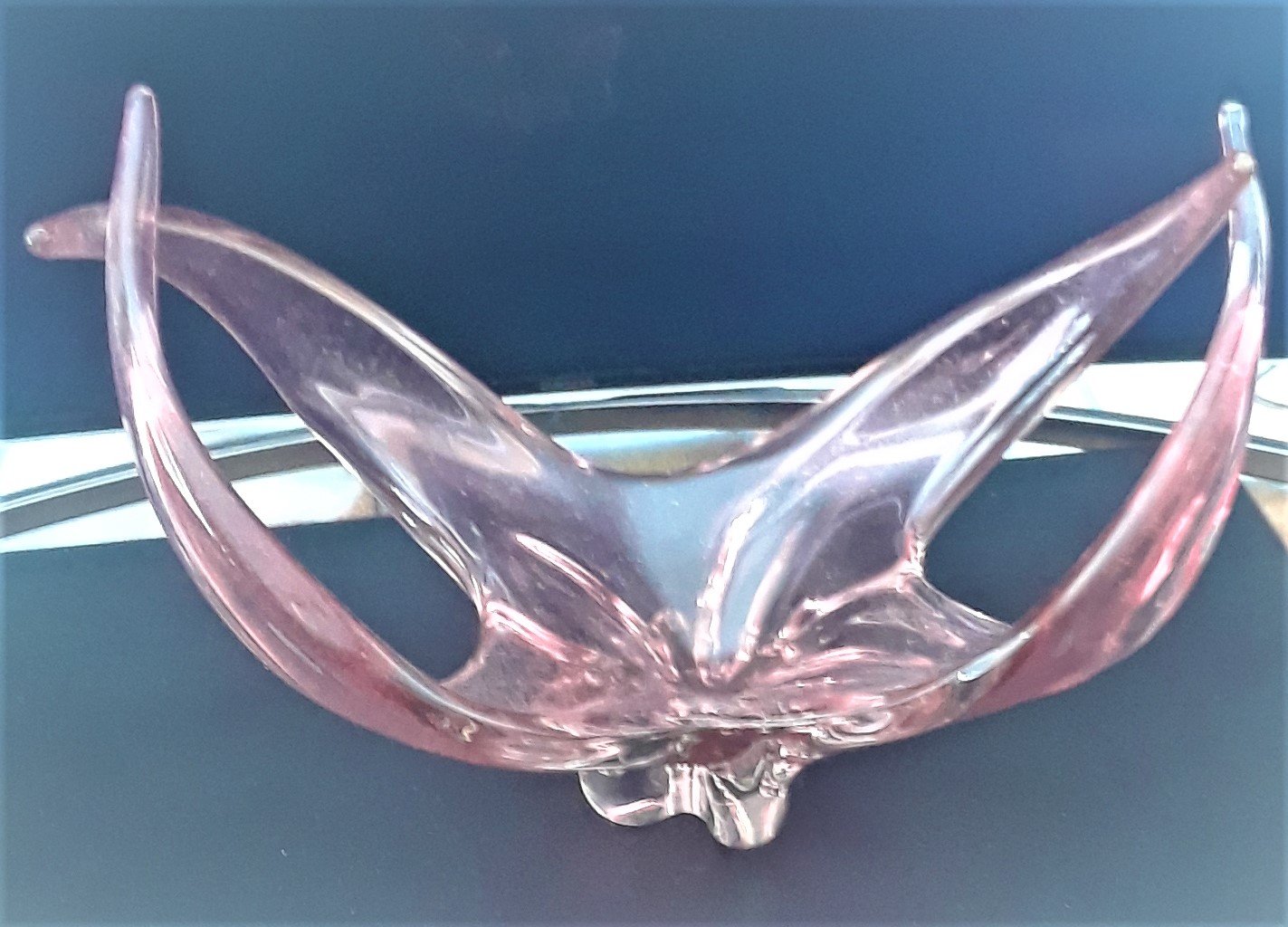
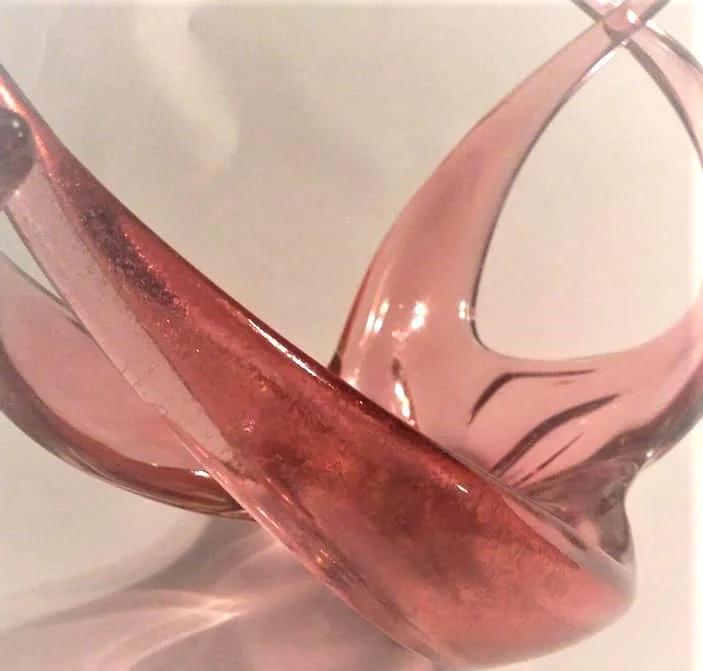
From the collection of Roy Prins.
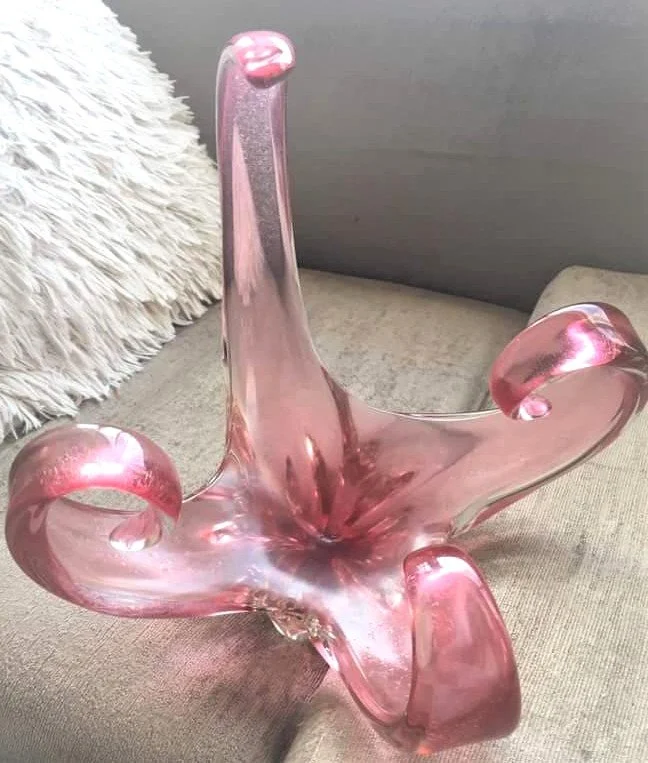
A third iconic form seen with a corroso finish – the “spike” vase:
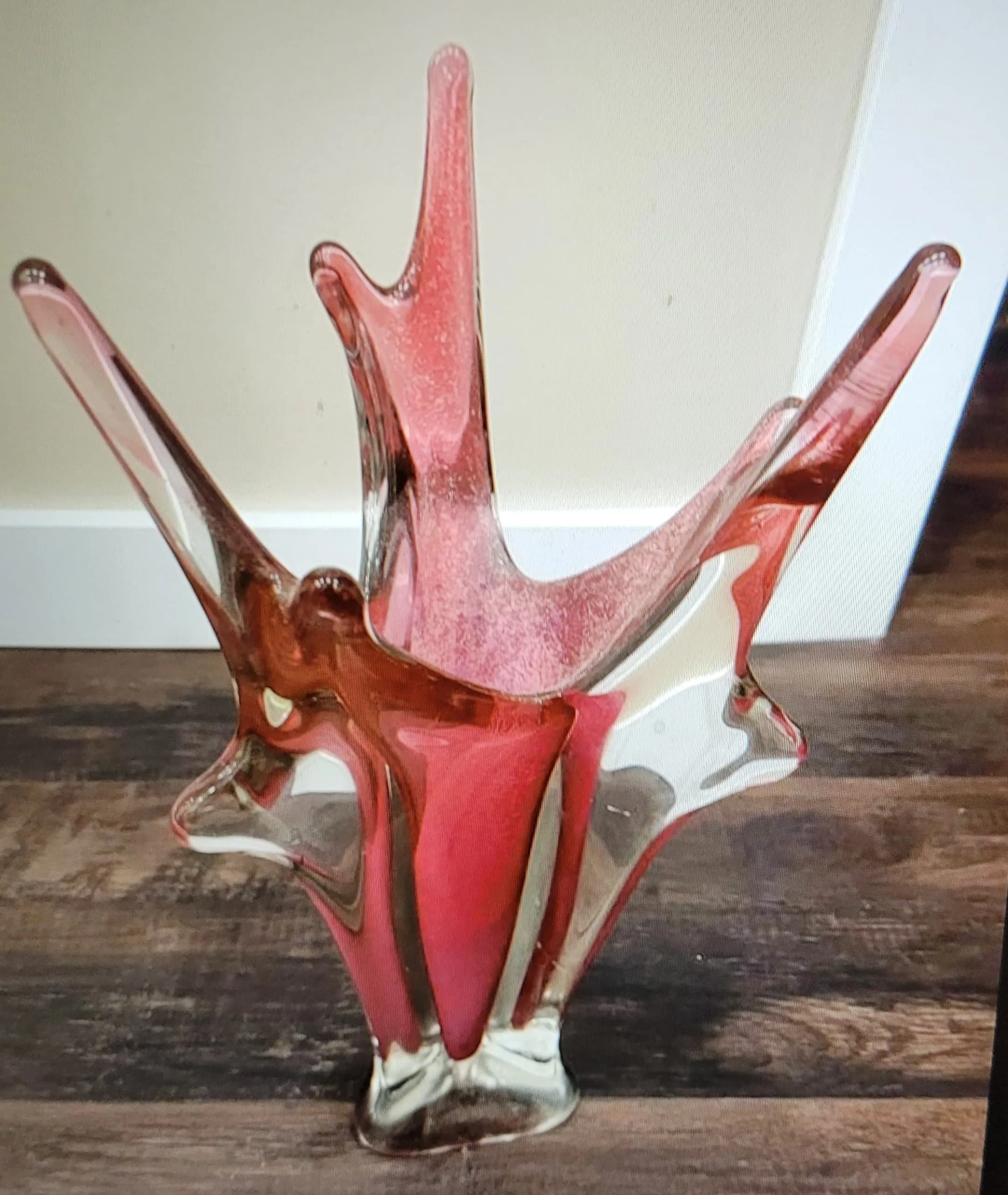
From the collection of Lorne Olafson and Darcy Dietrich.
Another style of centerpiece – similar yet different to the pink one from my collection.
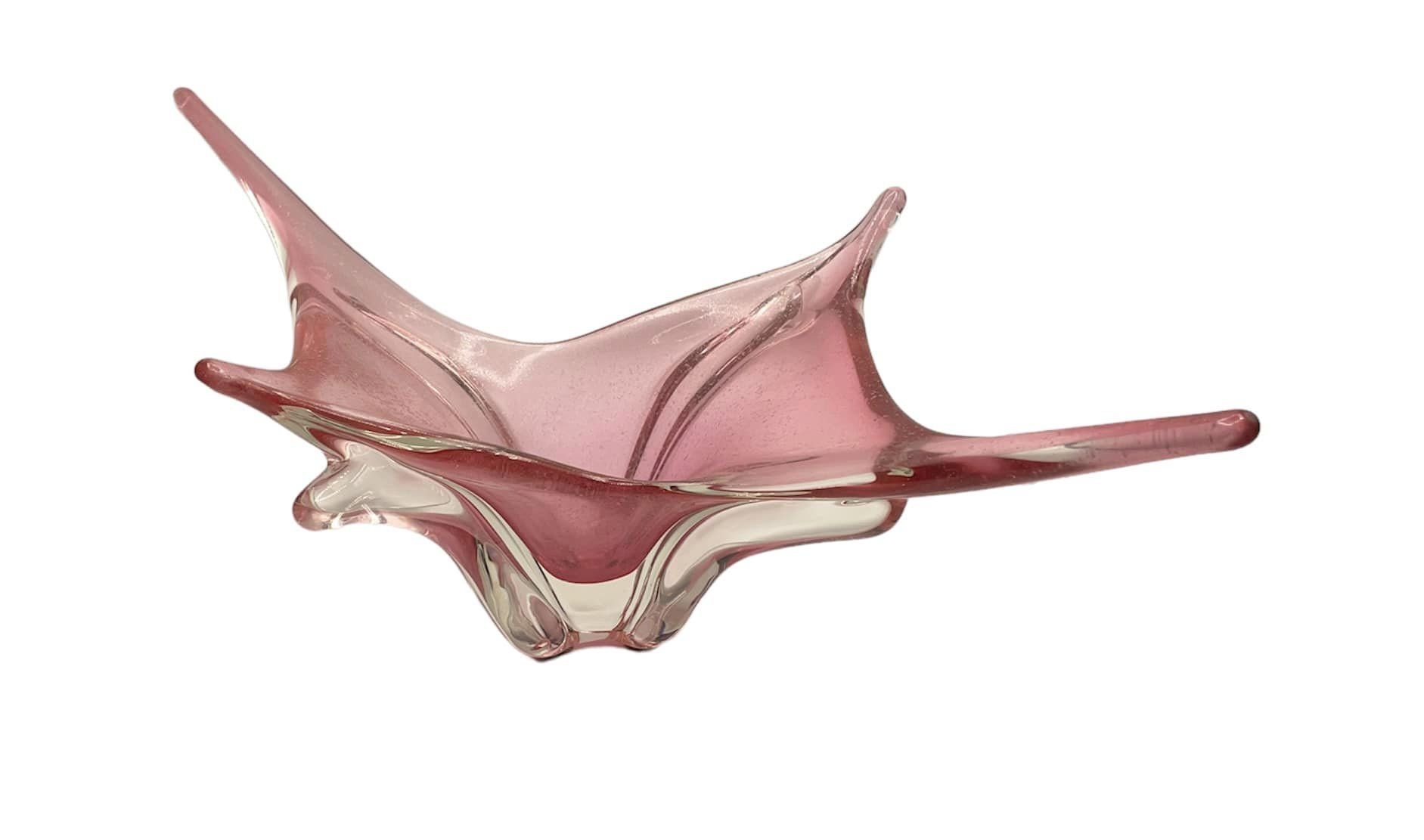
Photograph courtesy of Sabrina Brunetti.
This is a very interesting corroso finish piece:
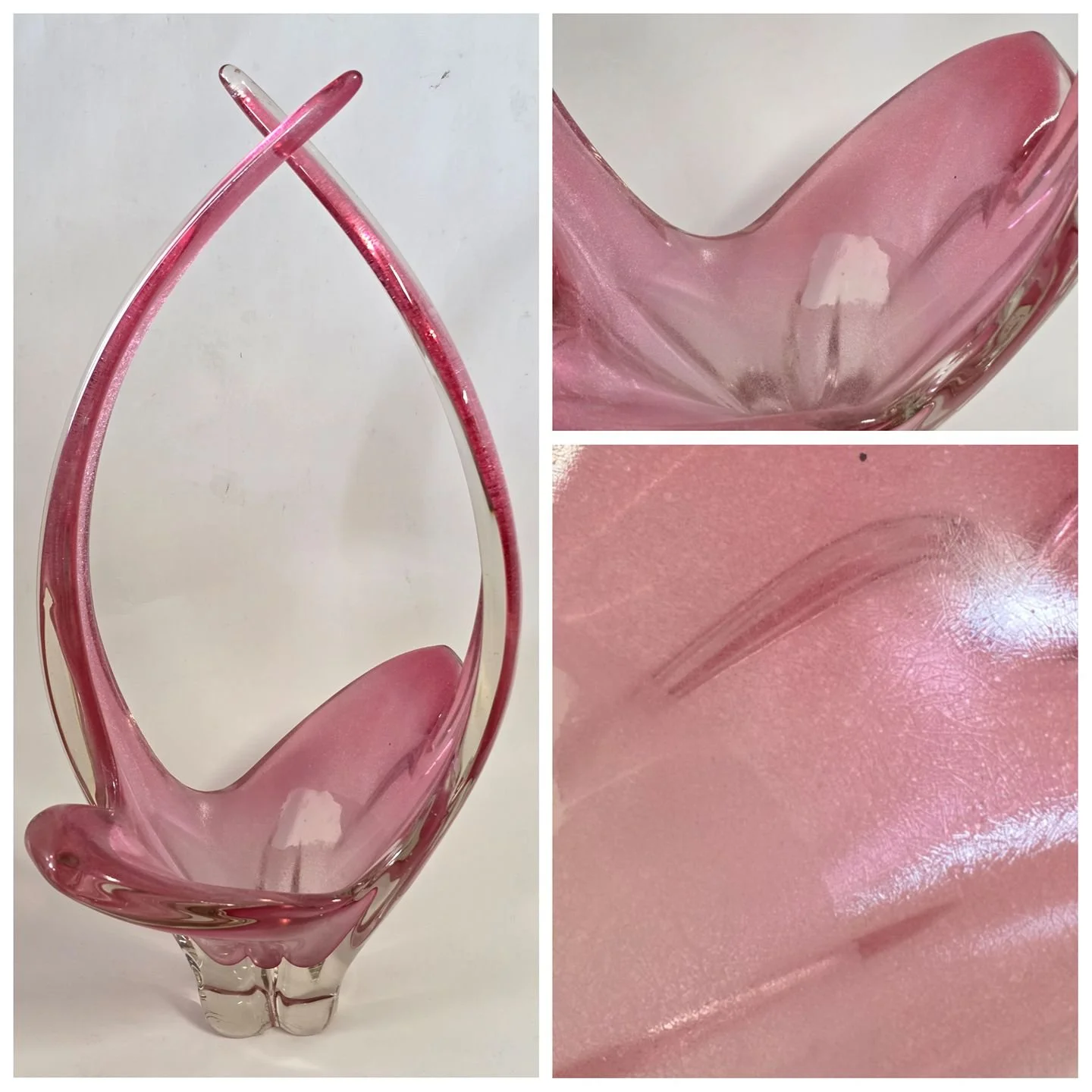
This basket’s corroso finish is uneven. The center of the basket has a circle, similar to a water mark, and there is an entire square where the acid etching is missing. From the collection of Gionny Gueli.
EDAG produced a very few pieces with a “scavo” surface finish that could be confused with a corroso finish. The scavo finish is achieved through applying a heated mixture of specific carbonates and nitrates. The heating of this mix causes the elements of this structure to alter and decompose which results in a change to the glass surface – it loses its transparency, gloss and smoothness. The aim of this finish is to give the glass an aged look. This can be coloured.
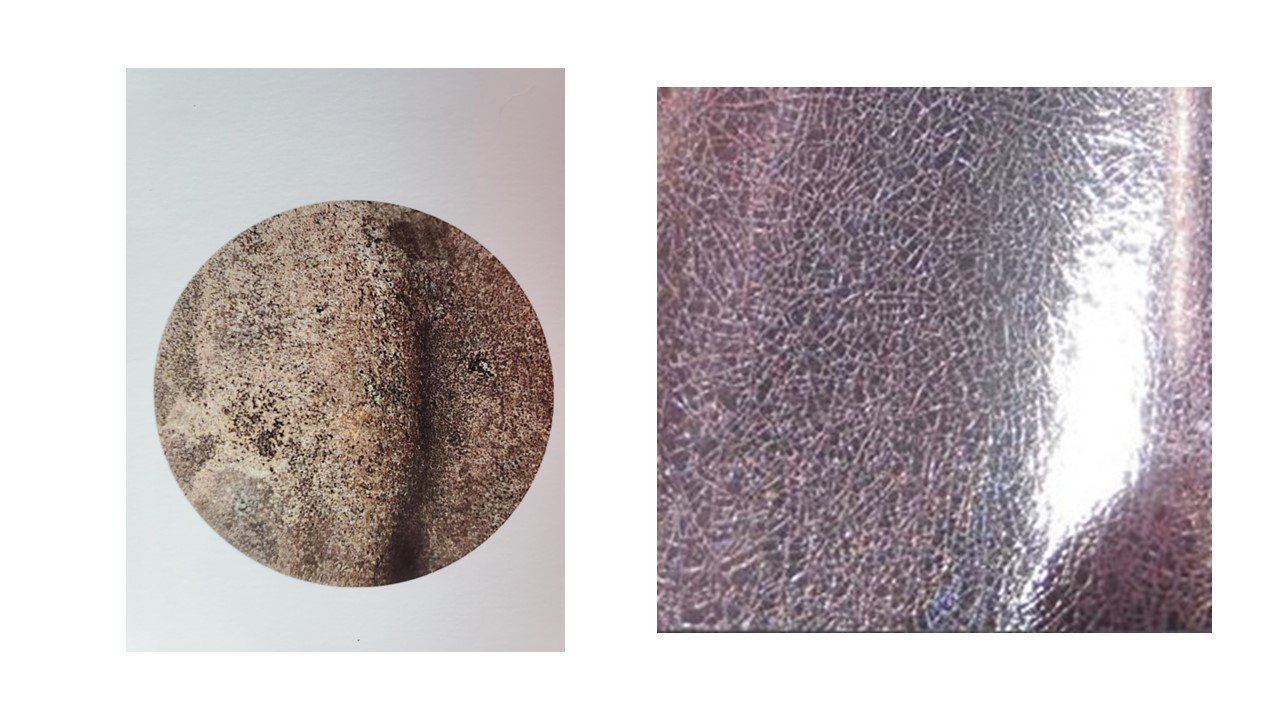
Photograph of scavo finish (left) courtesy of Sabrina Brunetti and Tamara Boutros. Photograph of corroso finish is on right.
I have no evidence at this time that either Lorraine Glass Industries or Mosaic Artistic Glass produced forms that had a corroso finish.
Now for something fun!
