Chalet makes it “Oh, so Pretty!”
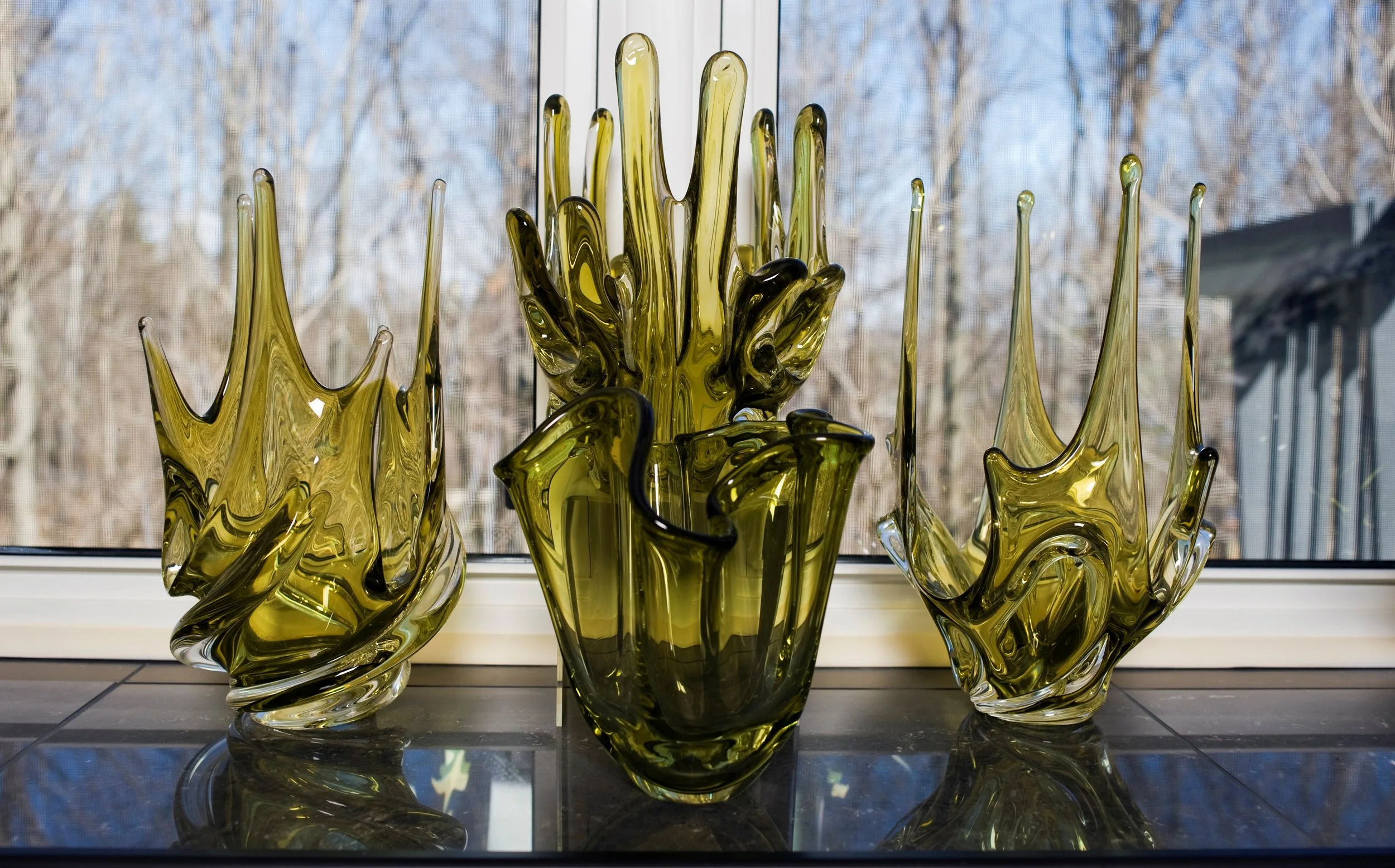
When Chalet glass is mentioned, iconic shapes such as these hand-blown vases spring to mind. Two Chalet standards are that the lines of such forms are clean, strong and that the pieces are without embellishment. And indeed, that is most typical of Chalet.
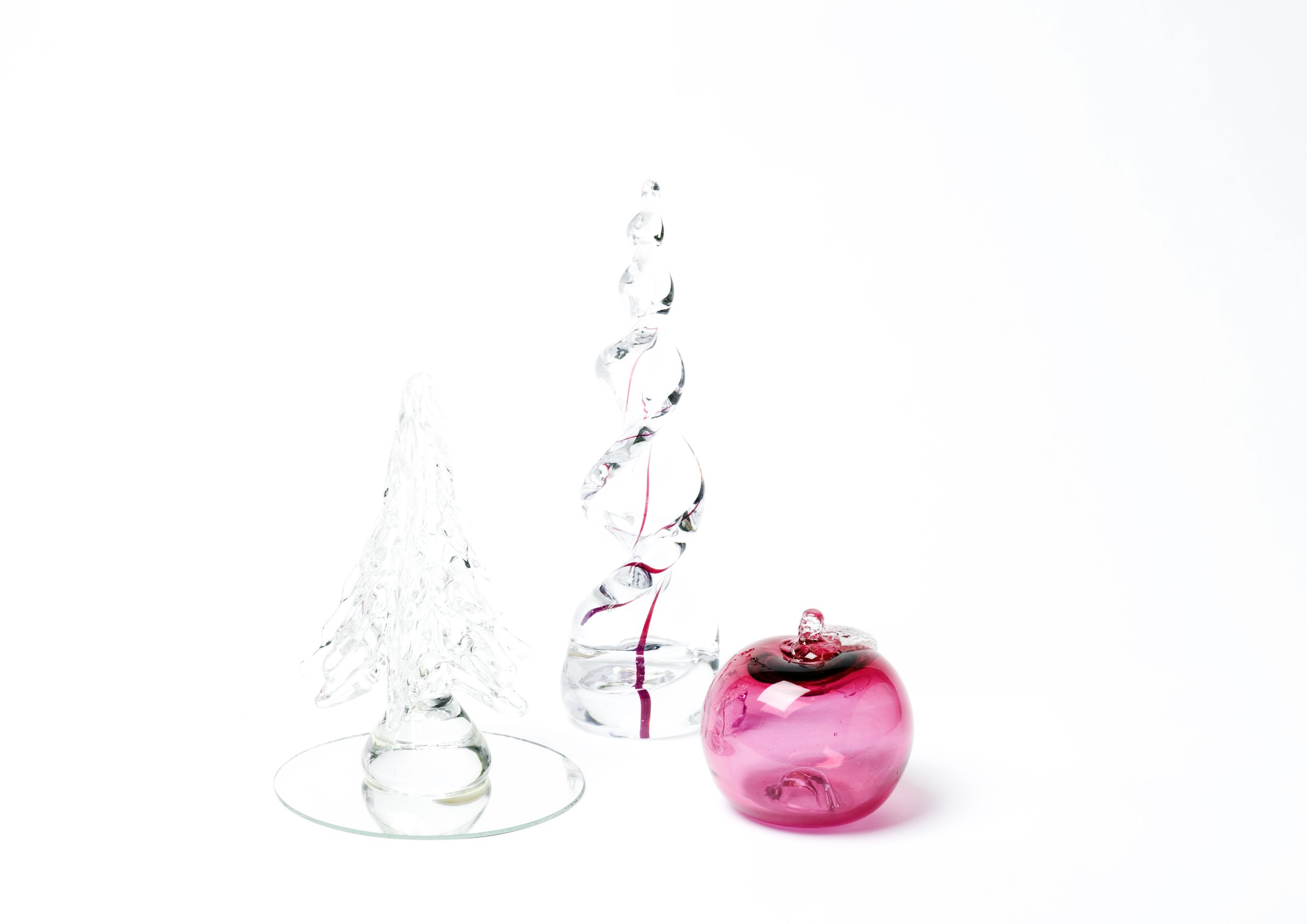
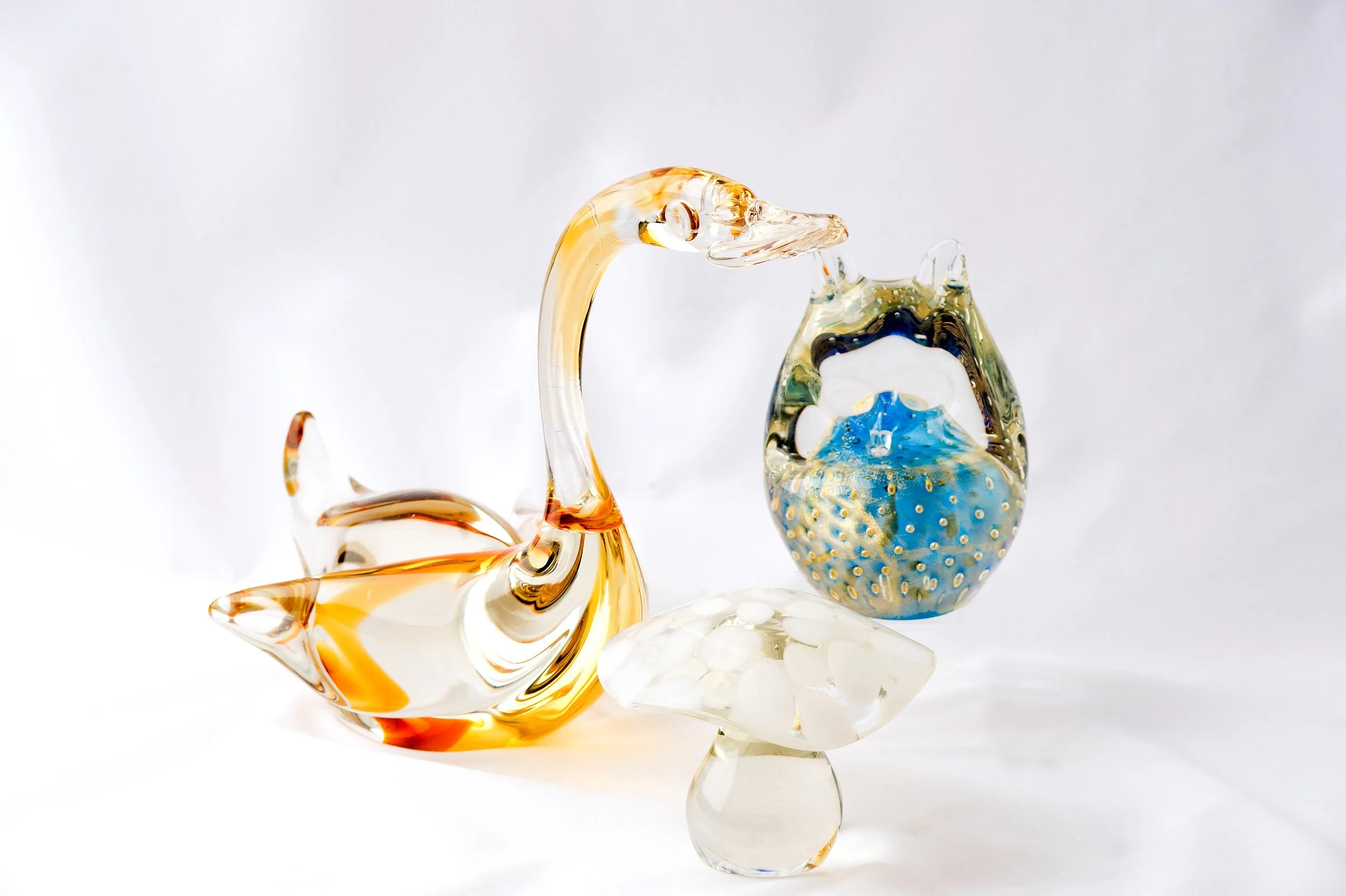
However, there are many pieces of Chalet that do not conform to these standards. Not only did Chalet use two or more colours to make some “Oh, so pretty” but hand-blown, mouth-blown and hand-molded pieces of Chalet that have adornments, or inclusions, and embellishments are also seen quite often. Some pieces also have surface treatments which alter the skin (surface) of the glass.
I think it would be easiest to examine the ways that “Chalet made it pretty” if we looked at specific examples regardless of how the piece was produced. Let’s get started!
Surface finishes and treatments.
Seen in both hand-molded and mouth blown forms.
An a ghiaccio (crackled) mouth-blown Chalet lemon:
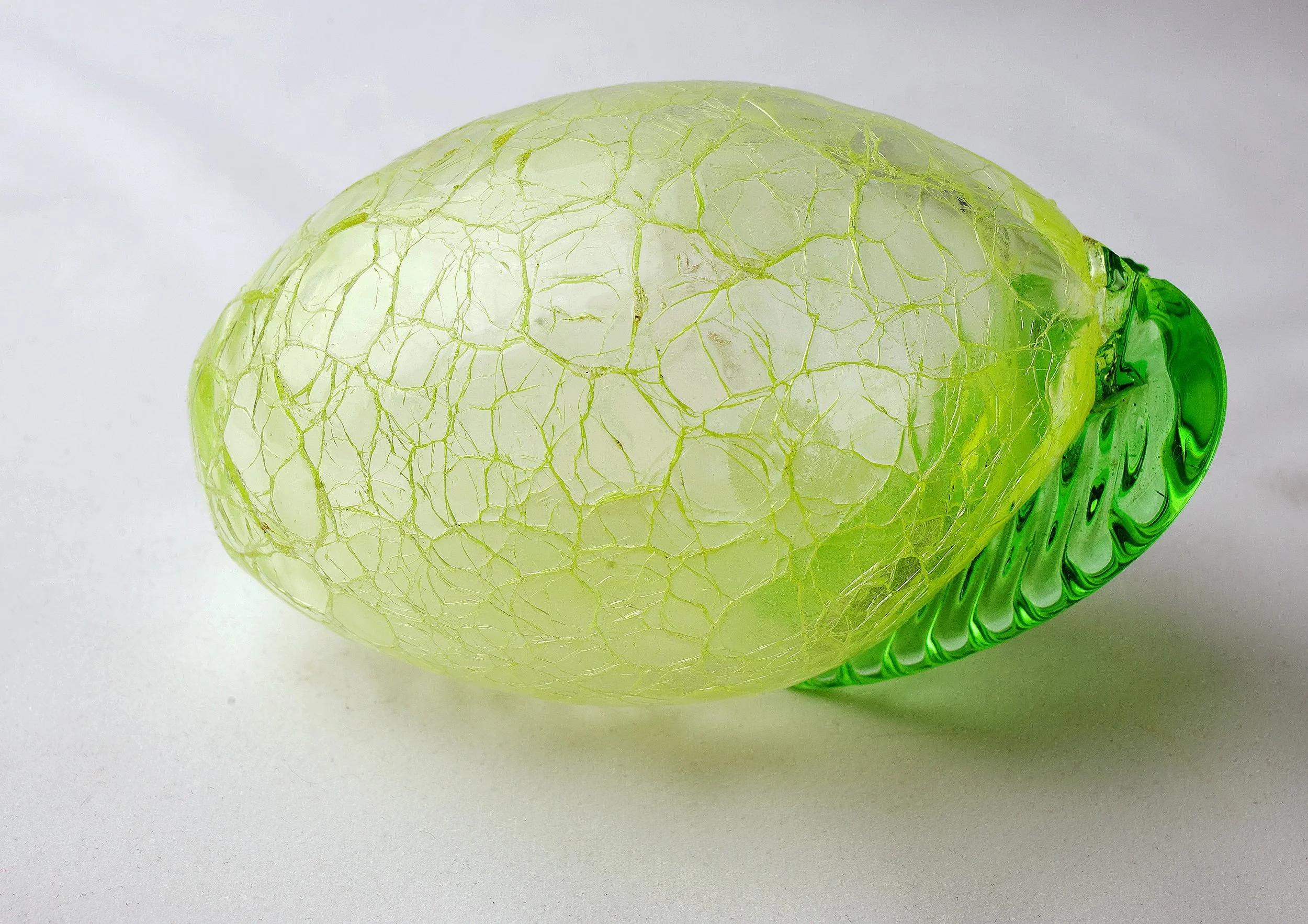
One of my most prized pieces as it was gifted as a “Thank You” to me from Chalet Maestro Giulio Gatto. He blew this while at Chalet.
A hand-blown corroso (acid etched) Chalet “splash” ashtray:
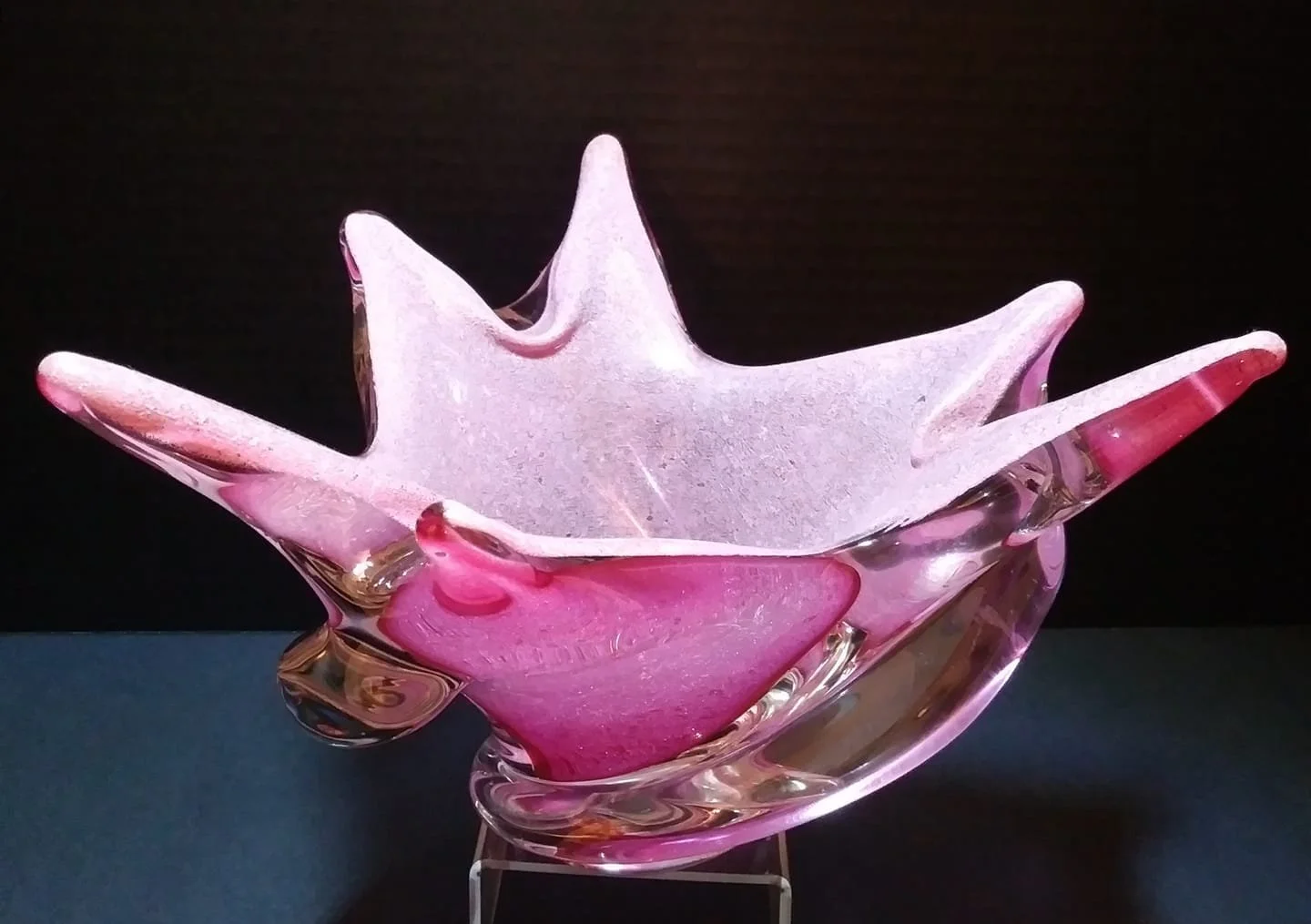
From the collection of 50 Shades member Cindy Bishop Laughlin.
Irradato Chalet bomboniere. This iridescent finish was typically achieved by treating a piece while still hot with metal chlorides or metallic oxide. An “old school” method was to drench the piece in gasoline at finish and set on fire.
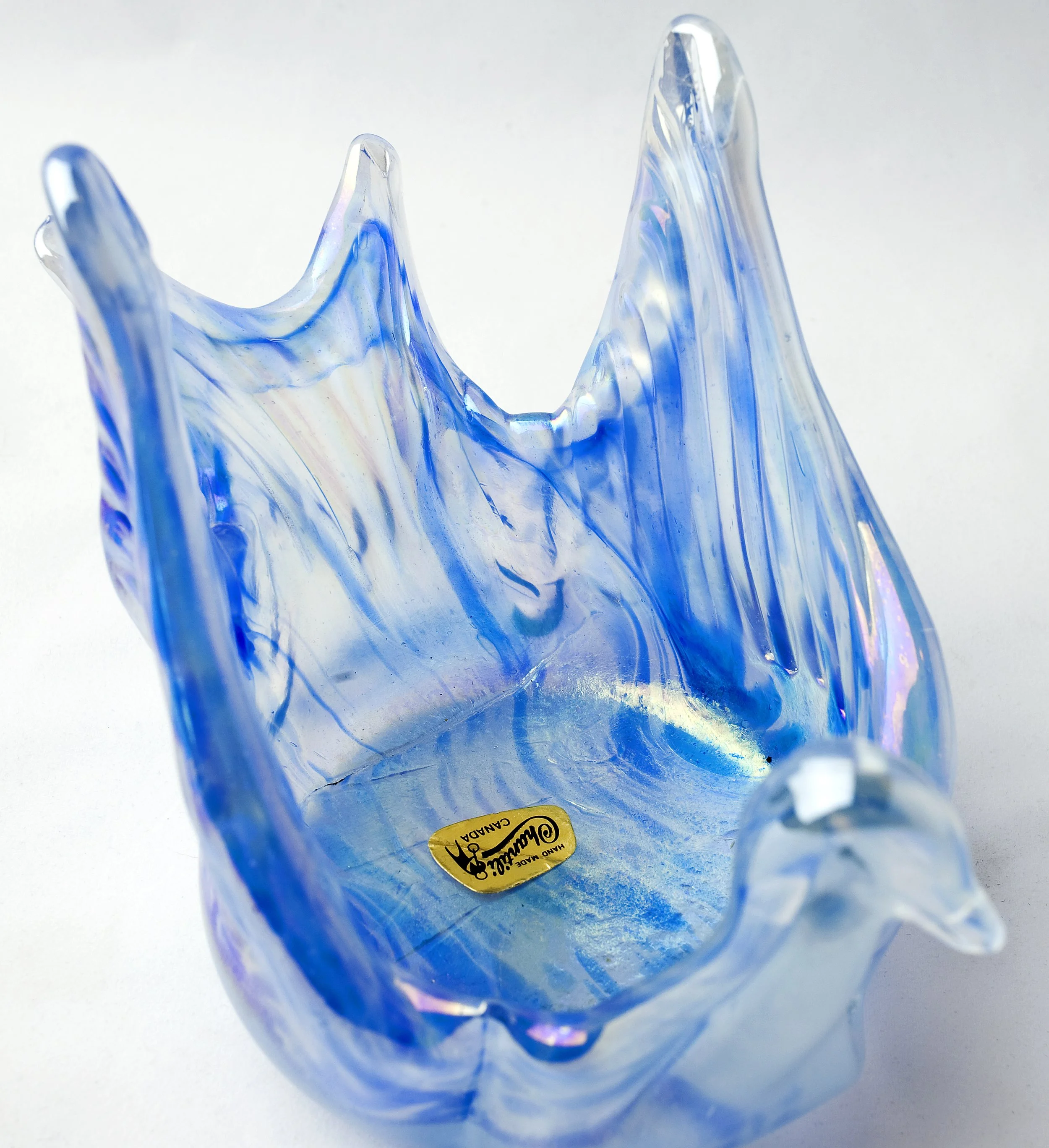
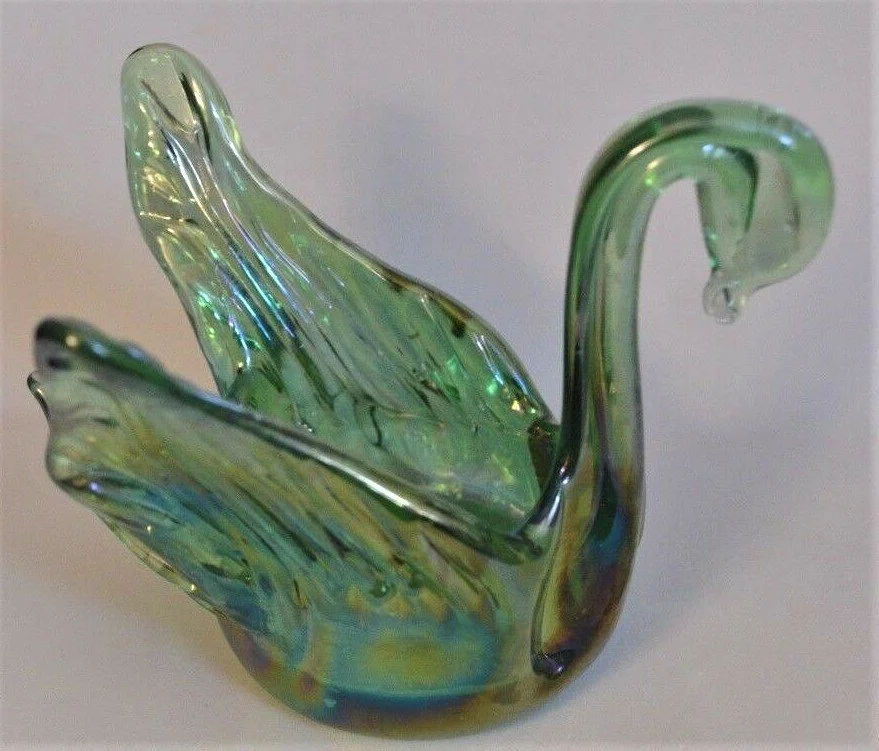
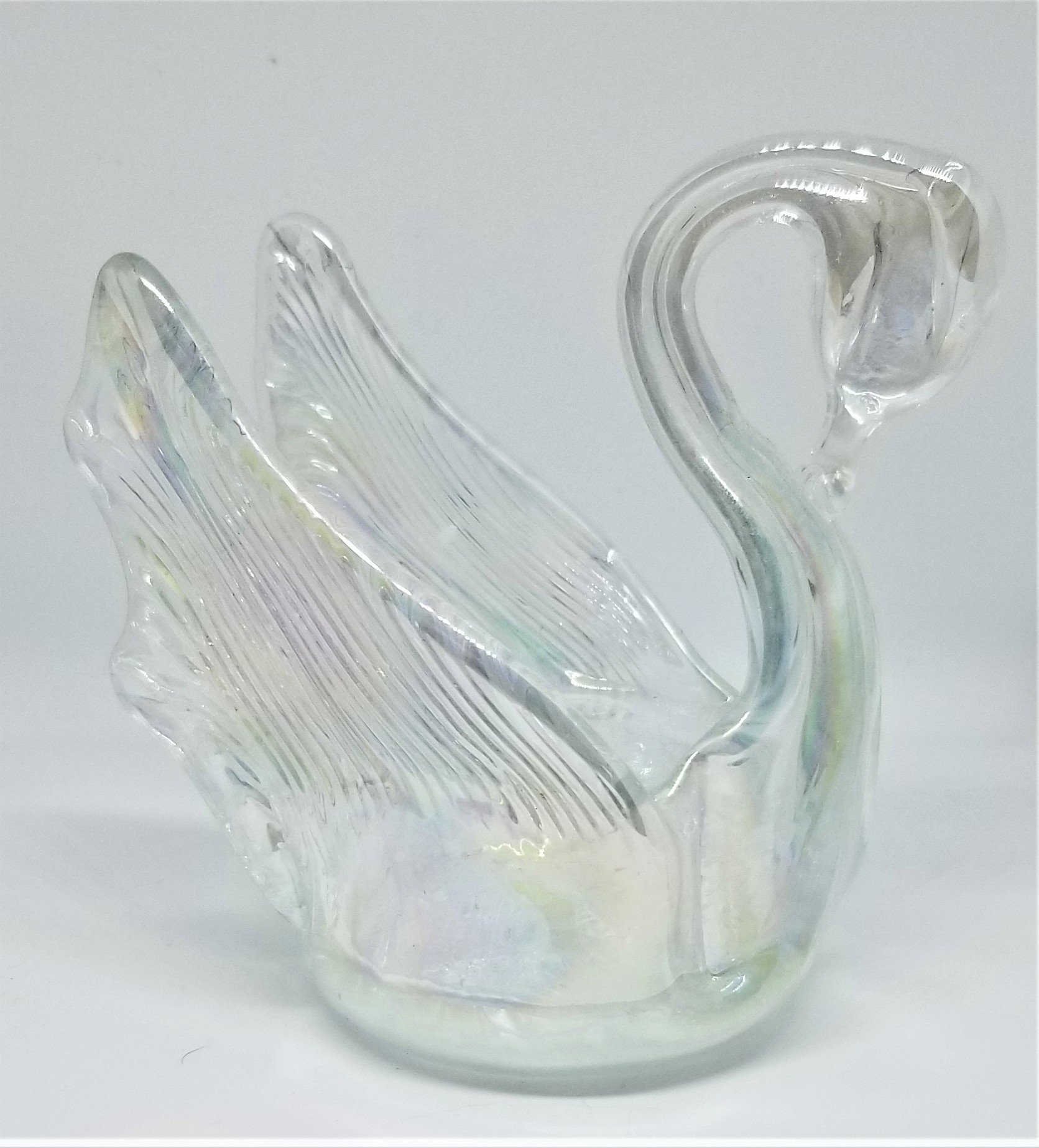
From the personal collection of Chalet artist Roberto De Marchi.
Opaline bomboniere.
Opaline Chalet pieces were created by the addition of lead arsenate to the mix. This is not a surface treatment.
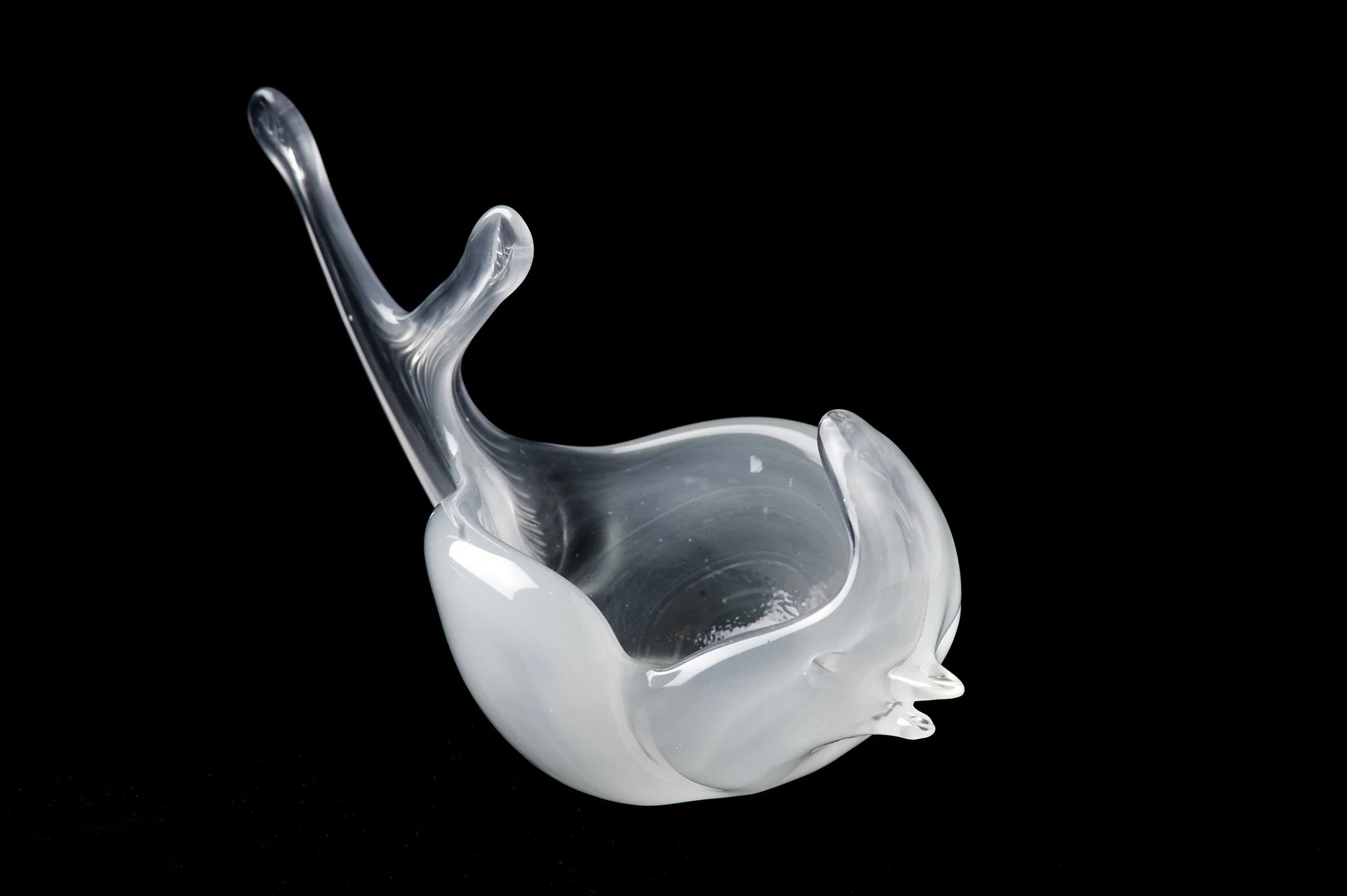
Opaline animal figurines:
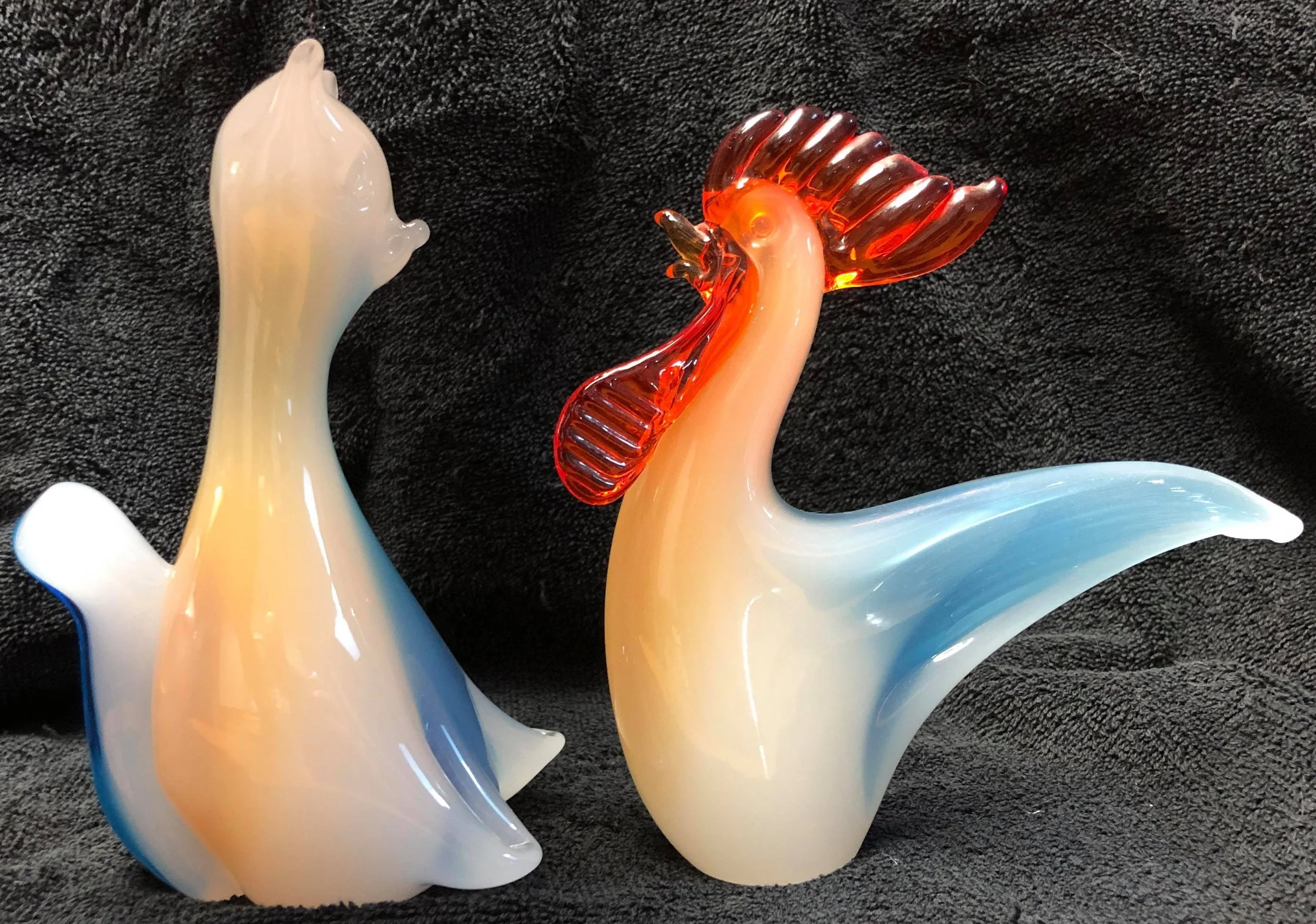
From the incredible collection of Troy Danby.
Opalescent Chalet. Opaline and irradato. A surface finish paired with an additive.
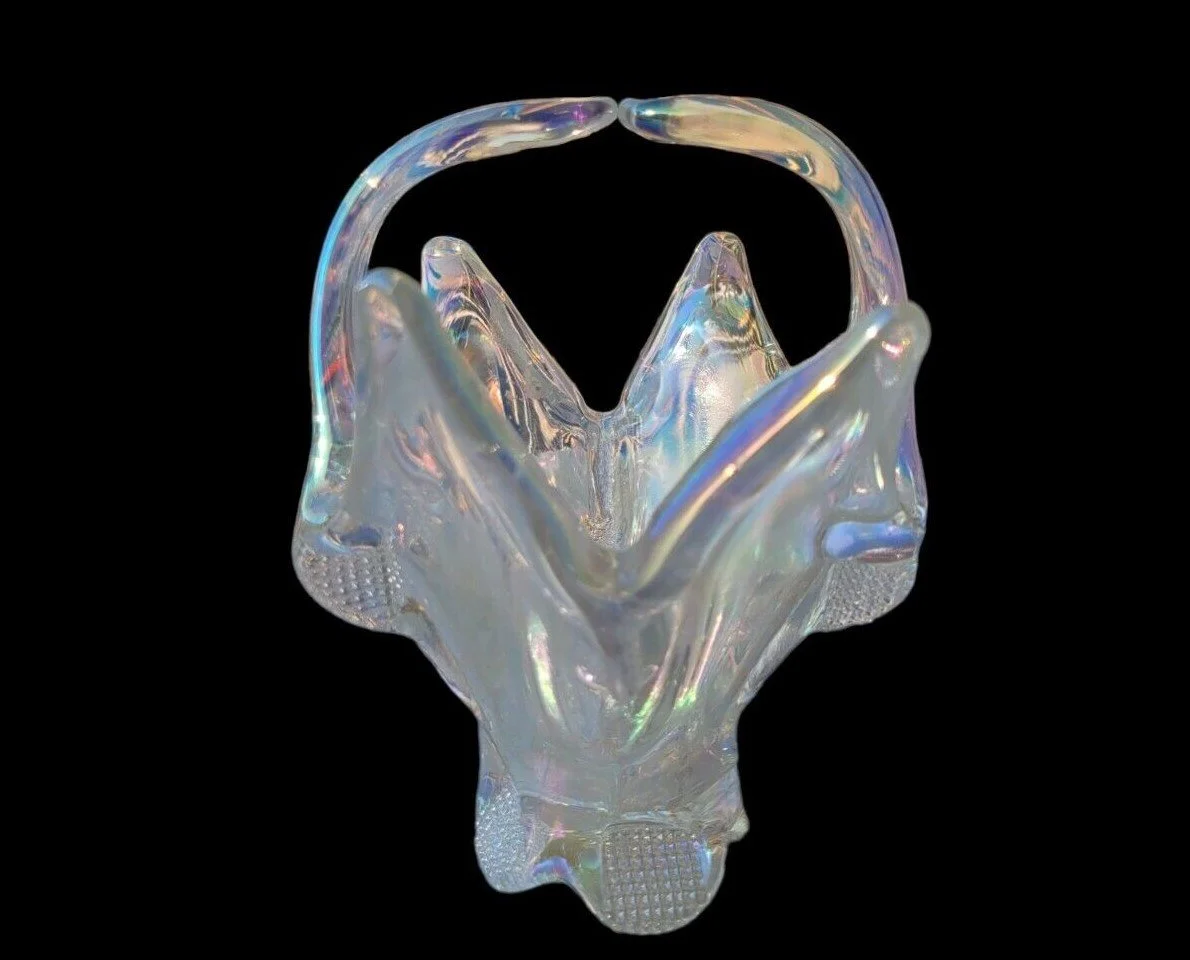
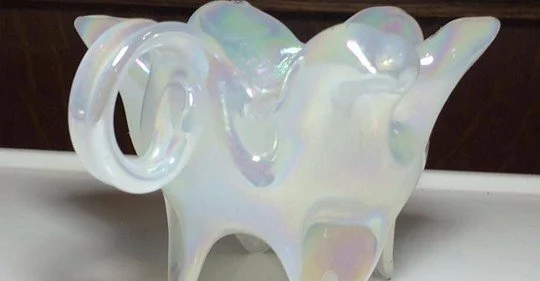
Applied clear crystal leaves and stem. Without gold dust.
On mouth blown fruit:
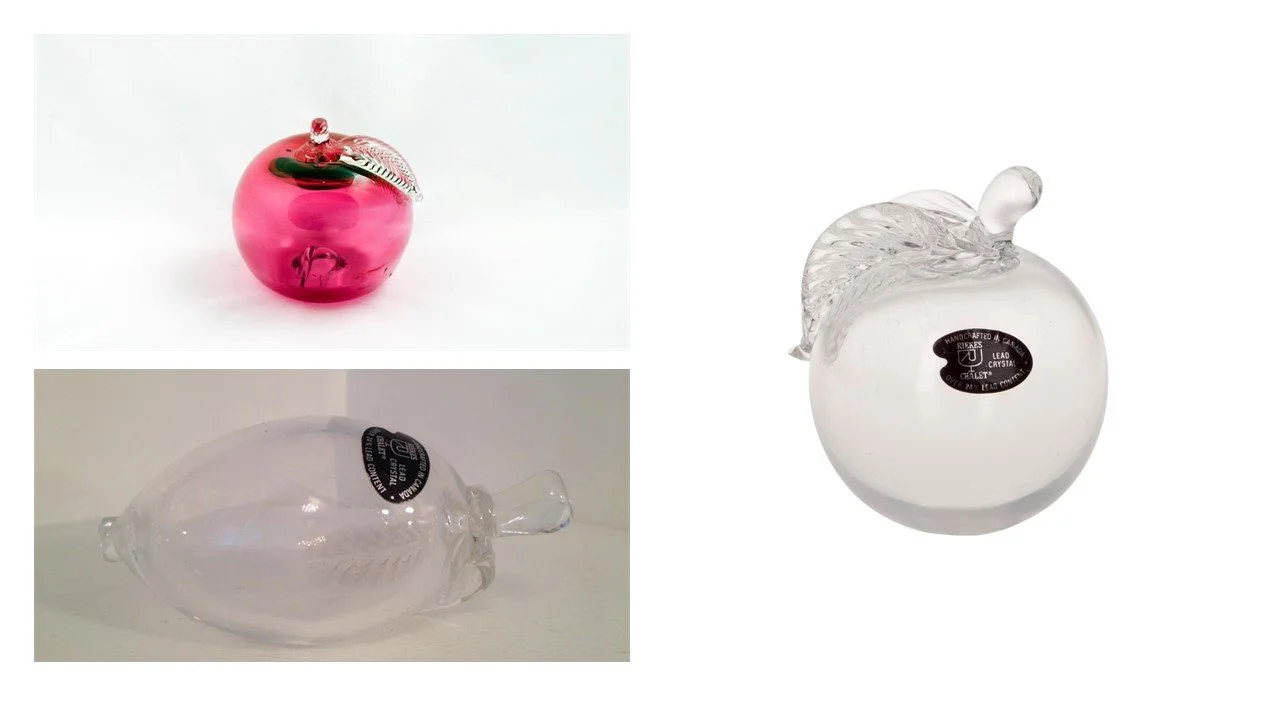
Gold dust was not used in the stems and leaves of the small mouth-blown fruit pieces such as the cranberry or clear crystal apples and lemons. Cranberry apple from the collection of Melissa Patterson. Photographs of clear crystal lemon (bottom left) courtesy of Bradley Atkinson and of apple at right – Deborah Patterson.
Applied clear crystal leaf and stem on the larger hand-blown fruit ashtrays:
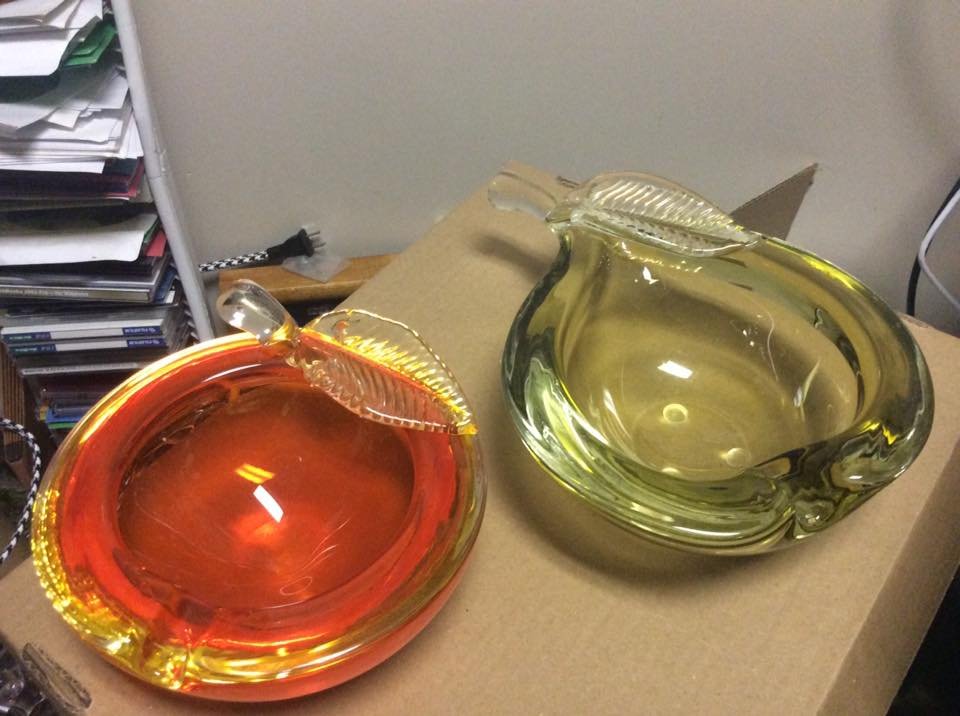
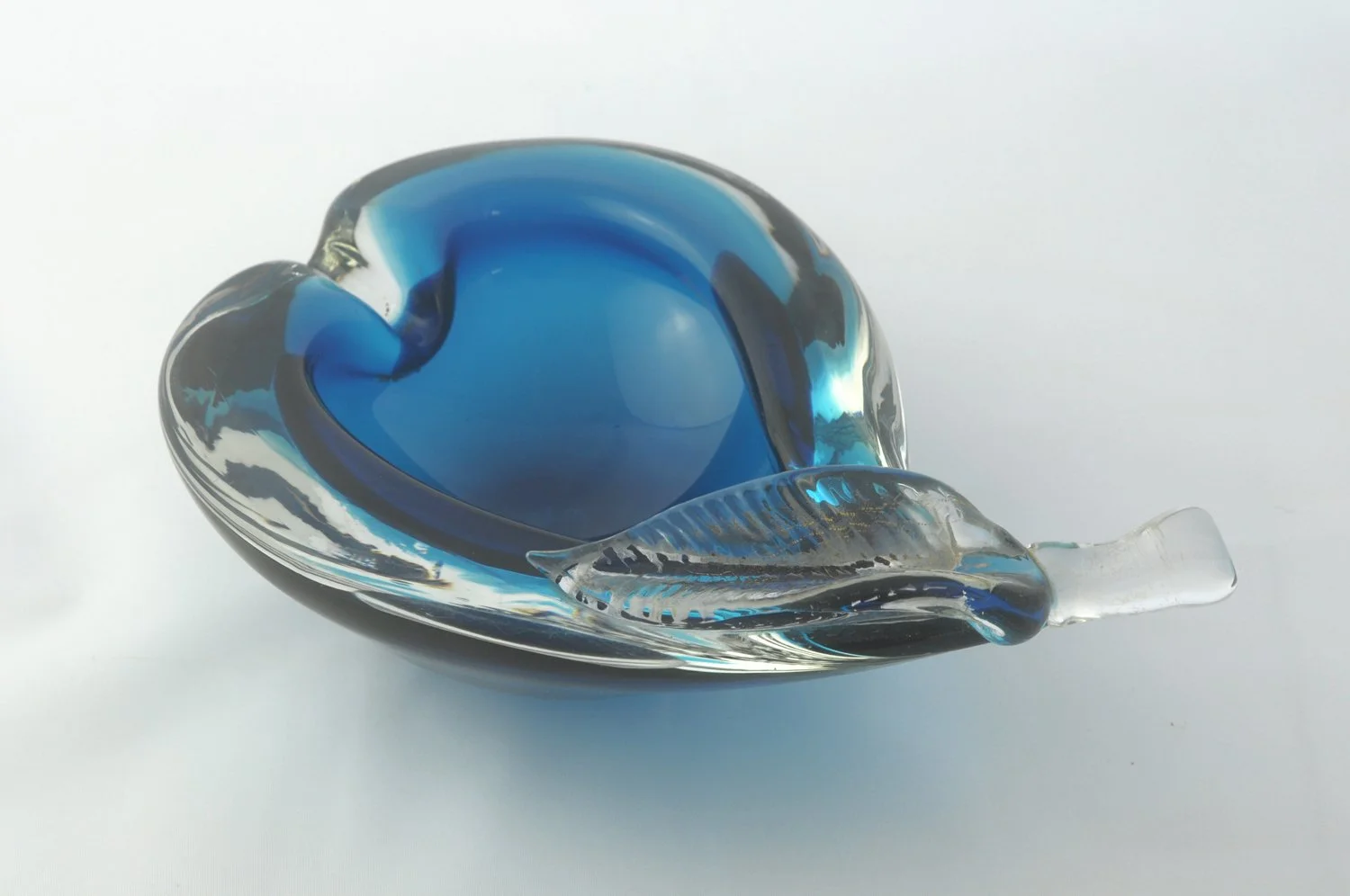
Clearly not polivere d’oro leaf or stem.
On the small hand-molded fruit ashtrays:
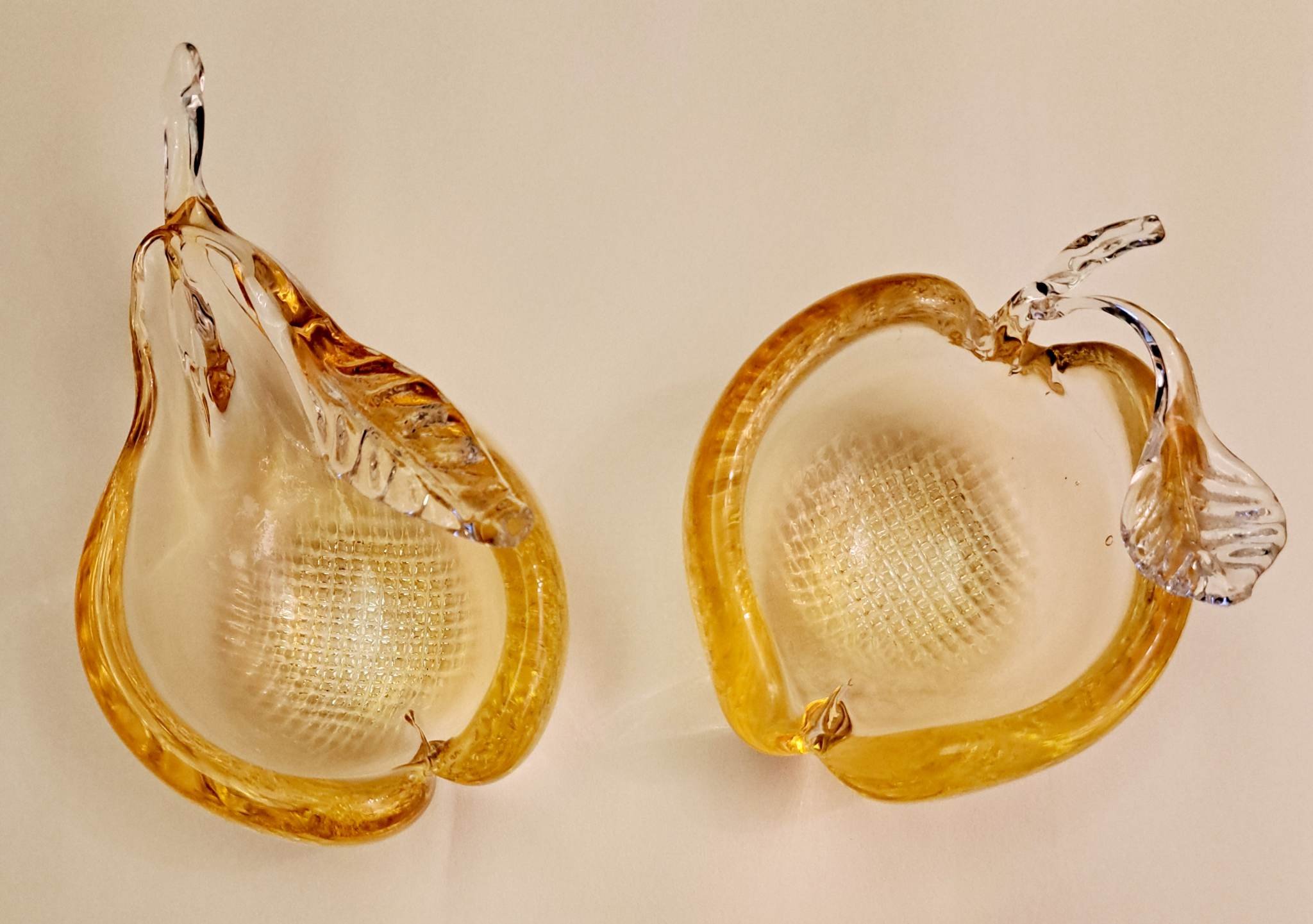
Photograph courtesy of Cindy Bishop Laughlin.
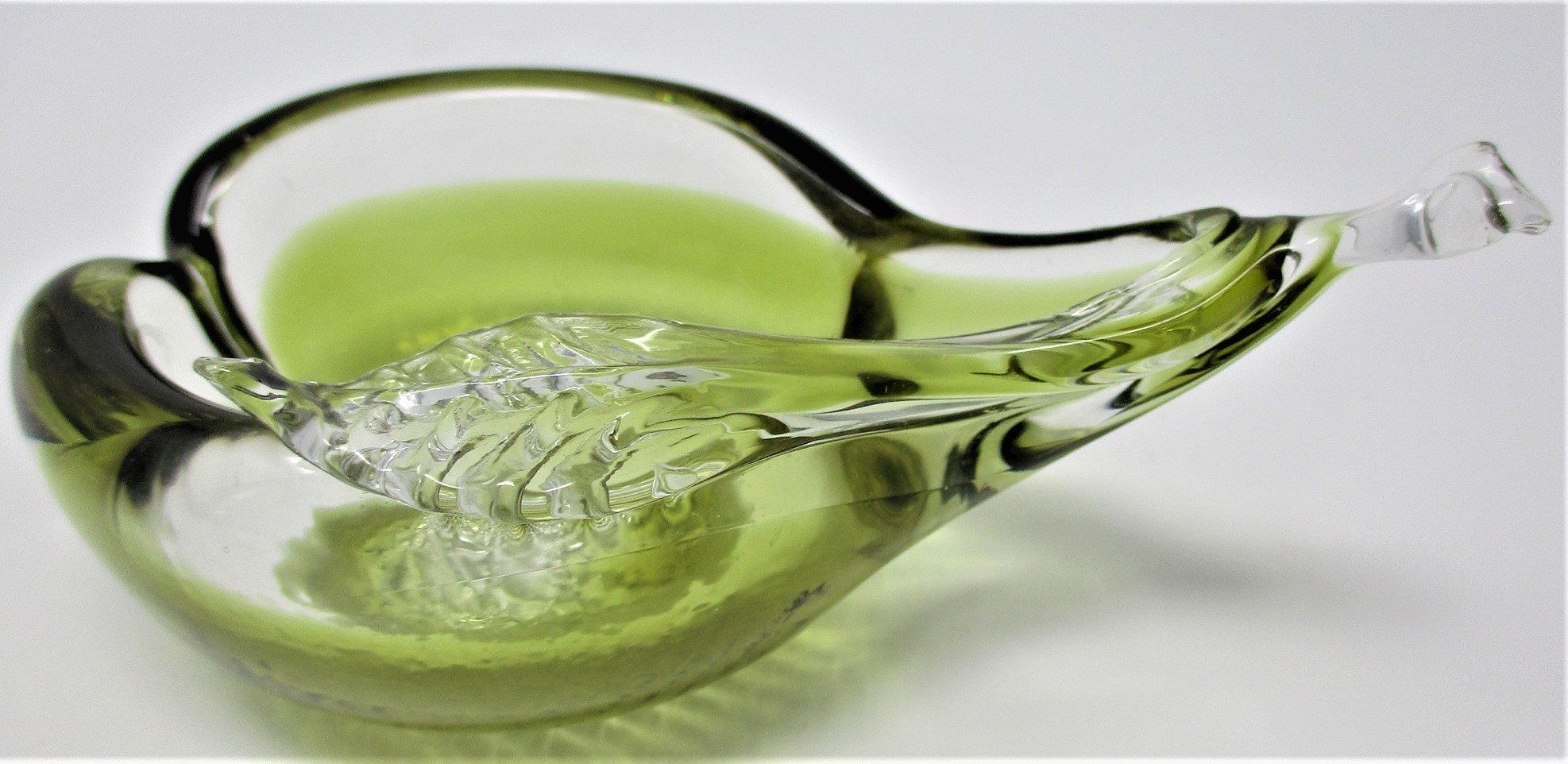
Again, note the absence of gold dust in the stem and leaf.
Applied clear crystal leaves and stem. With gold dust.
On the larger mouth blown Chalet fruit figurines and fruit bookends:
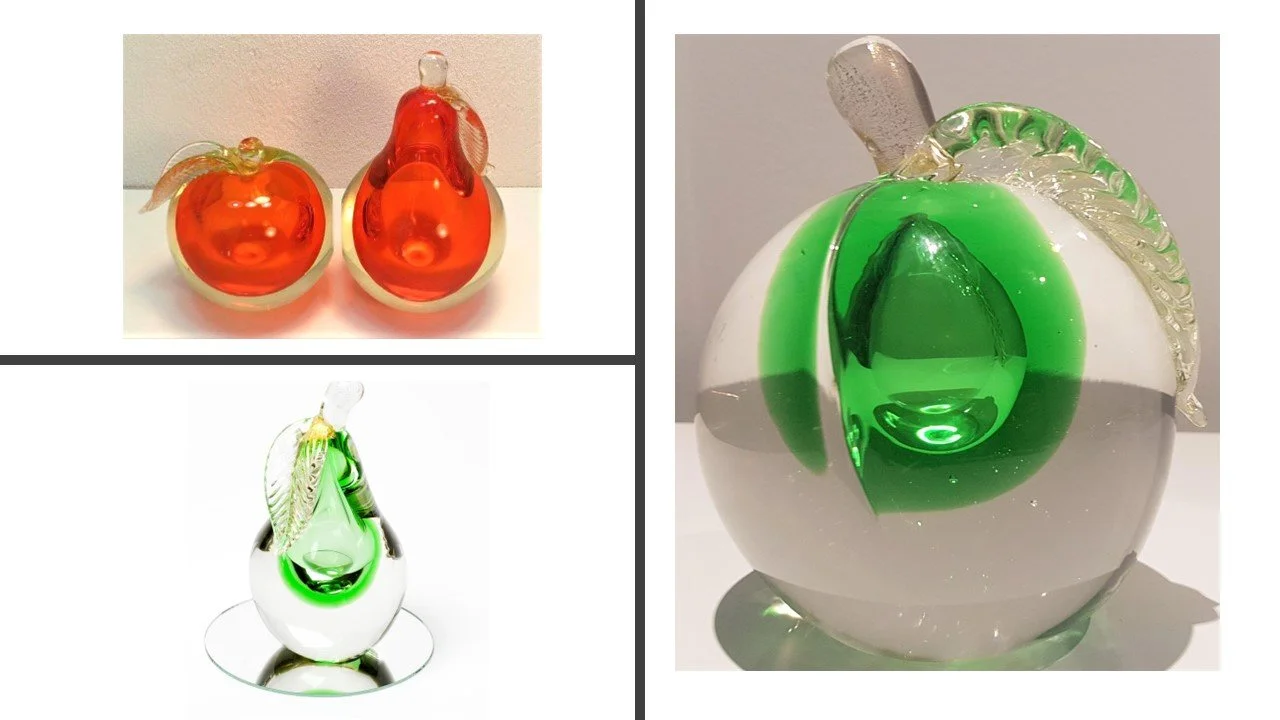
Set of apple with pear bookends at top left. From the collection of Troy Spielman. Photos of pear fruit figurine at bottom left and apple figurine at right courtesy of Deborah Patterson.
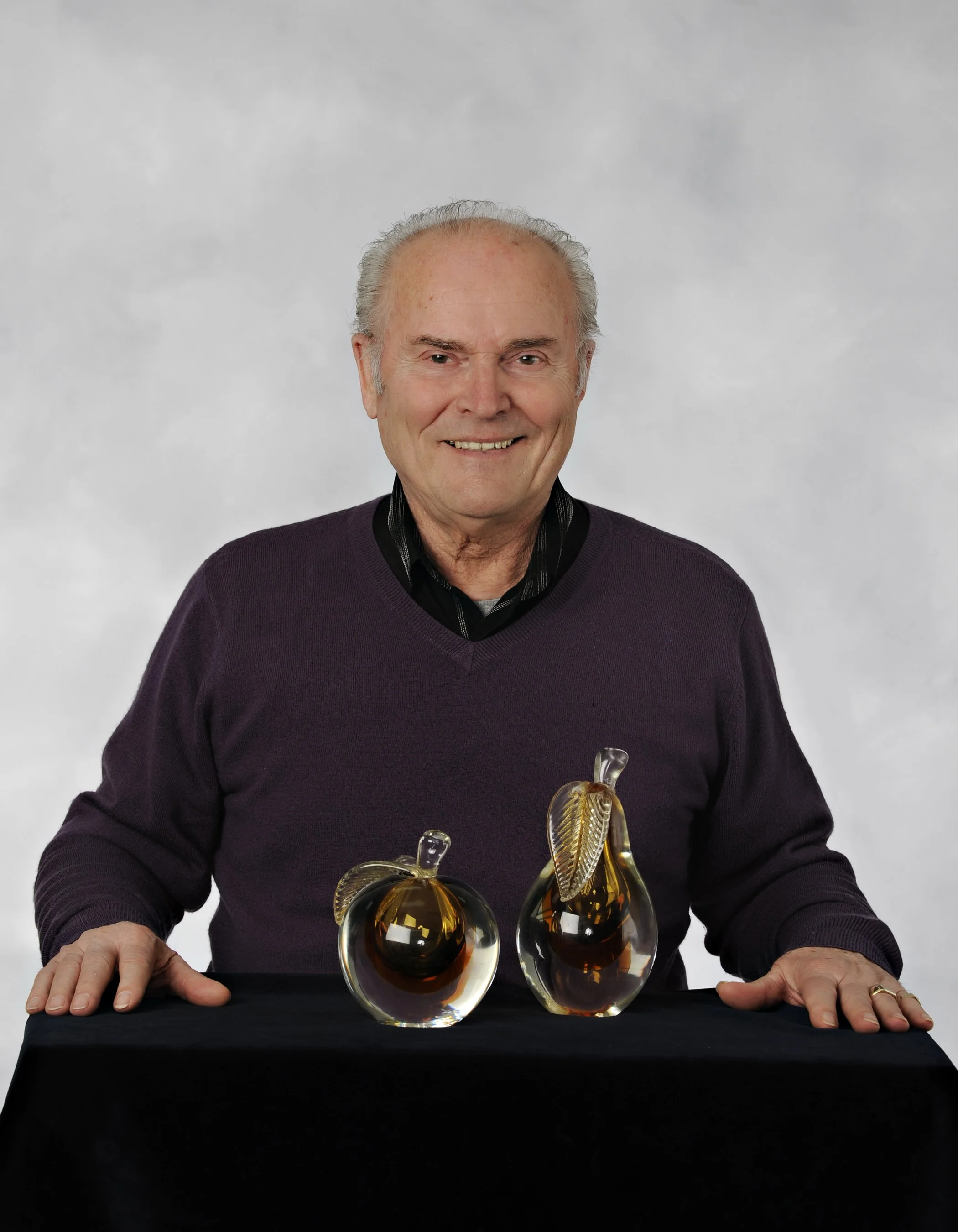
Chalet artist Gianfranco Guarnieri during a 2011 Cornwall photo shoot for “The Shapes and Colours of Chalet Glass” with a set of fruit figurines that he made for his father-in-law. These were quite a bit larger than the typical Chalet production sets.
A coloured applied crystal leaf has also been recently found!
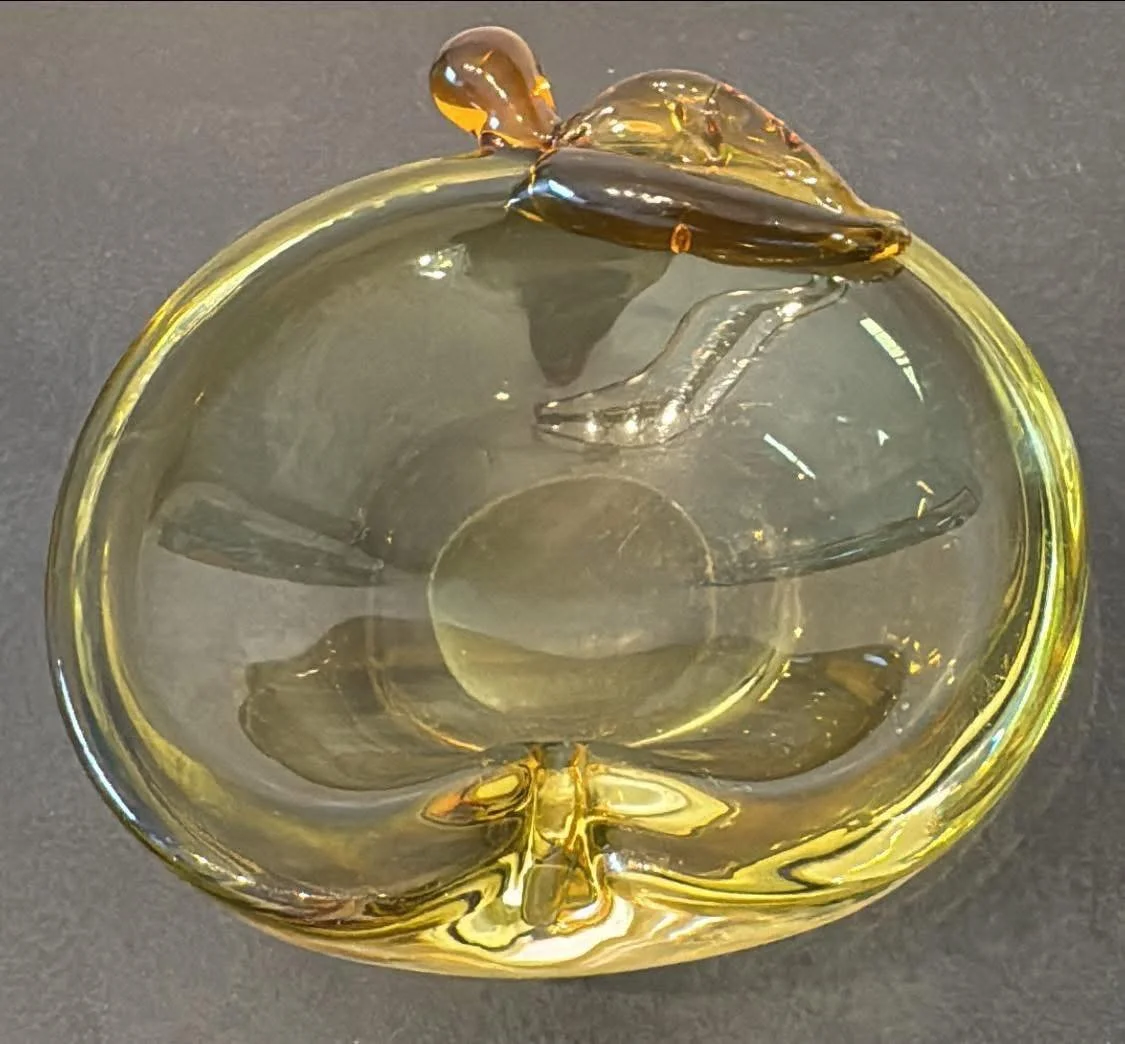
To date, the only known example of a coloured applied leaf on this style ashtray. From the collection of Laura Zamos.
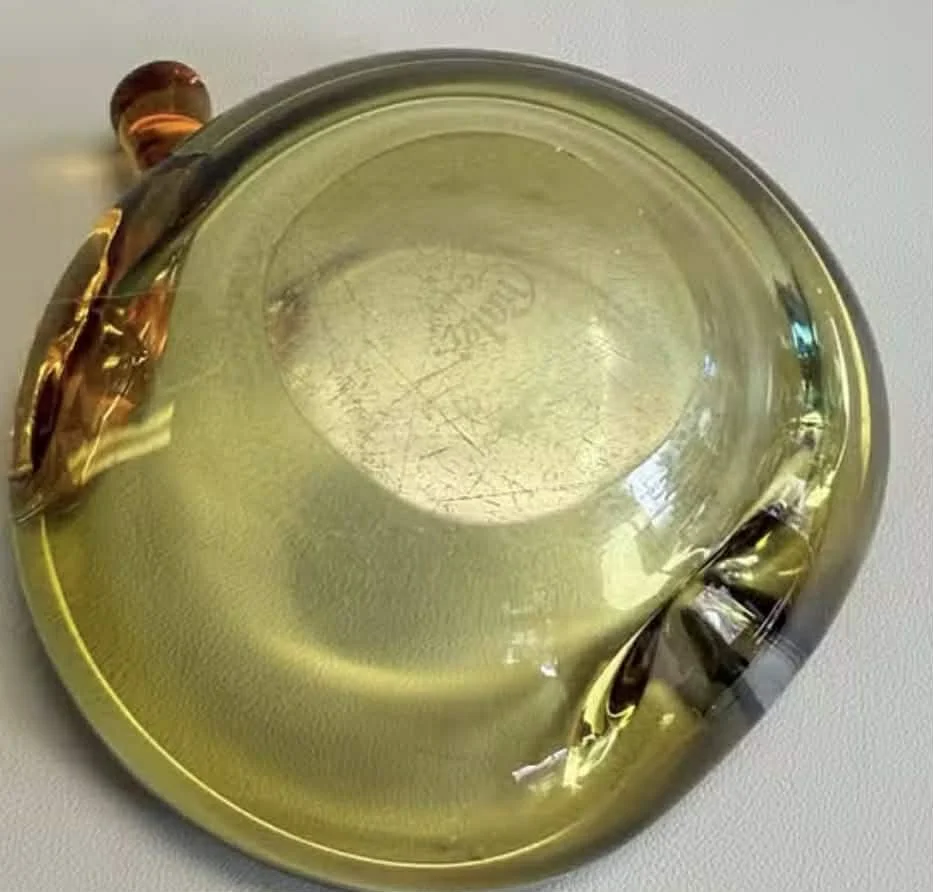
While the gold dust in these forms is always found in the applied crystal leaves, it may or may not be found in their stems:
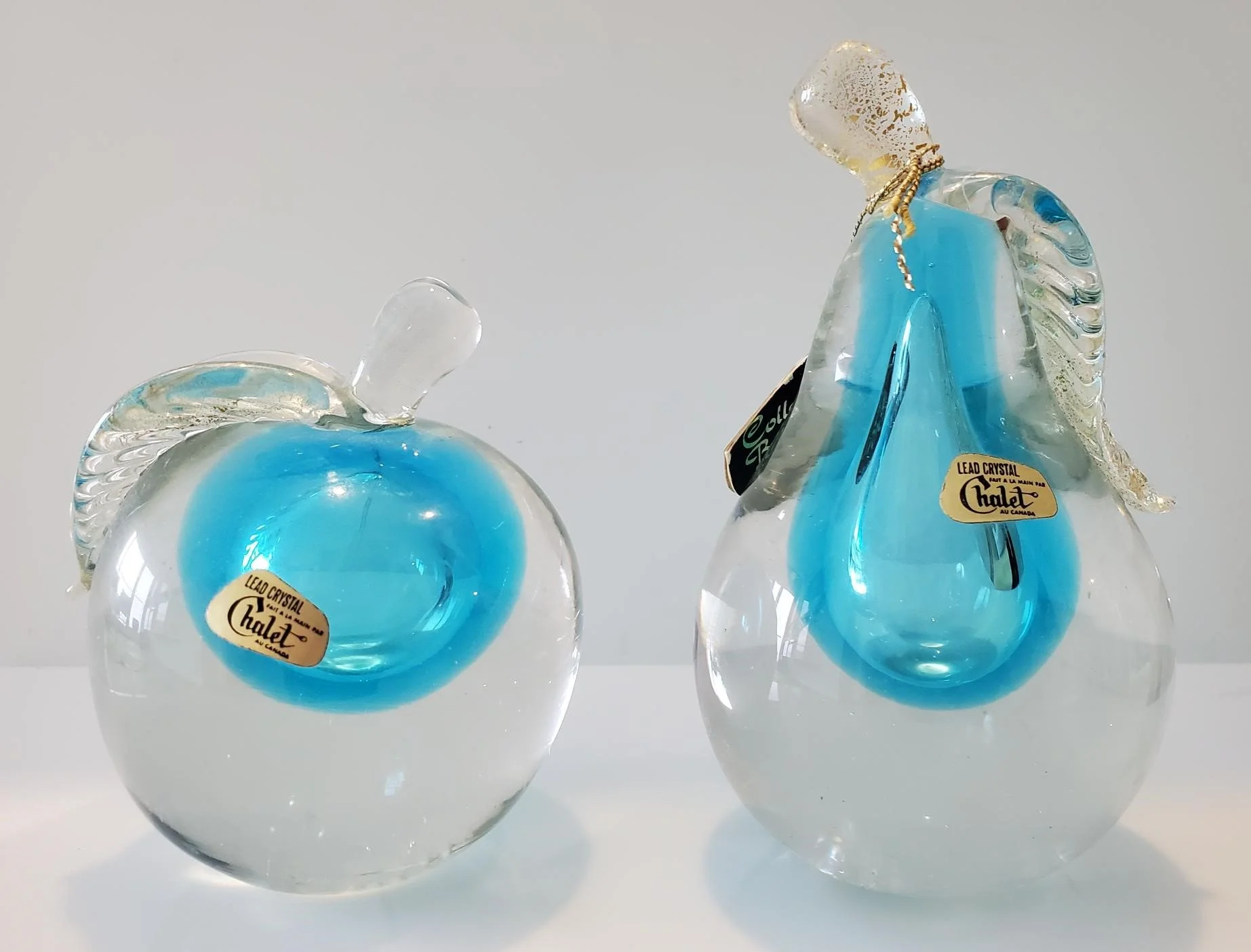
An exception! I always say, “Chalet is consistent in its inconsistency!” This large apple figurine does not have gold dust in its leaf:
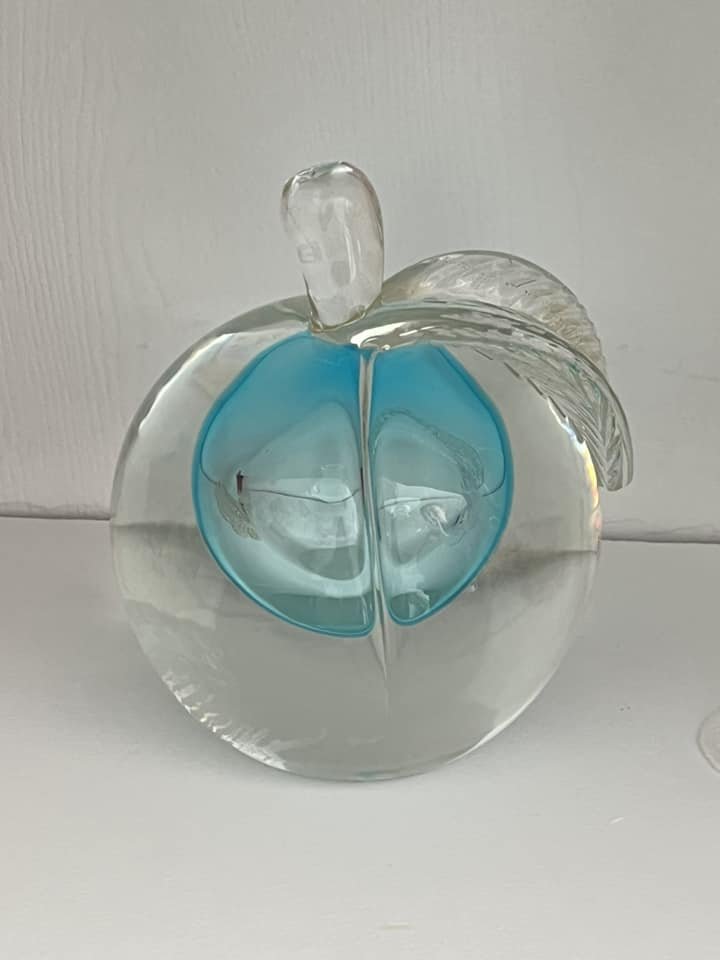
This is not the apple figurine shown directly above – that piece is from my personal collection and there is gold dust in its leaf. However, even though this apple is also blue, its leaf is not polivere d’oro. This apple figurine from the collection of Roses Jjak.
A Chalet special order – this set of pear bookends:
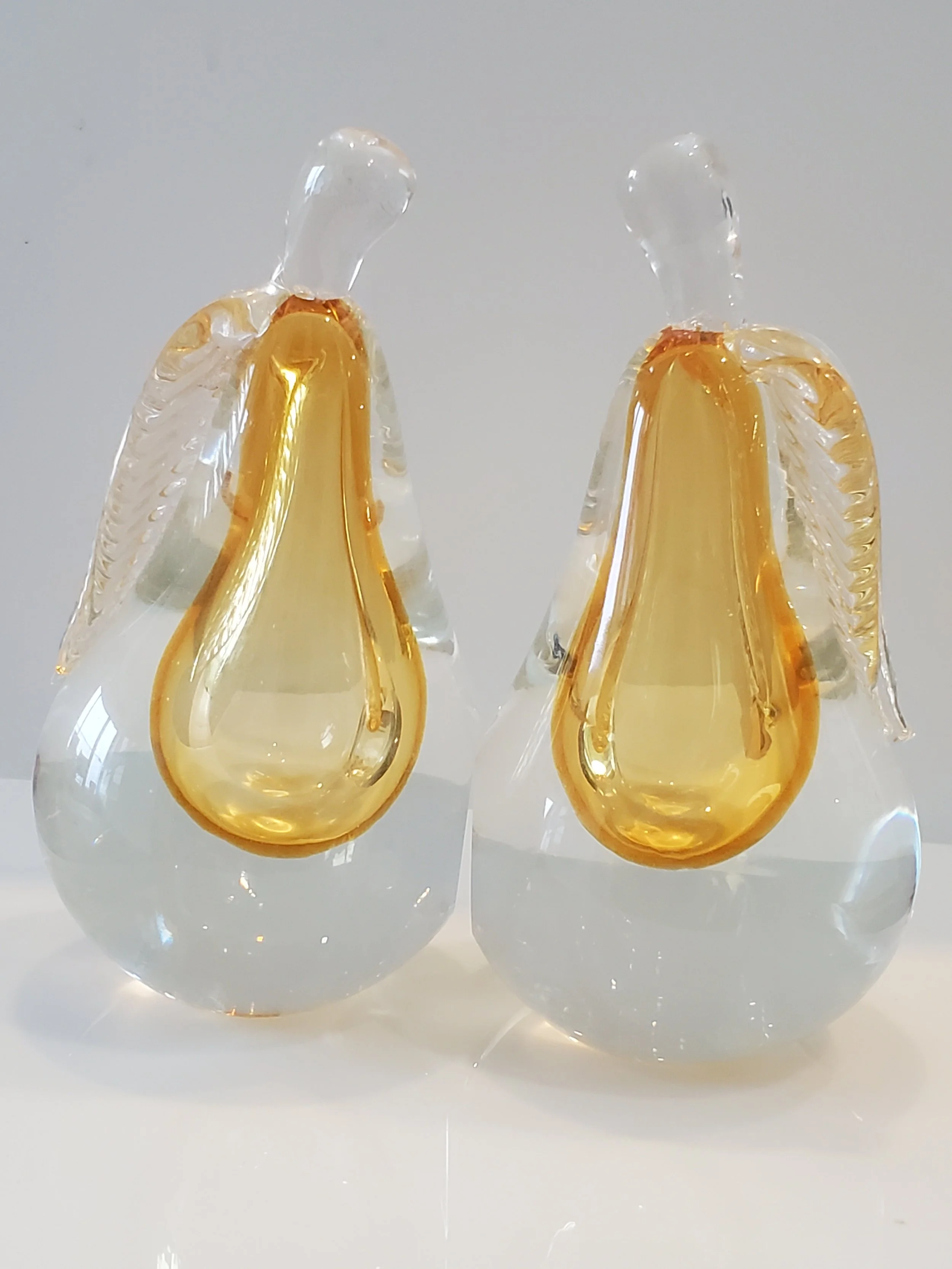
Both etched “Chalet Canada.” Chalet bookend sets are exceedingly rare. The set typically has both a pear and an apple as shown above. However, the original owner of this pair did not like it with the apple so ordered a set exactly to her liking directly at the Chalet factory. From my personal collection.
Coloured stems and leaves are exceedingly rare.
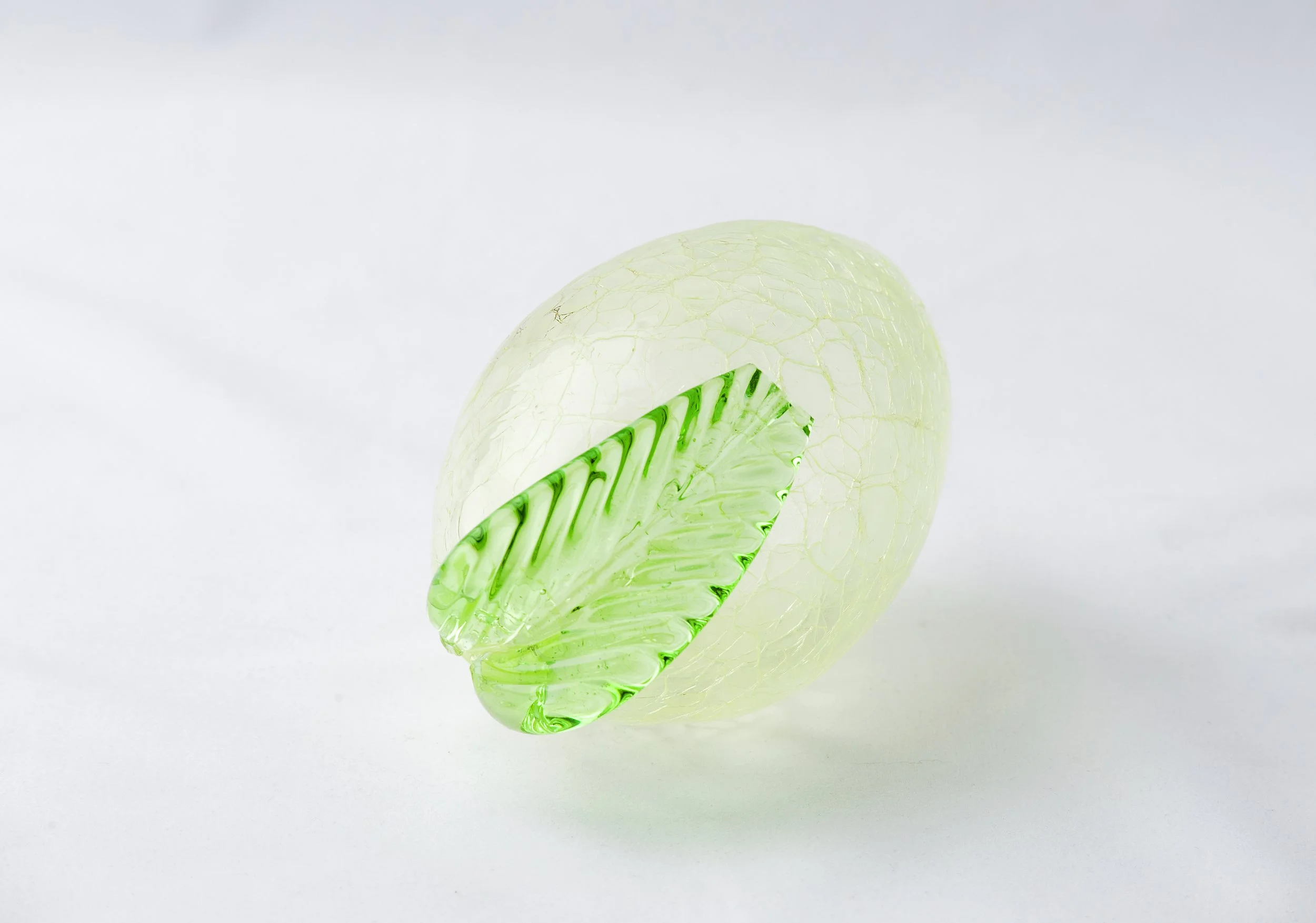
The Chalet lemon shown above. Please note that the leaf tip is damaged.
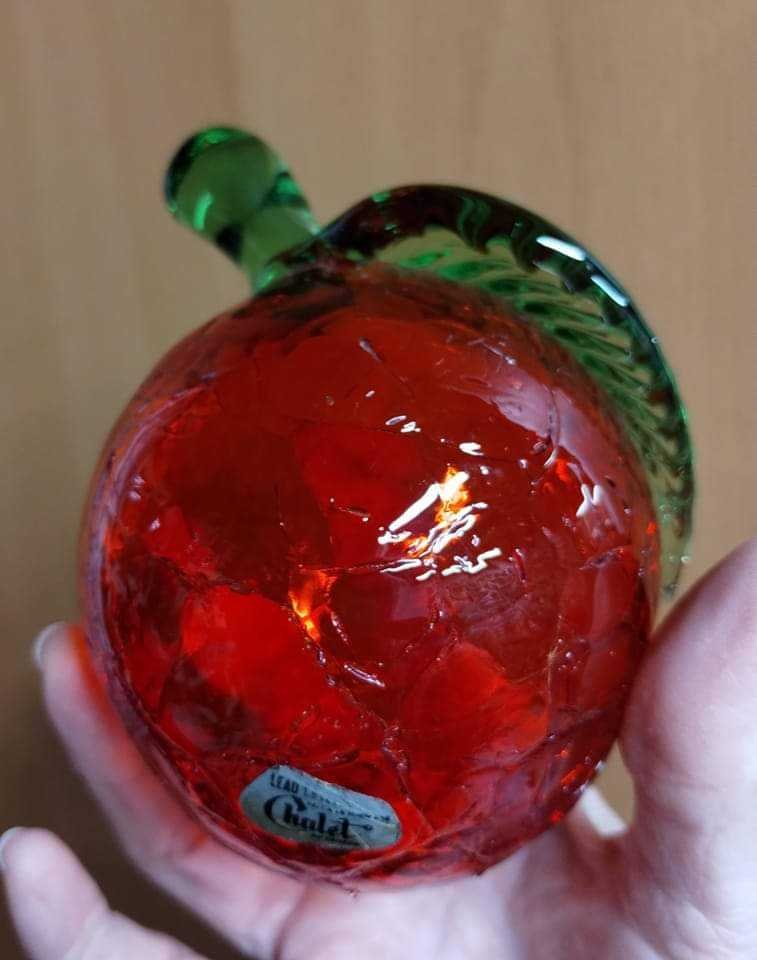
This mouth-blown Chalet apple is extremely rare. Not only does it have a coloured leaf and stem, the surface of the form is also “dappled.” From the orchard of Jo Highland.
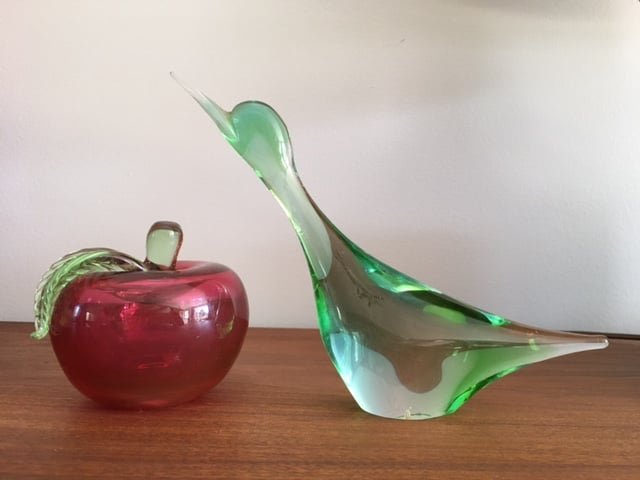
This apple figurine has a coloured stem and leaf as well, but the skin of the piece is not textured. From the collection of Lou Ann Steuik.
Applied “petal” crystal feet.
To date, these have been found in two different shapes:
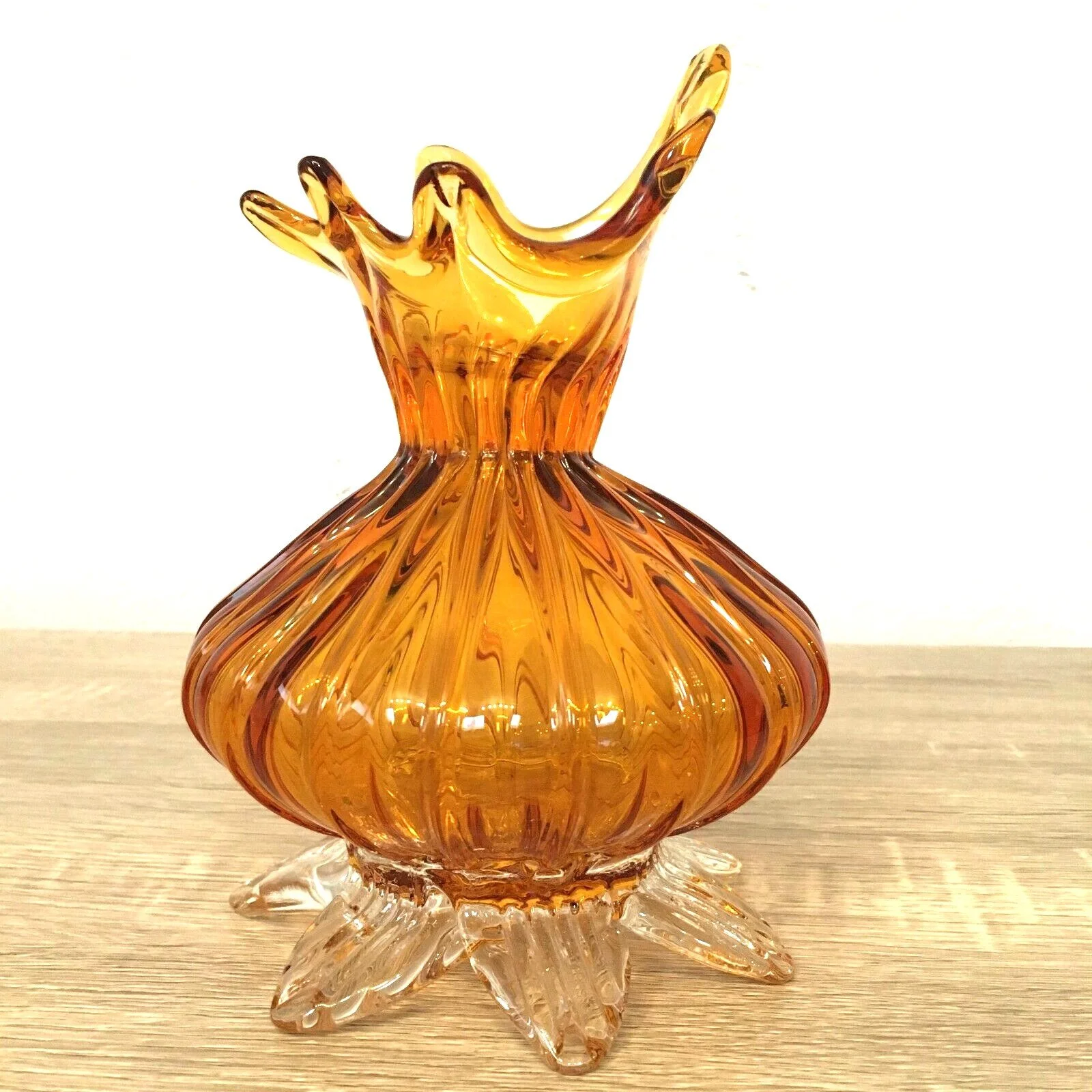
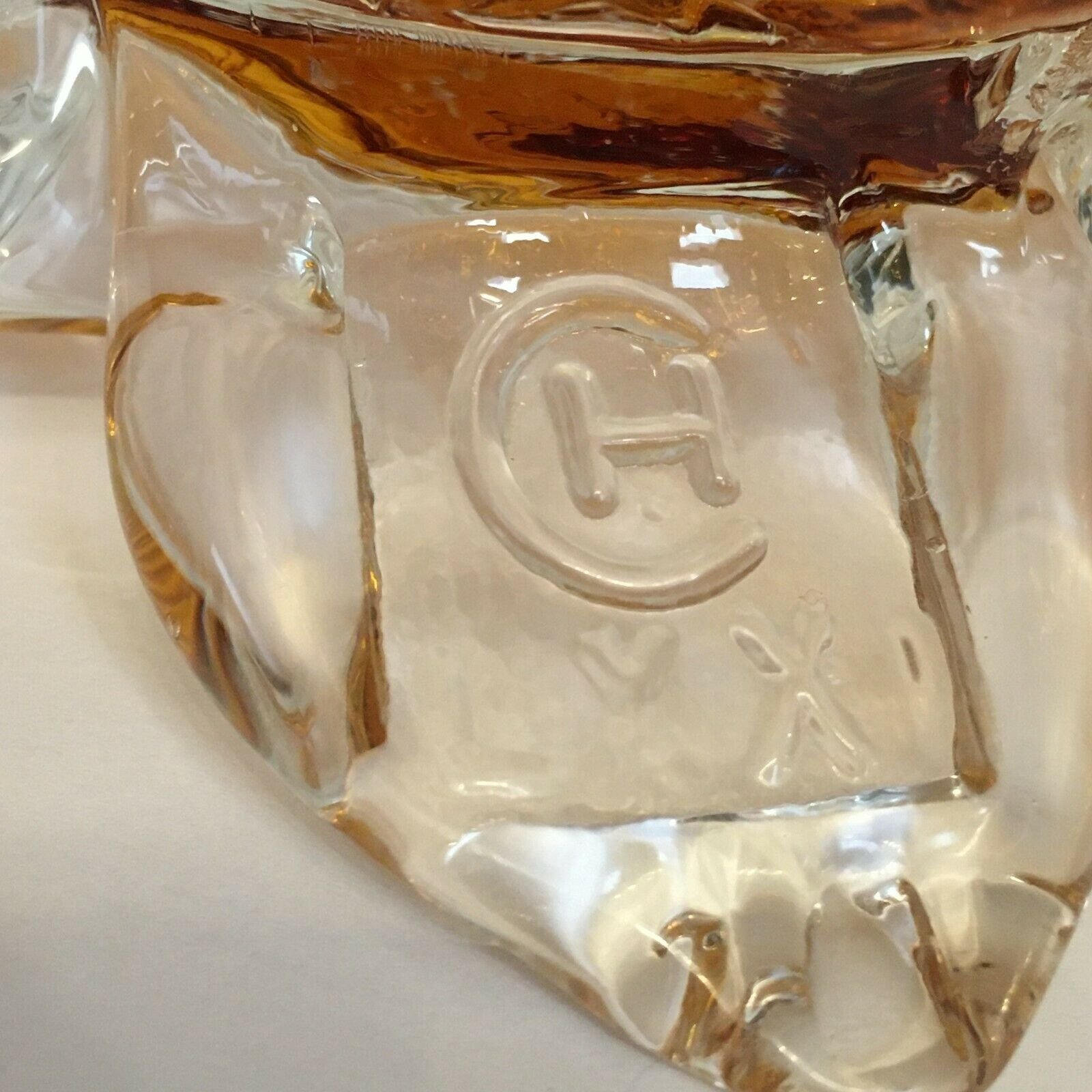
This vase happens to have a rare Chalet “Canadian Heritage Glass” line branding – an impressed CH with either 1970 or 1971 impressed into the upper surface. Please see “Chalet Crystal Clear Continued” page 137 in the chapter “Chalet Artistic Glass branding and Product Lines” for more detailed information.
Another style of feet. Rounded.
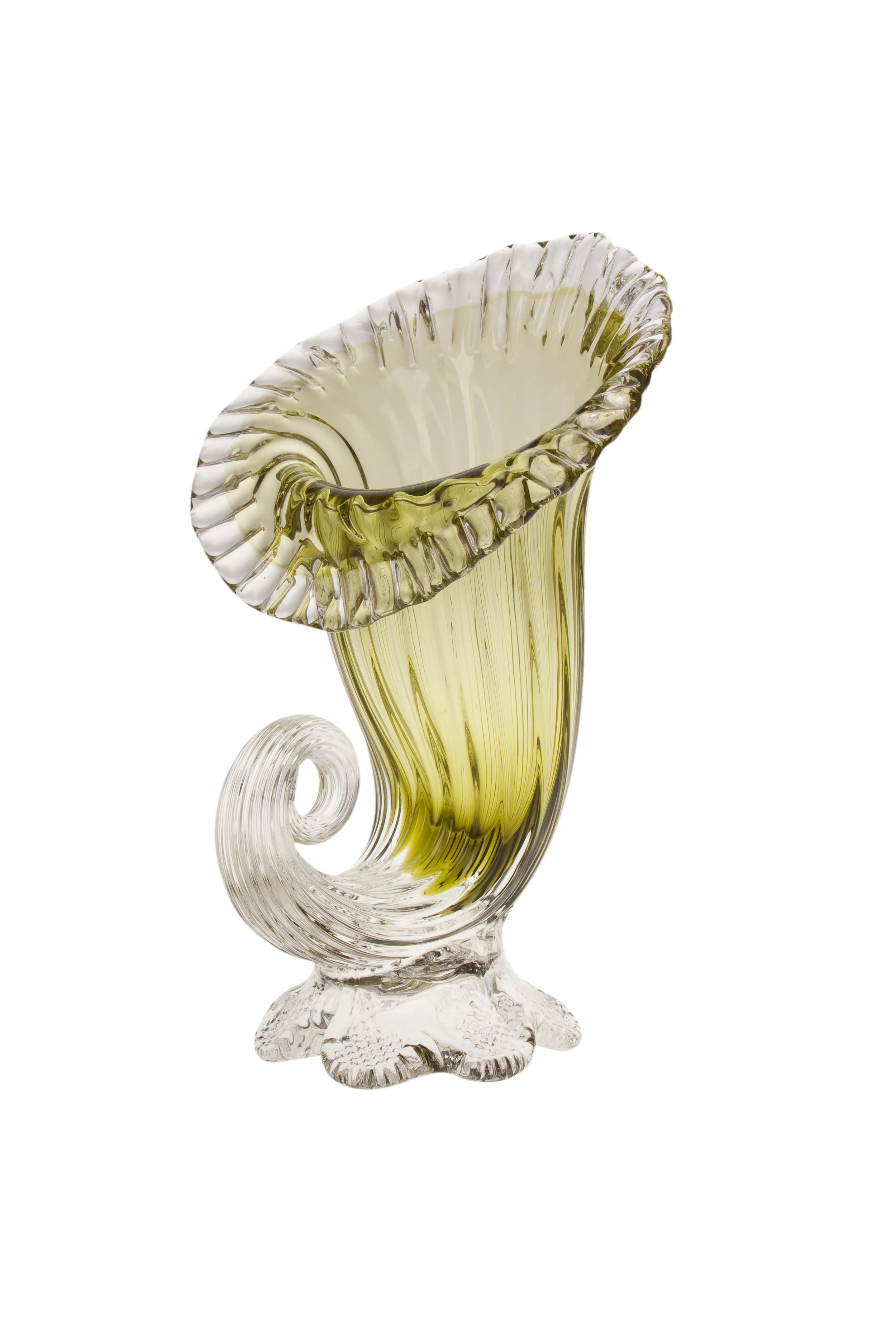
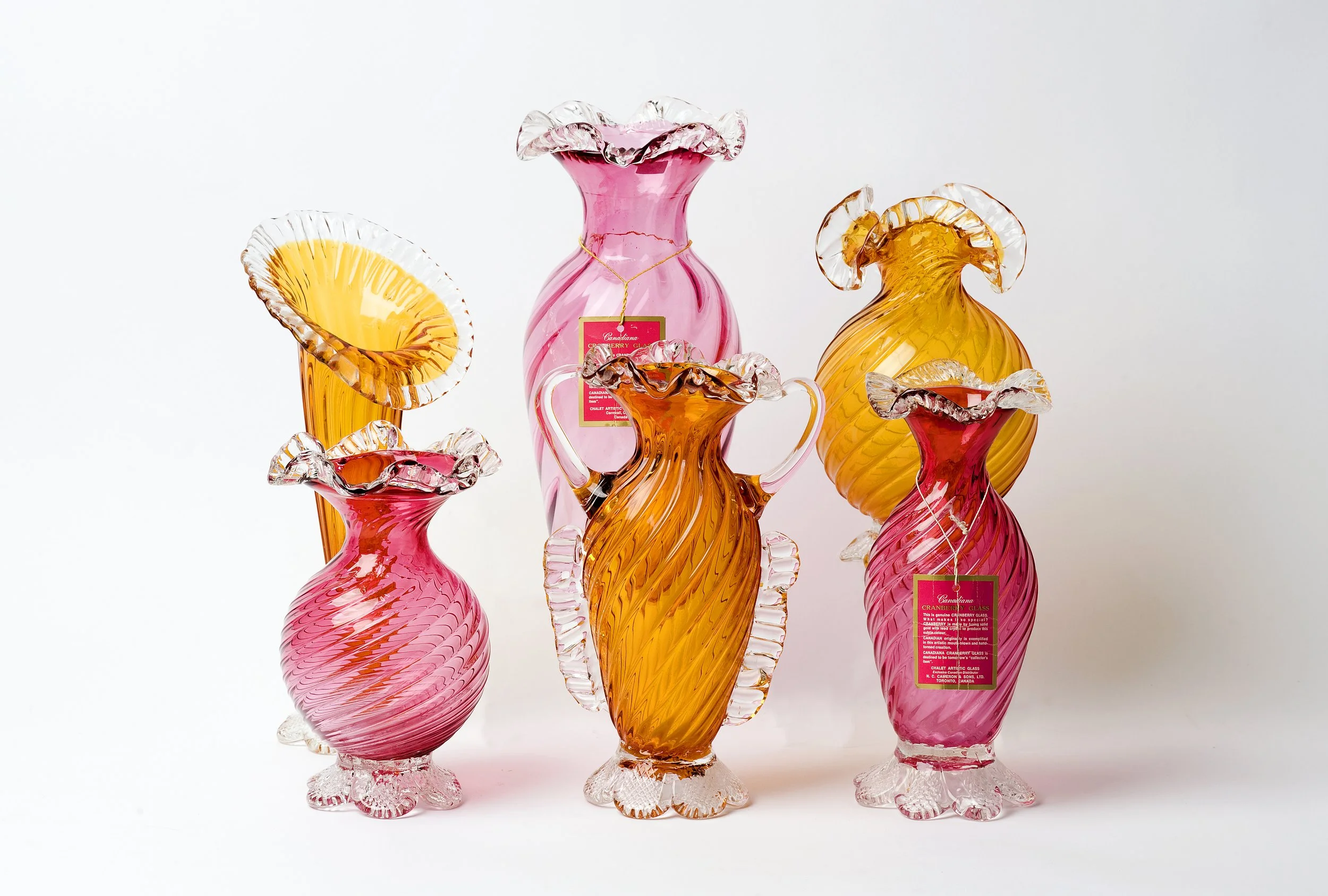
This style is the more frequently seen.
Applied feet were also used on the hand-molded pitchers, bowls and centerpieces:
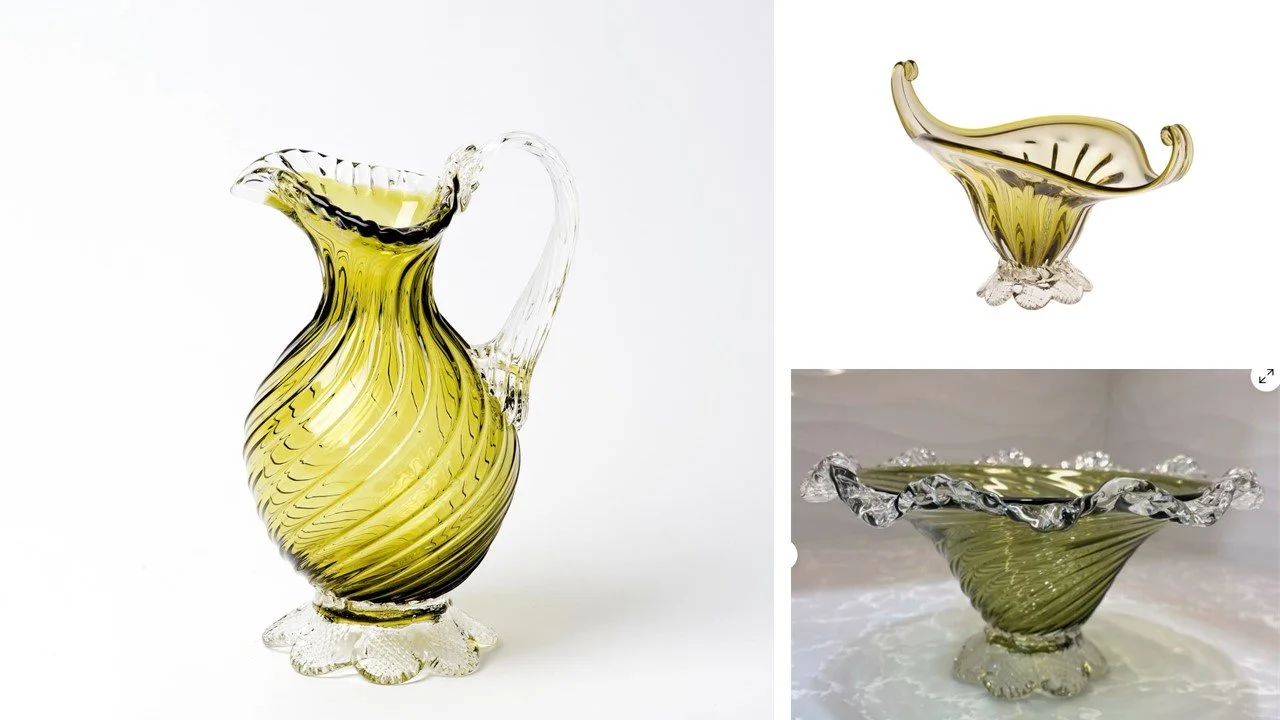
Although, at present, we have found no gold dust in any of the pieces with either style of applied crystal petal feet, we have found one of the styles in opaline.
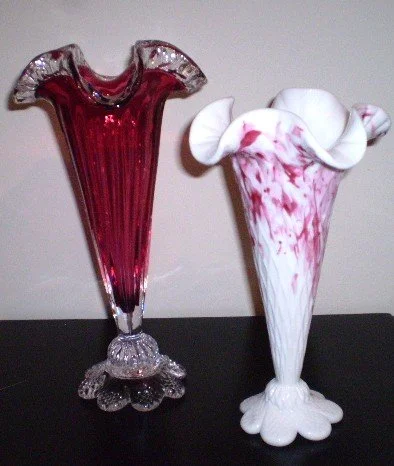
From the collection of Melissa Patterson.
Applied clear crystal throat ruffles, side frills, and neck threads.
Throat ruffles:
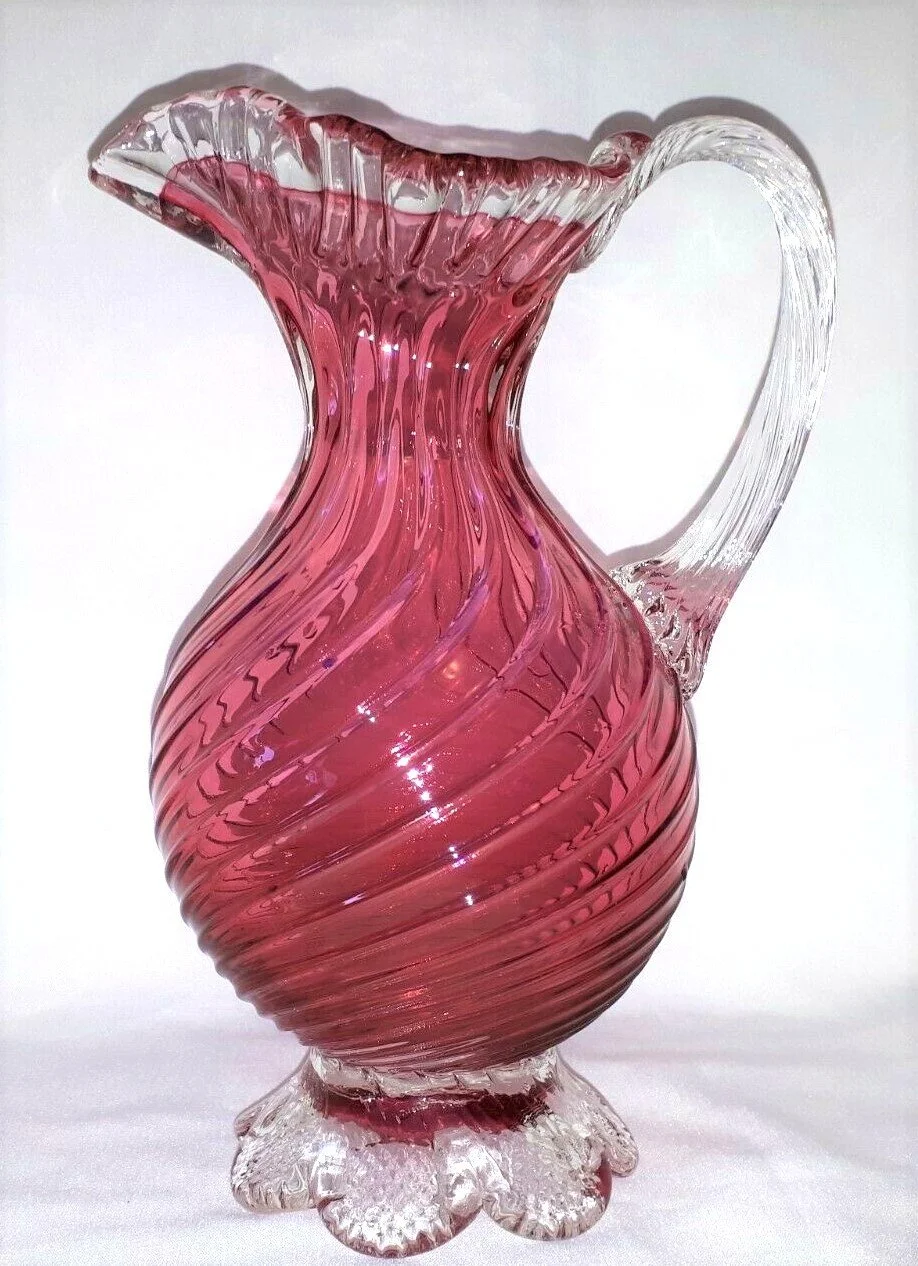
As well as a throat ruffle, this “pretty” pitcher also has an applied petal foot pedestal base and an applied textured clear crystal handle.
Side frills.
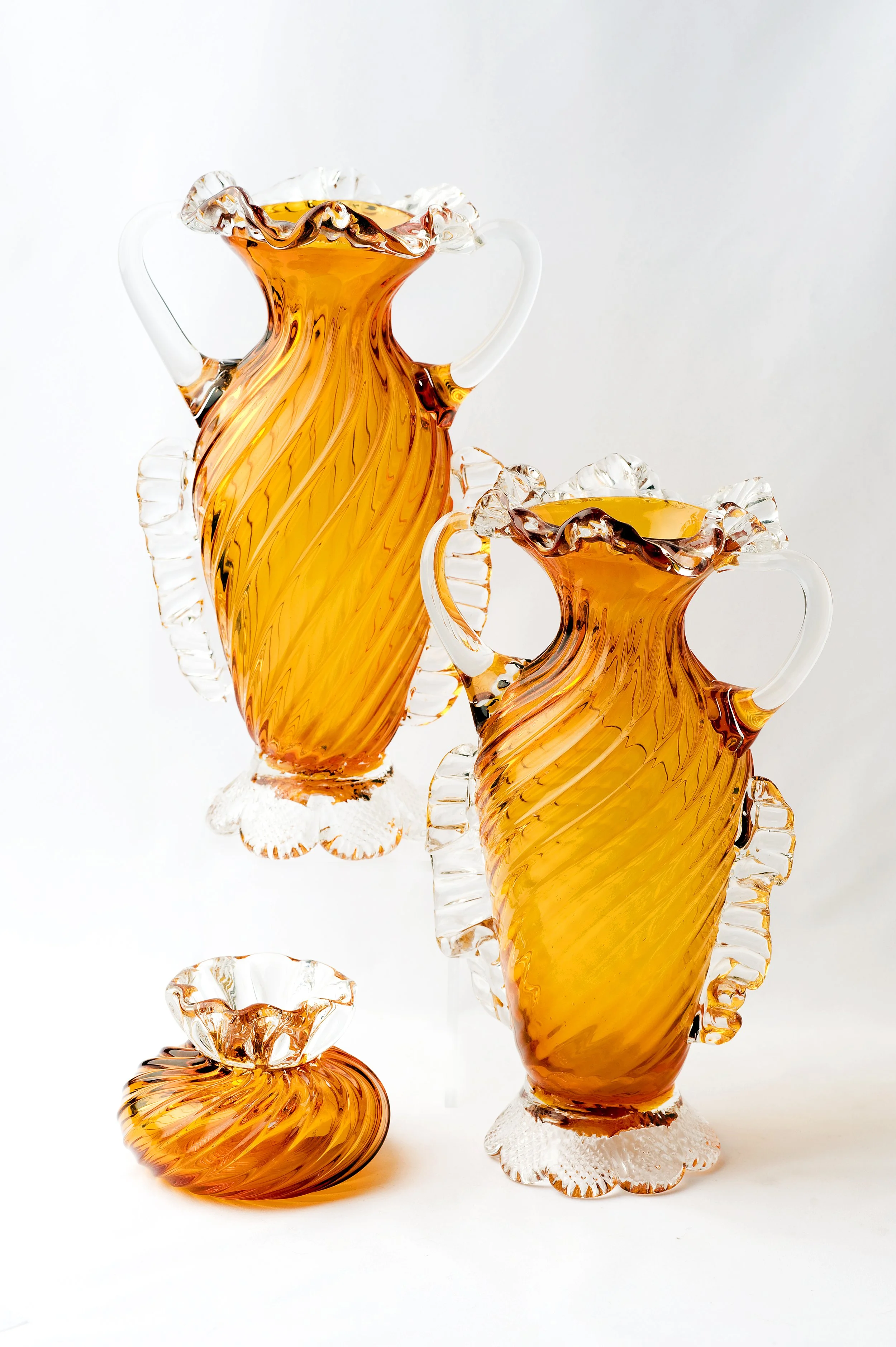
This vase set is fully decked out! Throat ruffle, side frills, petal feet and smooth clear crystal handles. The “powder puff” candle holder is beautifully finished with a clear crystal ruff.
While the crystal throat ruffle is most typically clear crystal, this “Never say Never” piece has been found:
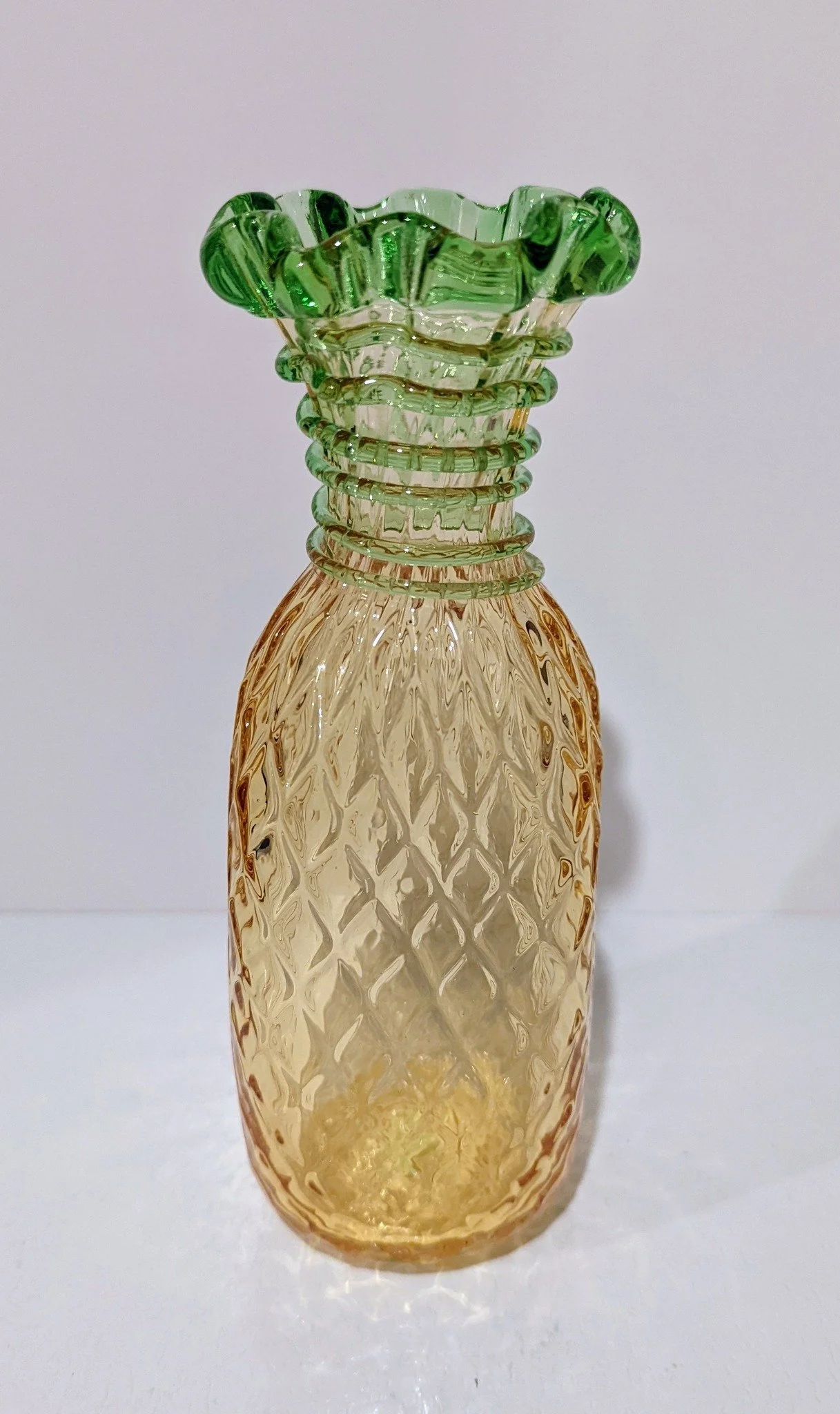
Not only is the throat ruff coloured but the vase throat is enhanced with coloured crystal “piping.” Dusted by Kevin Hall.
More pieces with throat piping/threads.
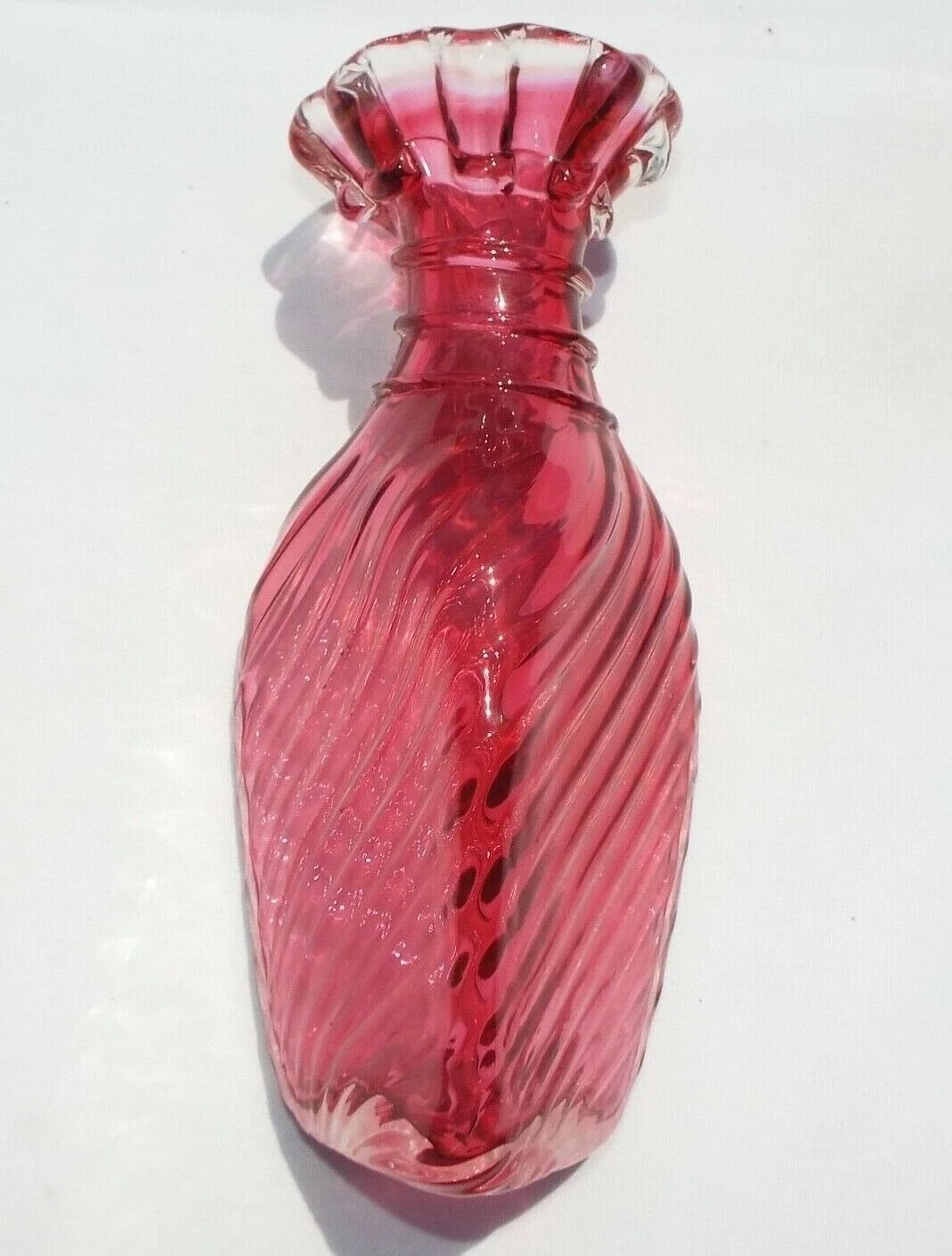
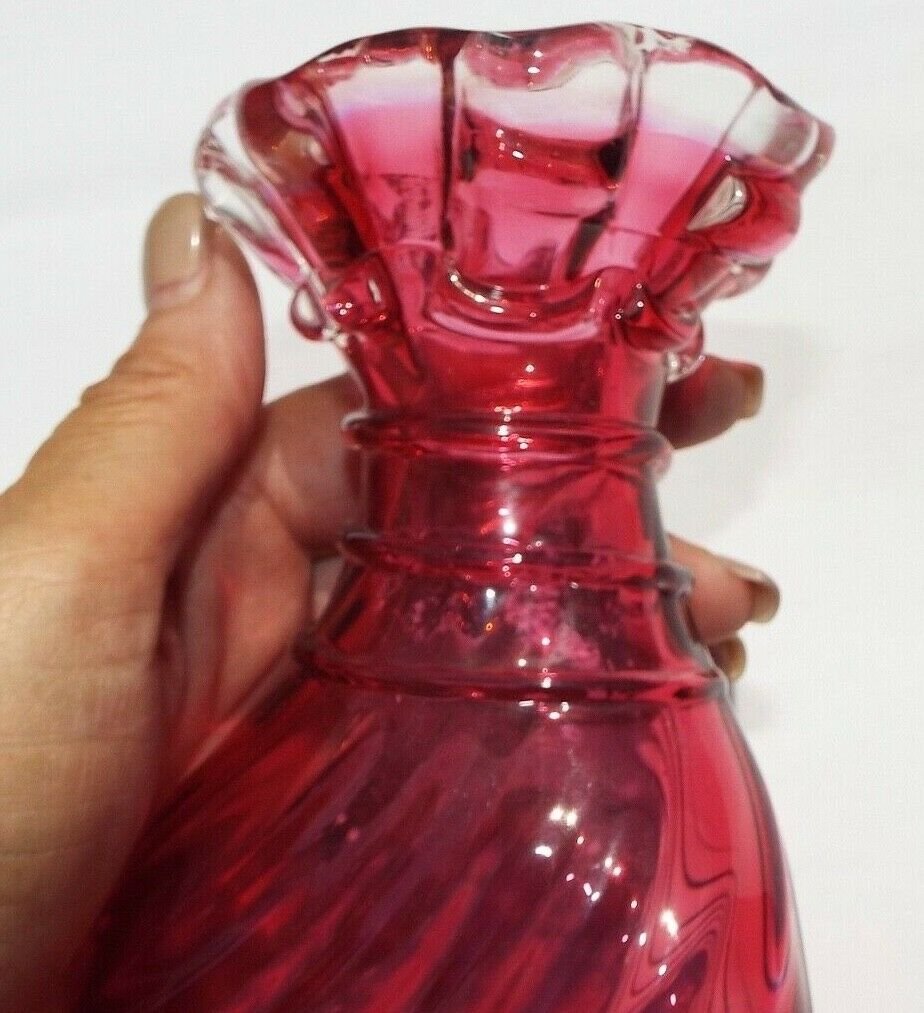
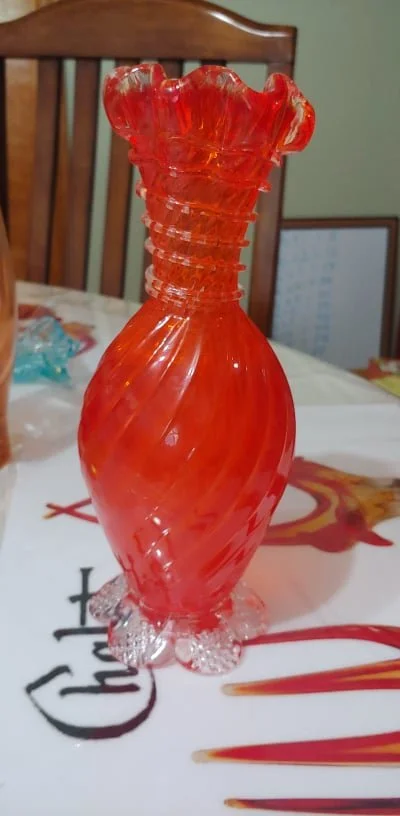
From the collection of Jeremiah Shaver. This is a very rare piece as its colour is unusual, the opaqueness of the glass is quite atypical and the throat threads uncommon.
Many of the Chalet hand-blown and hand-molded baskets are excellent examples of Chalet “making it pretty.” Let’s look at the different styles of applied basket handles first.
The clear crystal. Clear crystal handles can be either smooth or textured:
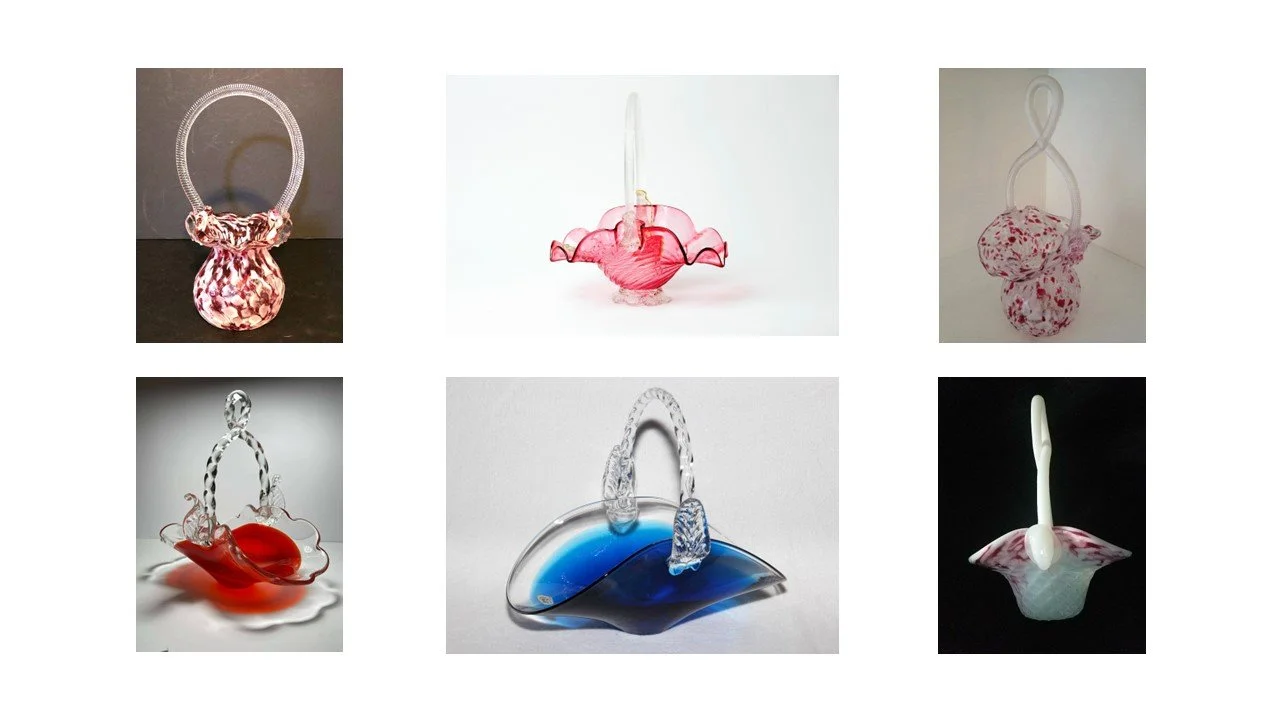
The basket handles are typically textured. However, there are exceptions – see handle of basket at bottom right. They may be in a “twisted rope” (bottom left and top right) or a “hoop” style (top left and middle). Blue “bridal” basket at centre bottom is from the collection of Bob Burgess.
A closeup of an arched, textured “hoop”:
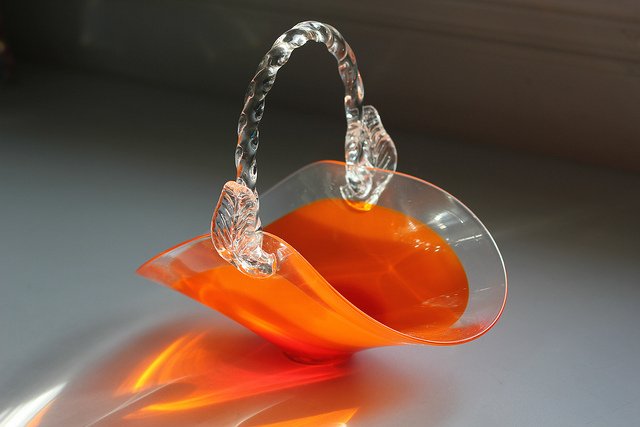
Very rare colouring in this style. Courtesy of the Zhao family.
As so clearly illustrated in this incredible grouping, many basket handles could also be smooth:
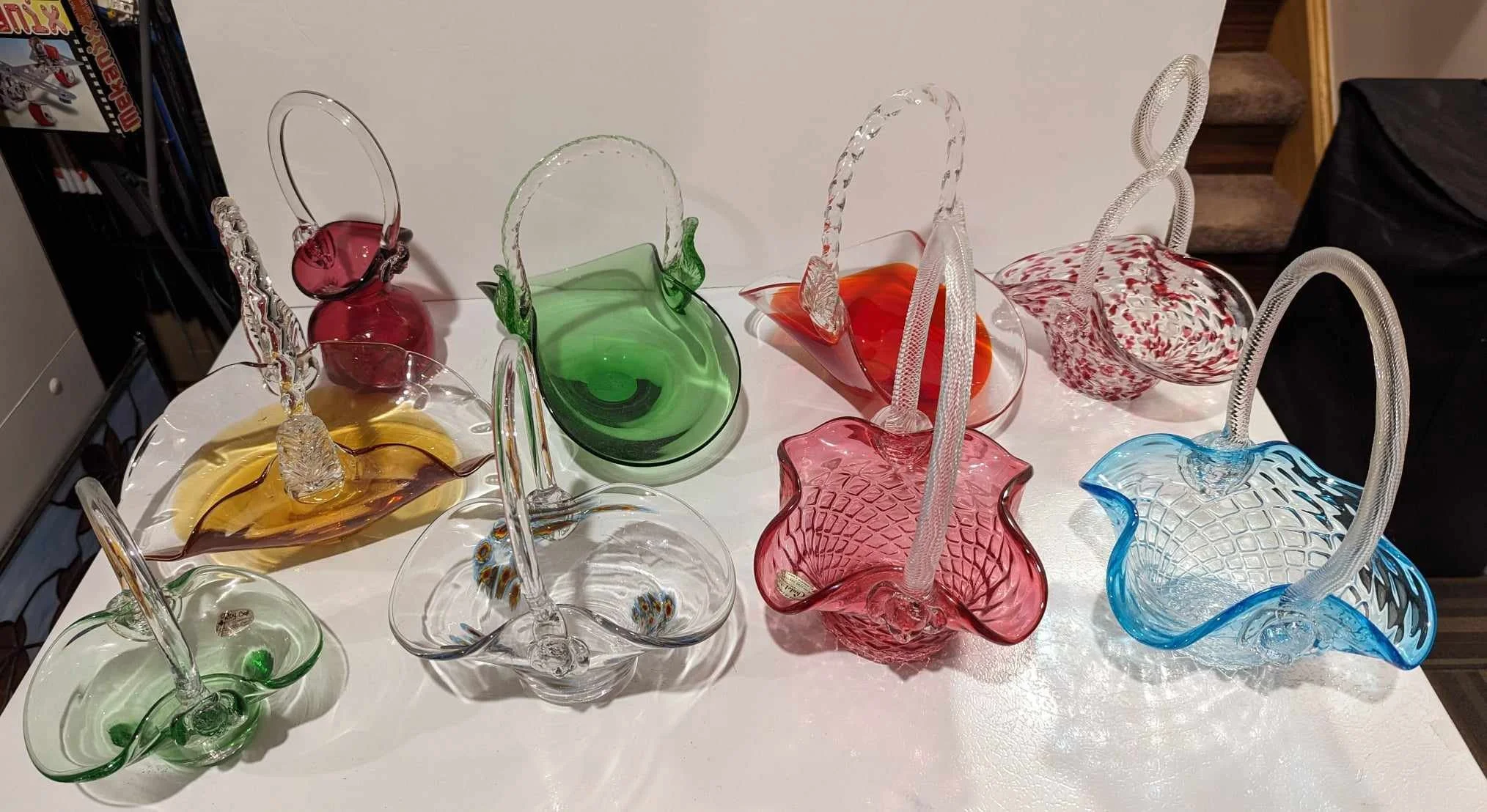
Just a few pieces from the amazing collection of Kevin Hall.
As with the applied crystal feet, we have not found any handles that contain gold dust, but we have found opaline handles:
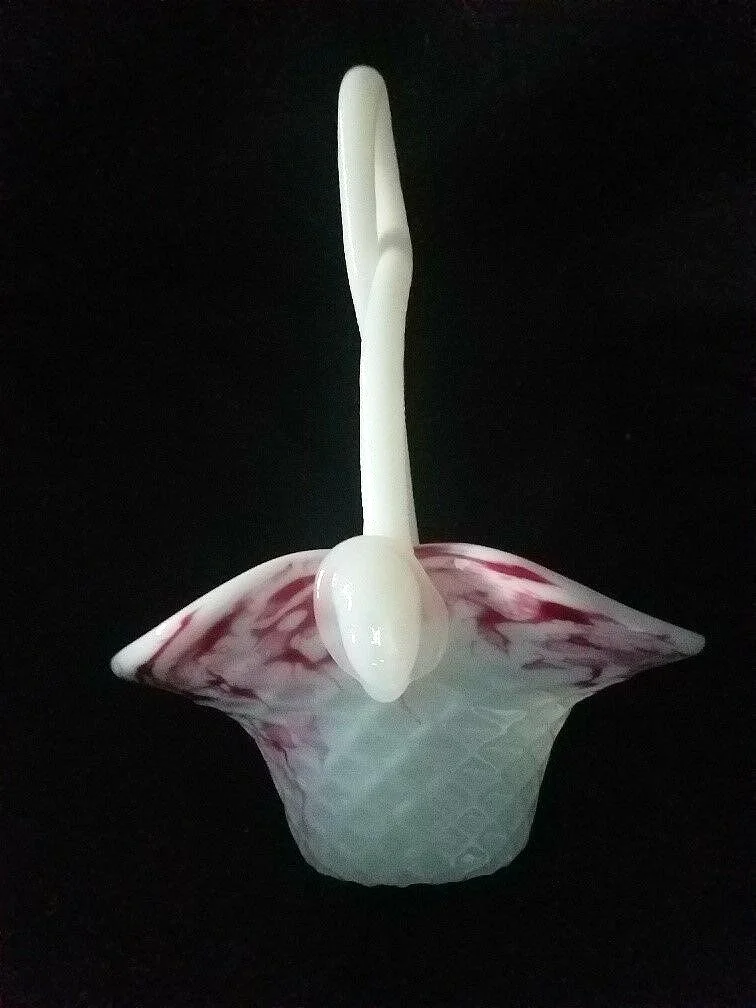
Clear crystal applied handles could also be found on other Chalet forms.
Tableware. This “End of Day” cream and sugar set is exceptionally rare:
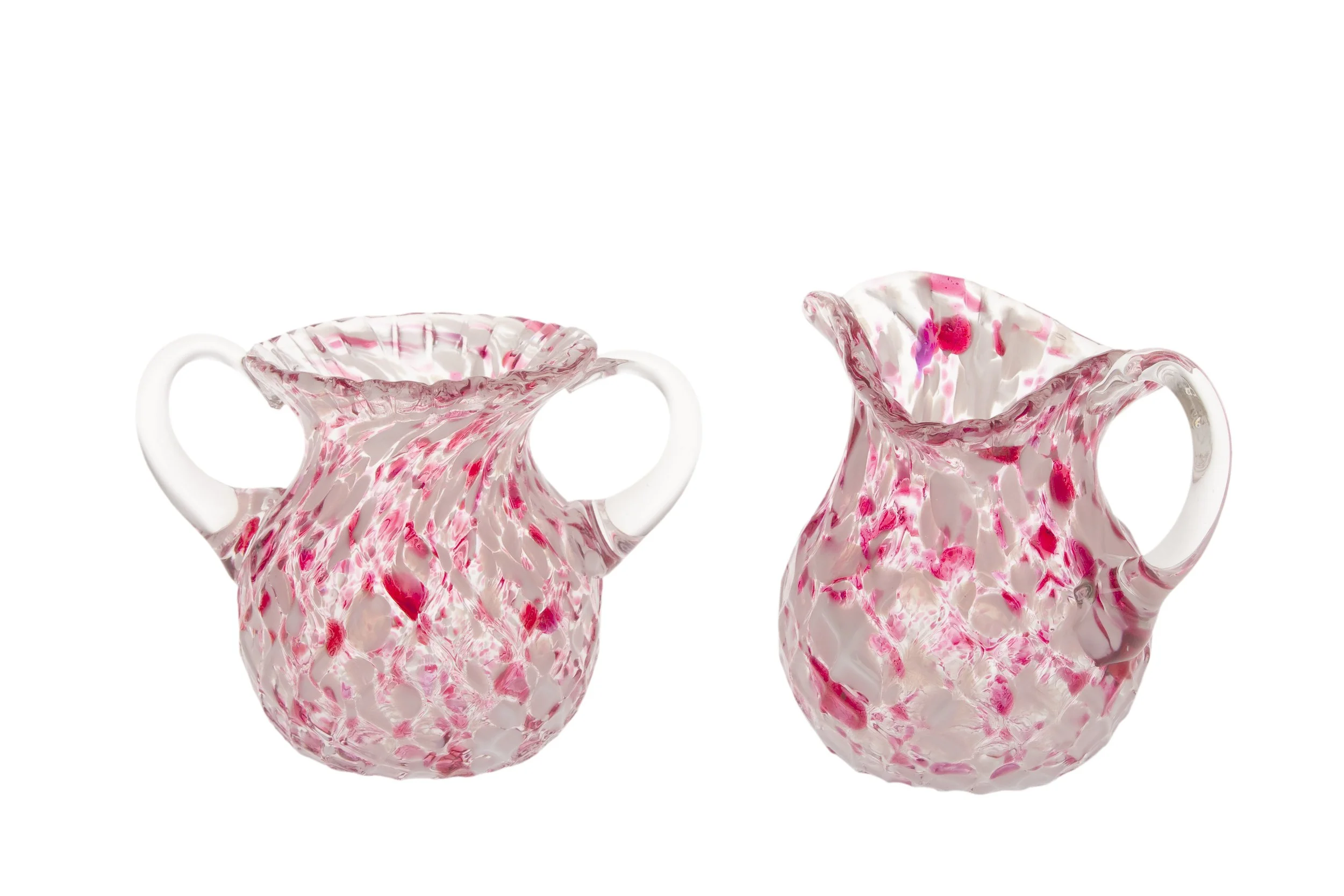
This “End of Day” cream and sugar set is exceptionally rare. Photograph - Deborah Patterson.
Handled pitchers:
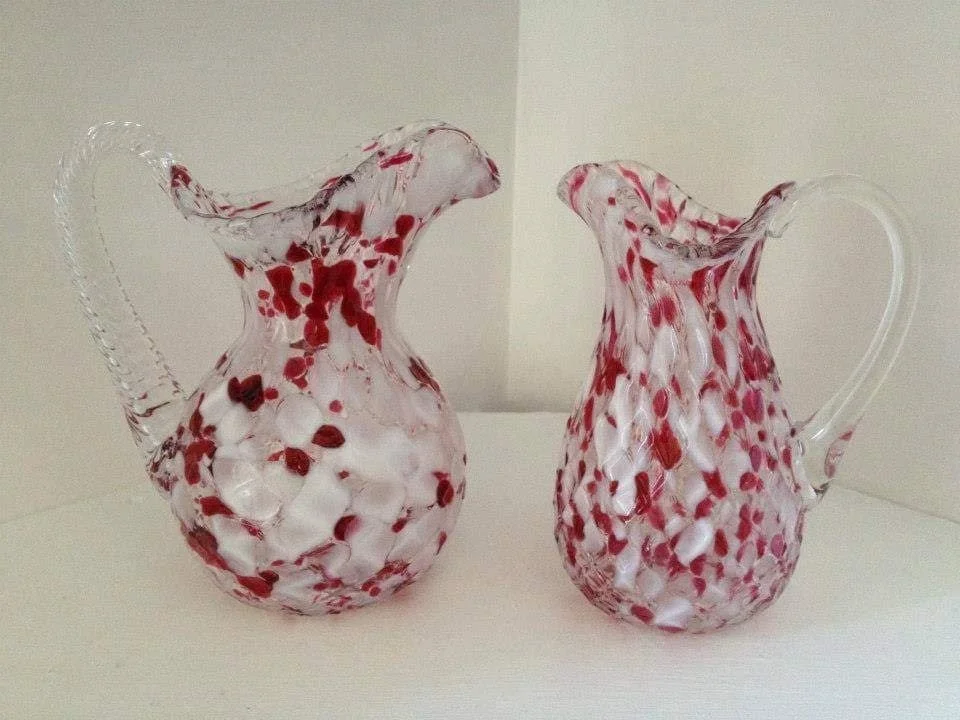
Both a textured and a smooth surface handle.
The Chalet bells are also forms found with applied clear crystal handles:
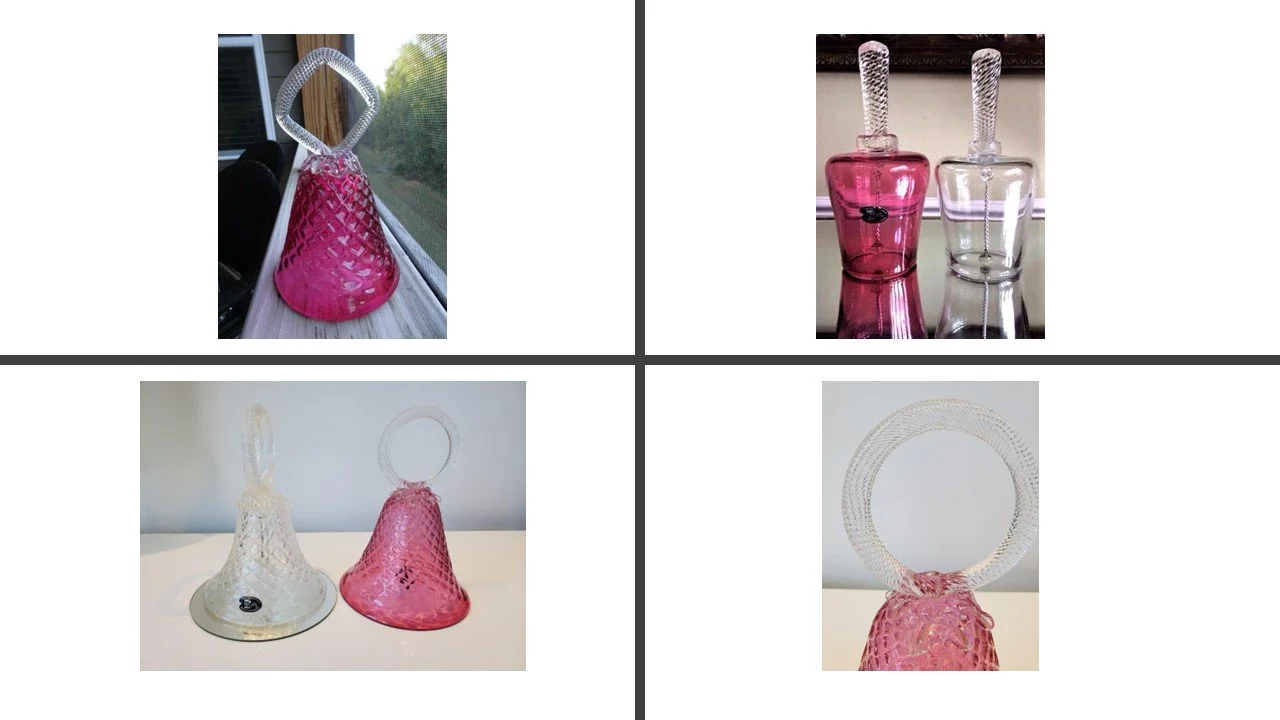
Chalet basket handle attachments are just as decorative as the handles.
We have found 4 different styles – the Sergio Pagnin designed face in either clear crystal or opaline (more details follow below), two styles of leaves (clear crystal and coloured) and a circular raised dot attachment.
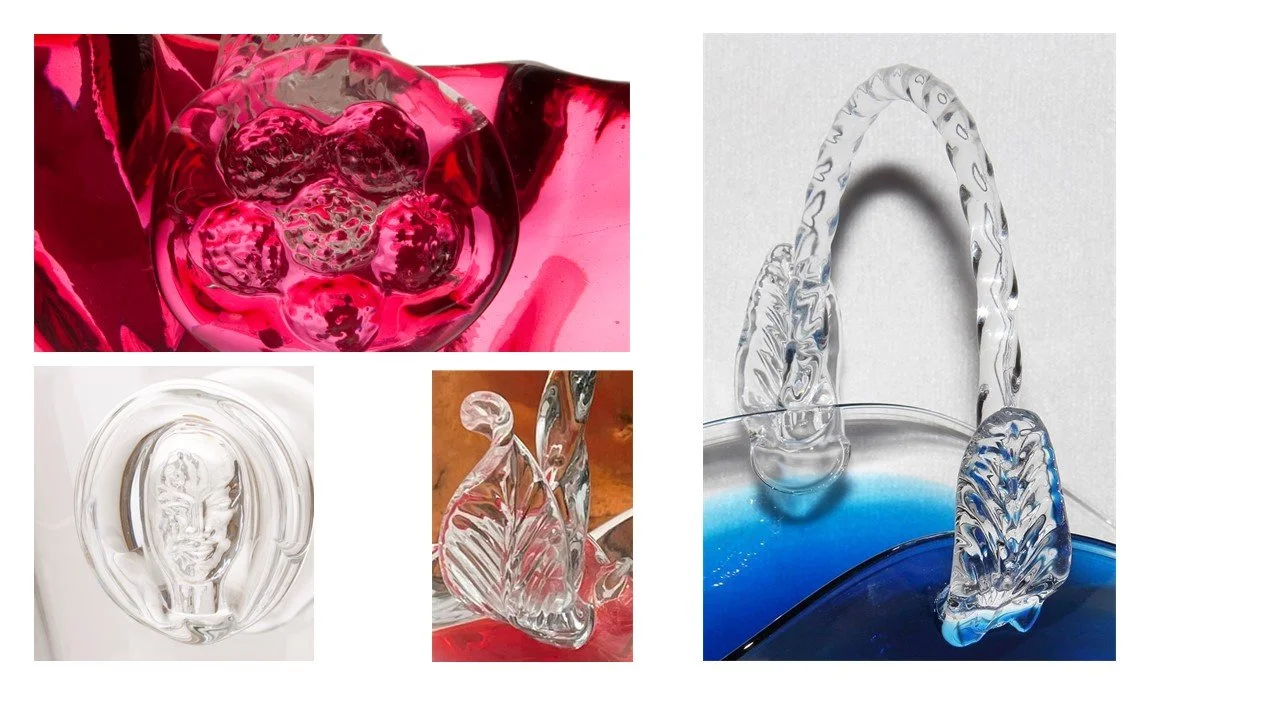
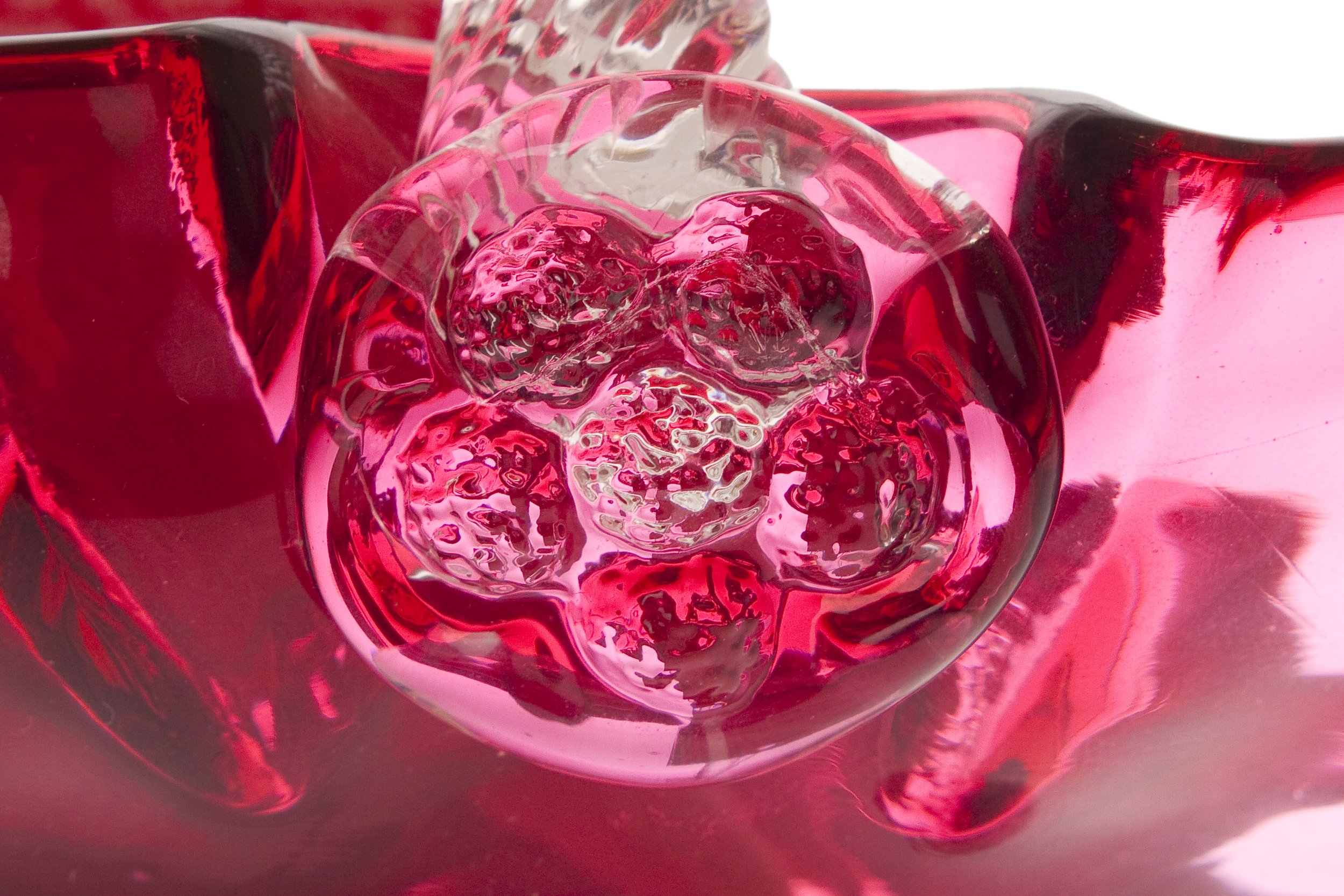
The round dot attachment is very scarce.
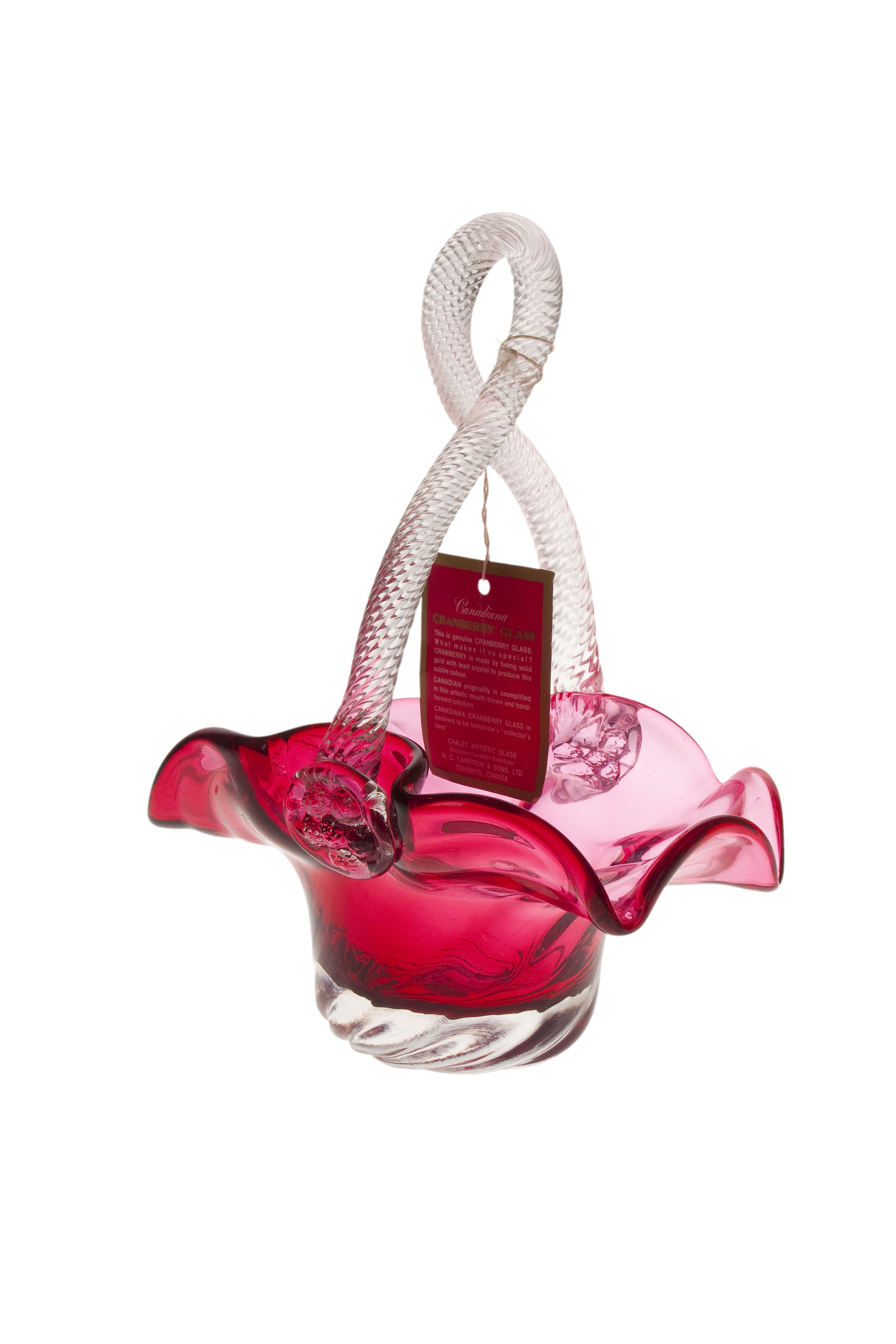
And the coloured leaf basket handle attachment is extremely rare:
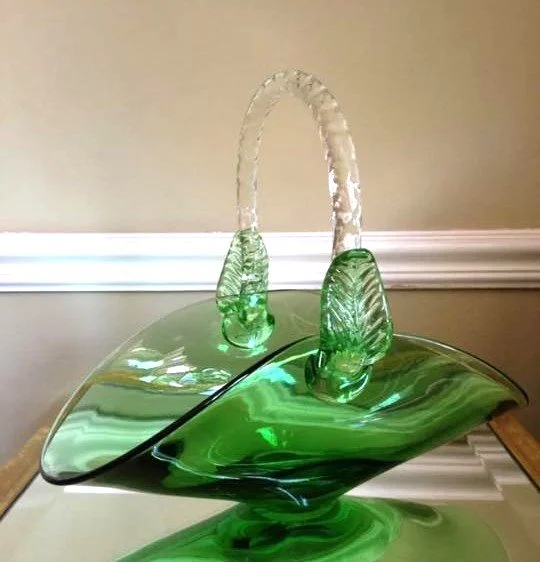
Exceedingly rare. From the collection of Kevin Hall.
Chalet also embellished some of their pieces with crystal prunts.
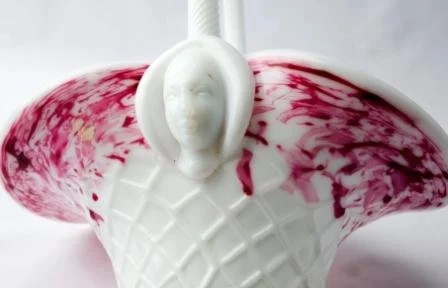
Prunts are applied pieces of glass that are fused to a cool piece at finish. The most recognizable and common prunt was designed by Chalet owner, Maestro and chemist Sergio Pagnin.
As shown above, “the face” is most commonly seen as a basket handle attachment:
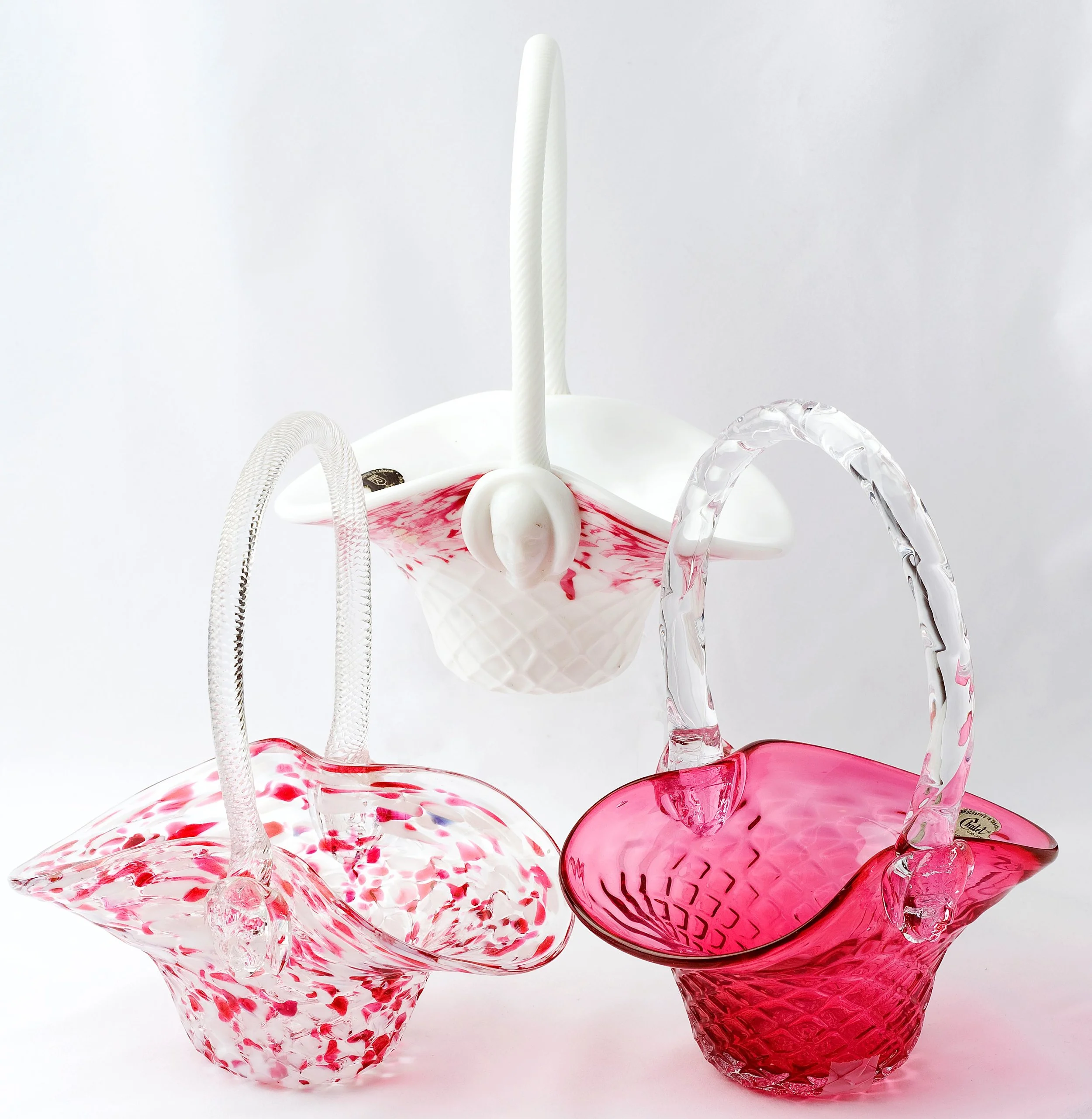
However, this same design can also be found as a purely decorative prunt adornment on some pitchers and vases:
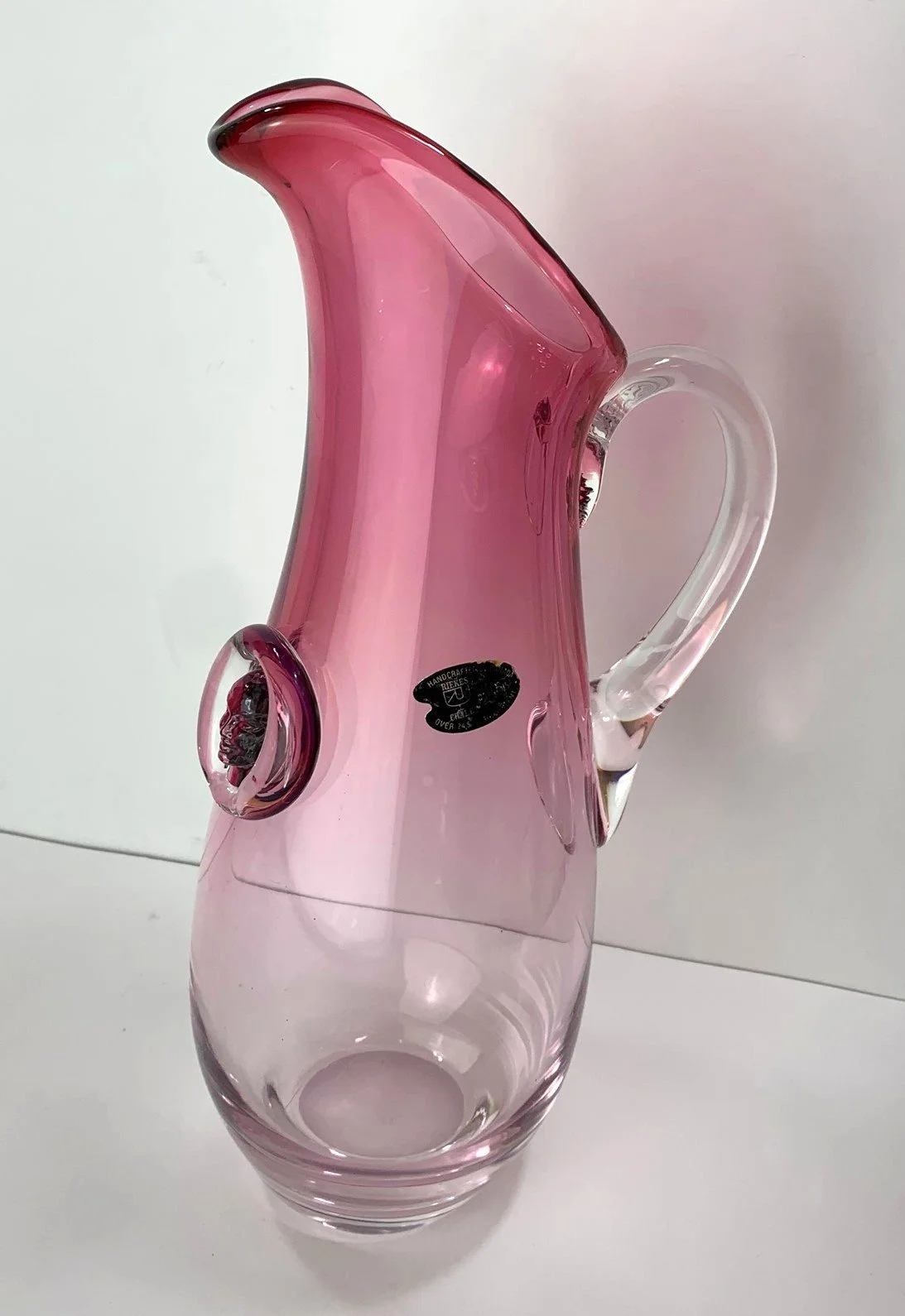
This photo clearly illustrates the applied nature of the prunt.
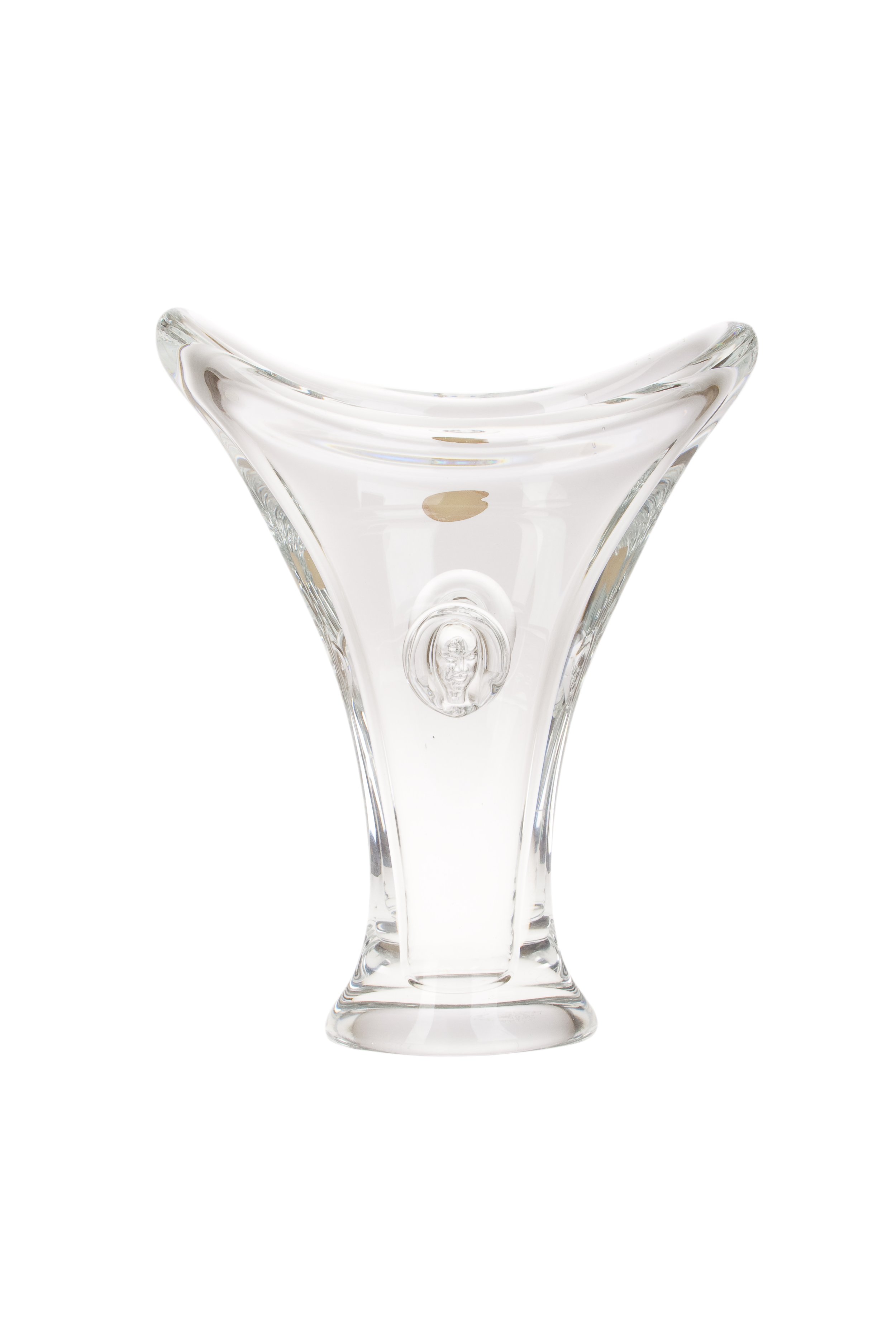
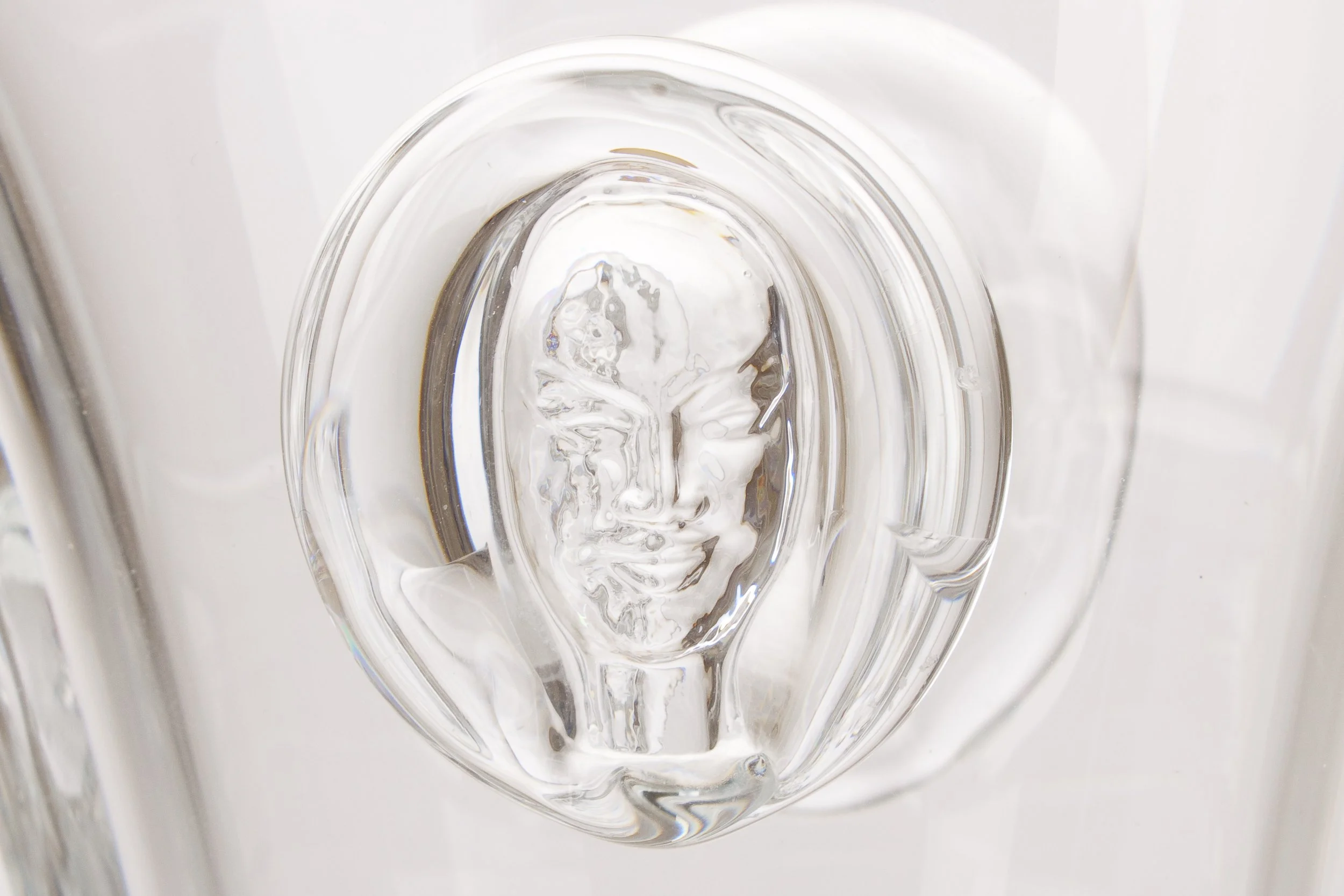
I found this Riekes/Chalet vase with a clear round crystal prunt on 2 sides. Not typical.
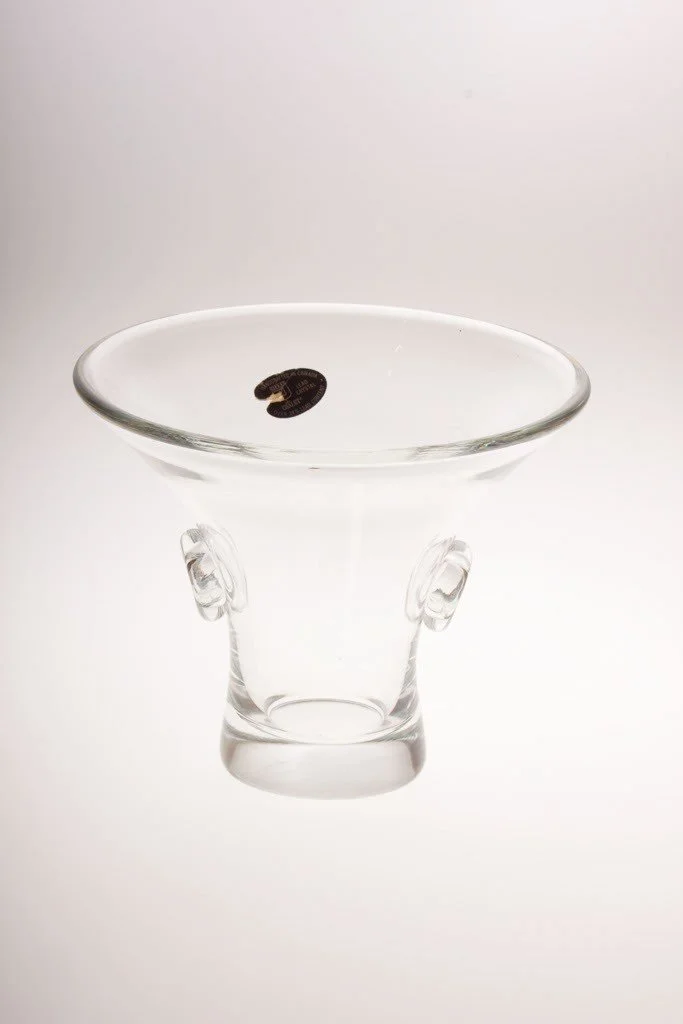
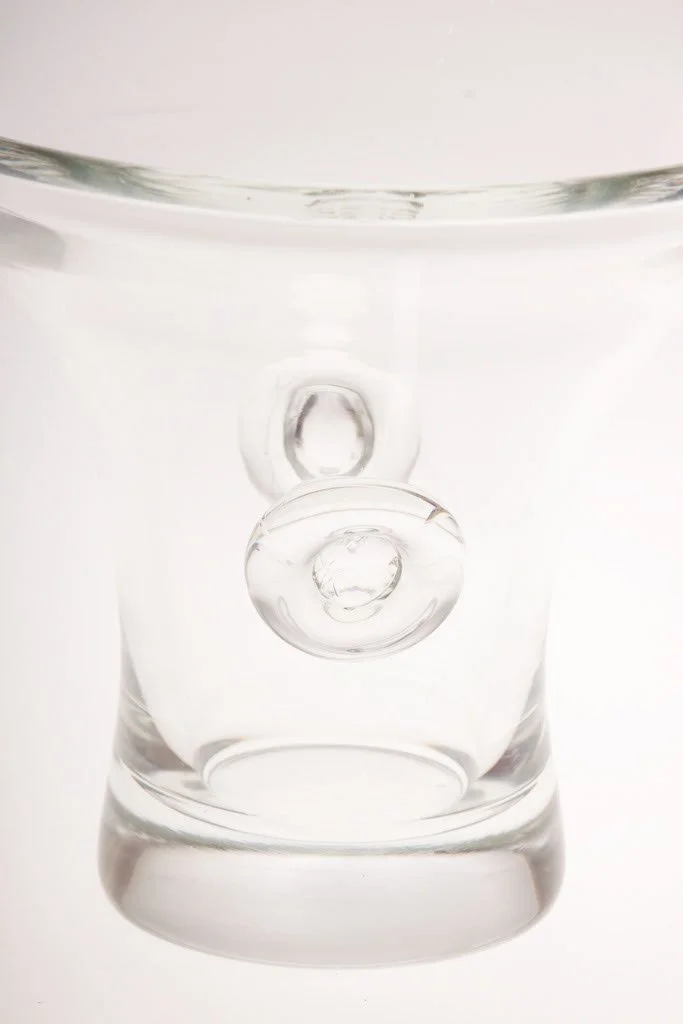
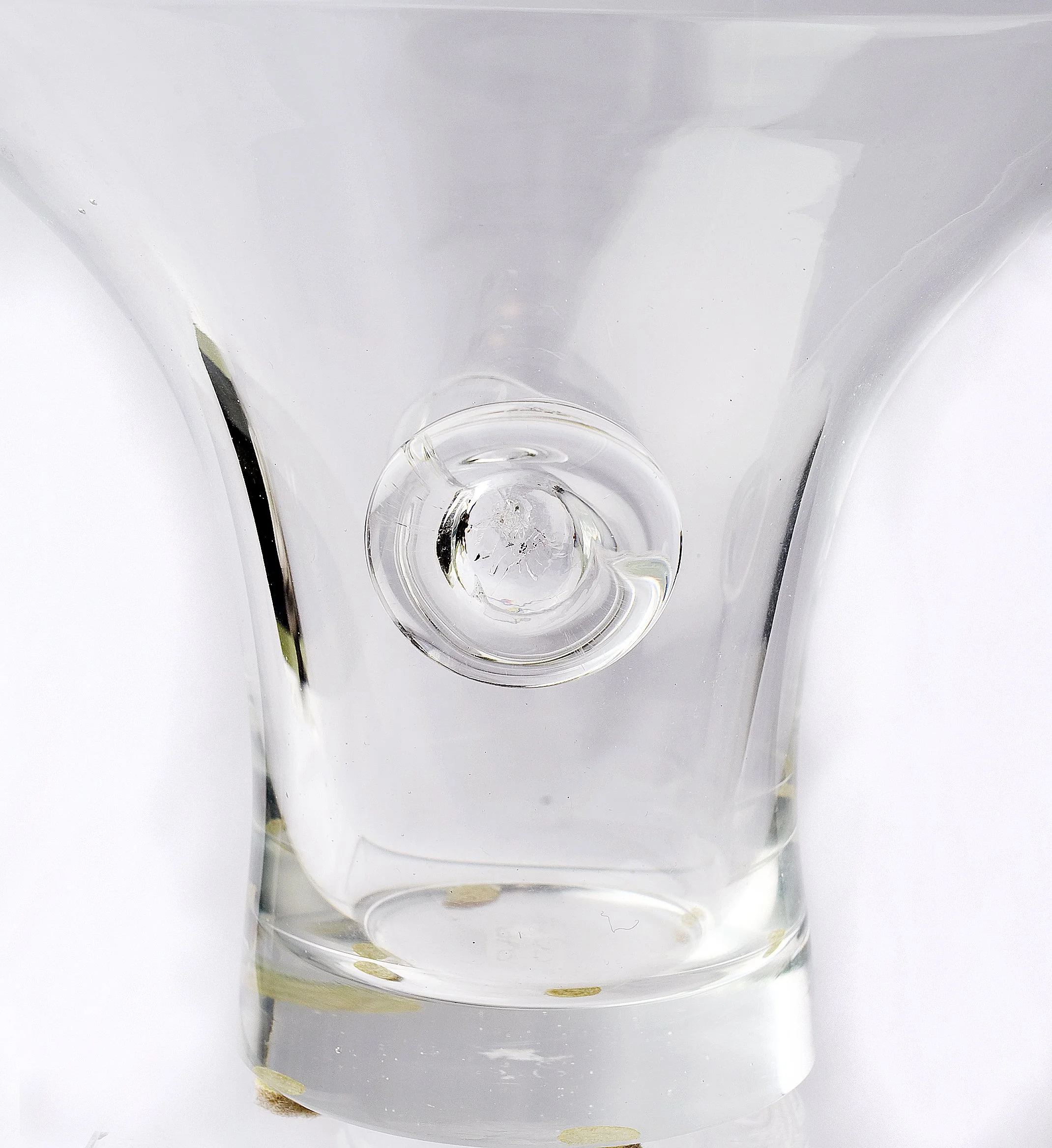
Coloured prunts on a one-of-a-kind Chalet piece:
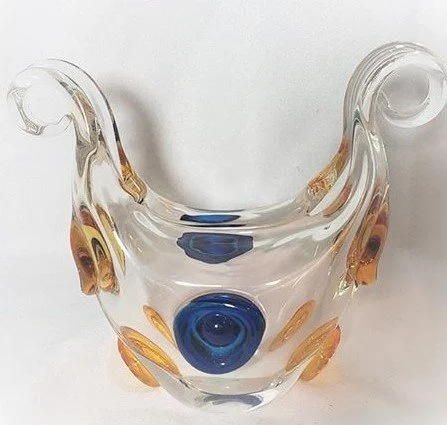
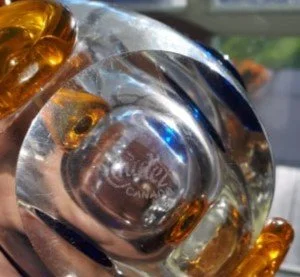
Photographs courtesy of Jeremiah Shaver.
Chalet’s use of gold dust was not limited to the stems and leaves of fruit forms.
It was used in 6 different animal figurine styles:
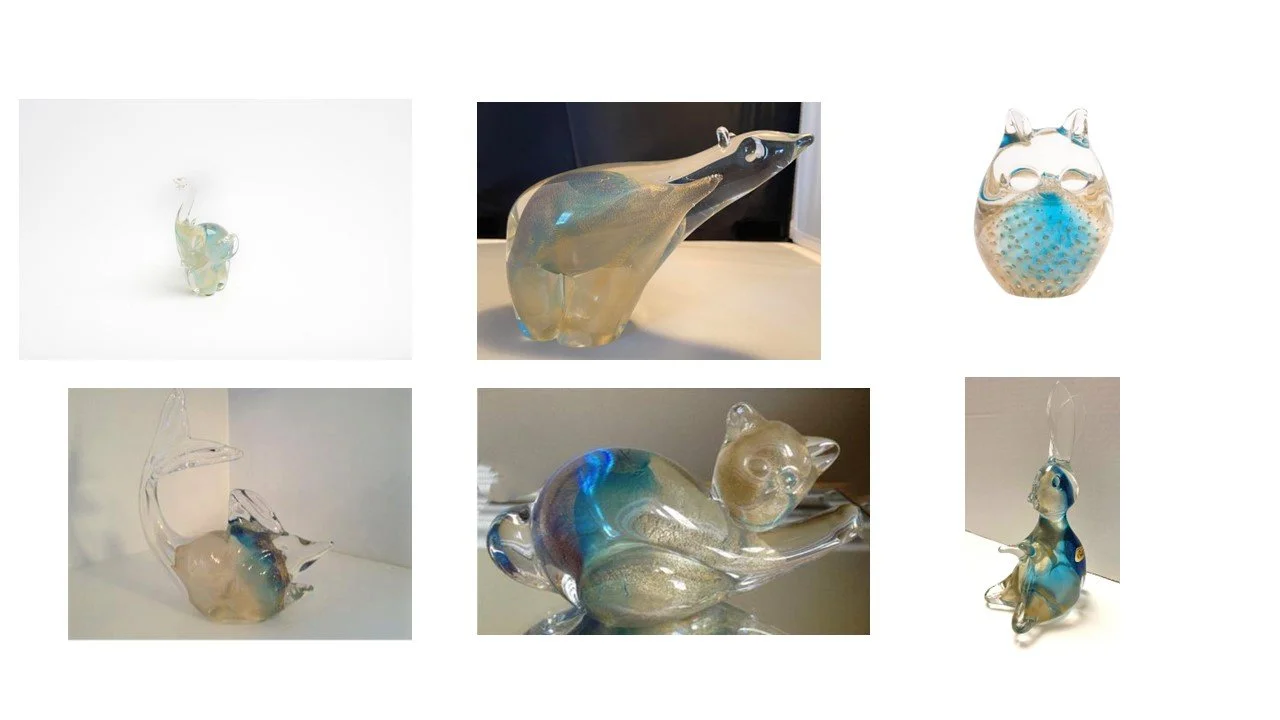
Contributors – top left to bottom right – Deborah Patterson, Matthew LeDrew, Deborah Patterson, Jackie Lyn, Deborah Patterson and Troy Danby.
Another precious metal was also used to “pretty things up” in the animal figurines.
Silver foil was used in 5 different animal figurine styles:
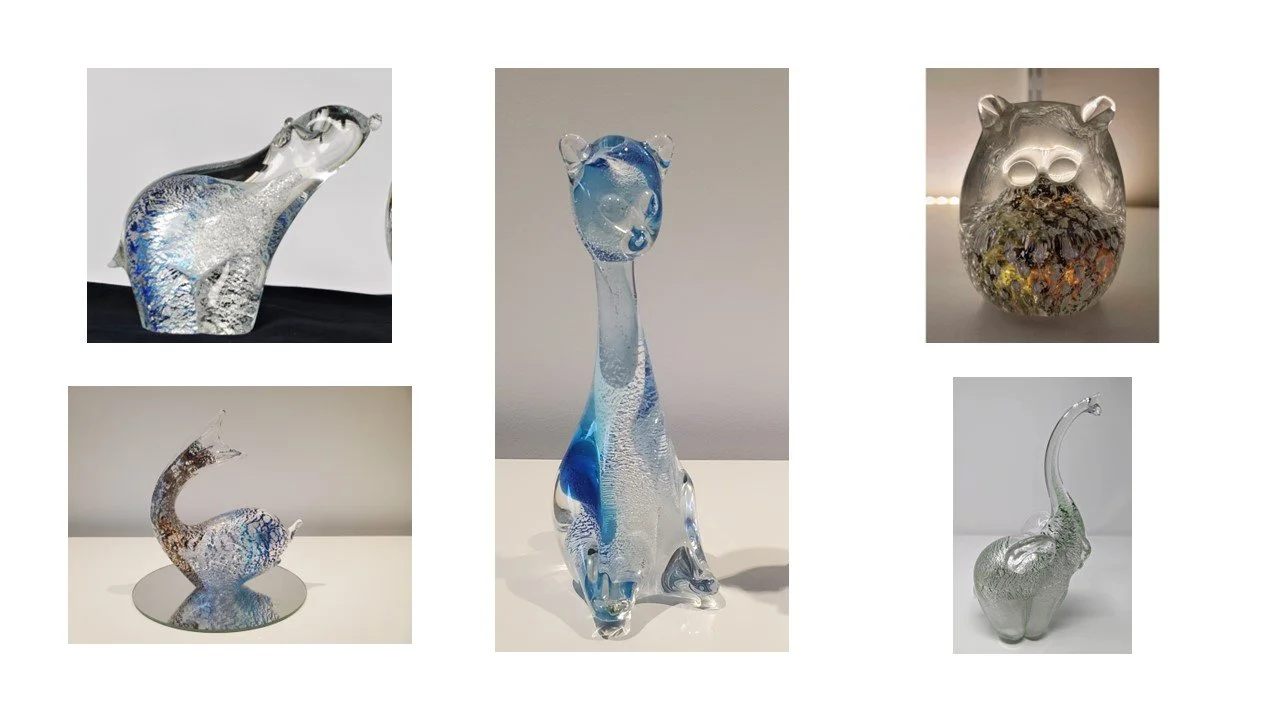
Contributors – top left to bottom right – Maestro Bruno Panizzon, Troy Danby, Cindy Bishop Laughlin, Troy Danby and Kevin Hall.
Mica powder, a mineral not a precious metal, added some “sparkle” too.
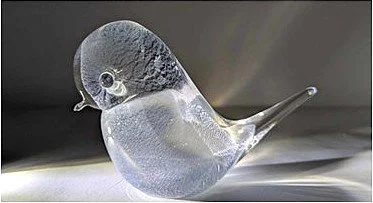
From the collection of Kevin Hall.
All the coveted Chalet “birdbath” ashtrays received special attention with contrasting coloured applied bird figurines.
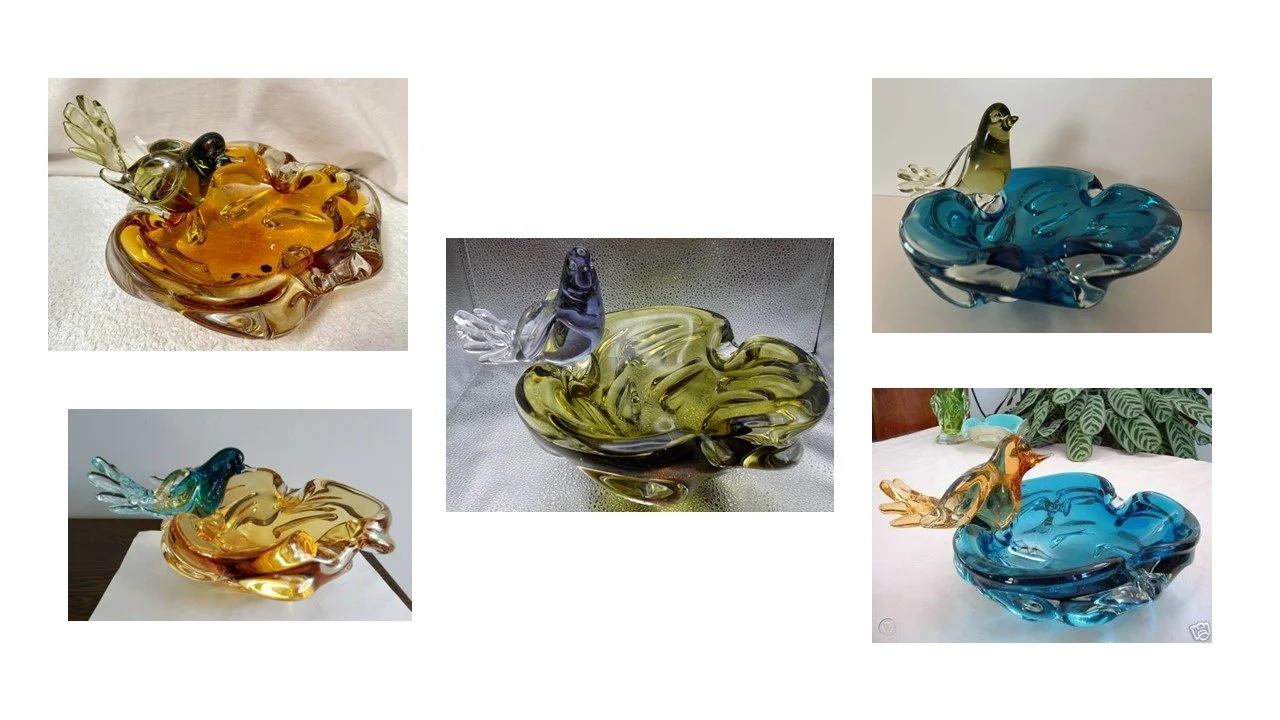
From the collections of: Randy Episcopo (top left), and Pina Pina (middle). Elizabeth Charest contributed the photograph at top right and Cindy Bishop Laughlin contributed the bottom right picture.
Some also contained gold dust and/or silver foil:
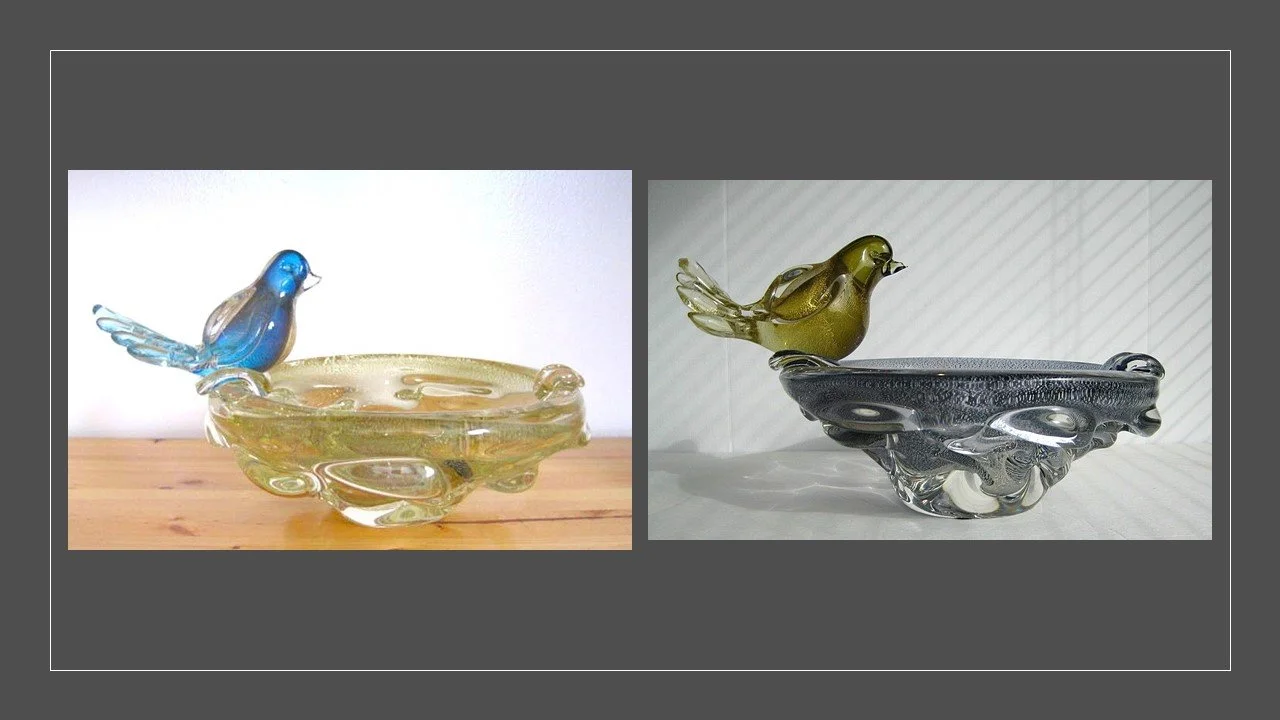
Photographs of these stunning pieces – gold filled bird and bowl at left from Robin Thorne and gold-filled bird and silver foil bowl at right from Graham Thomas.
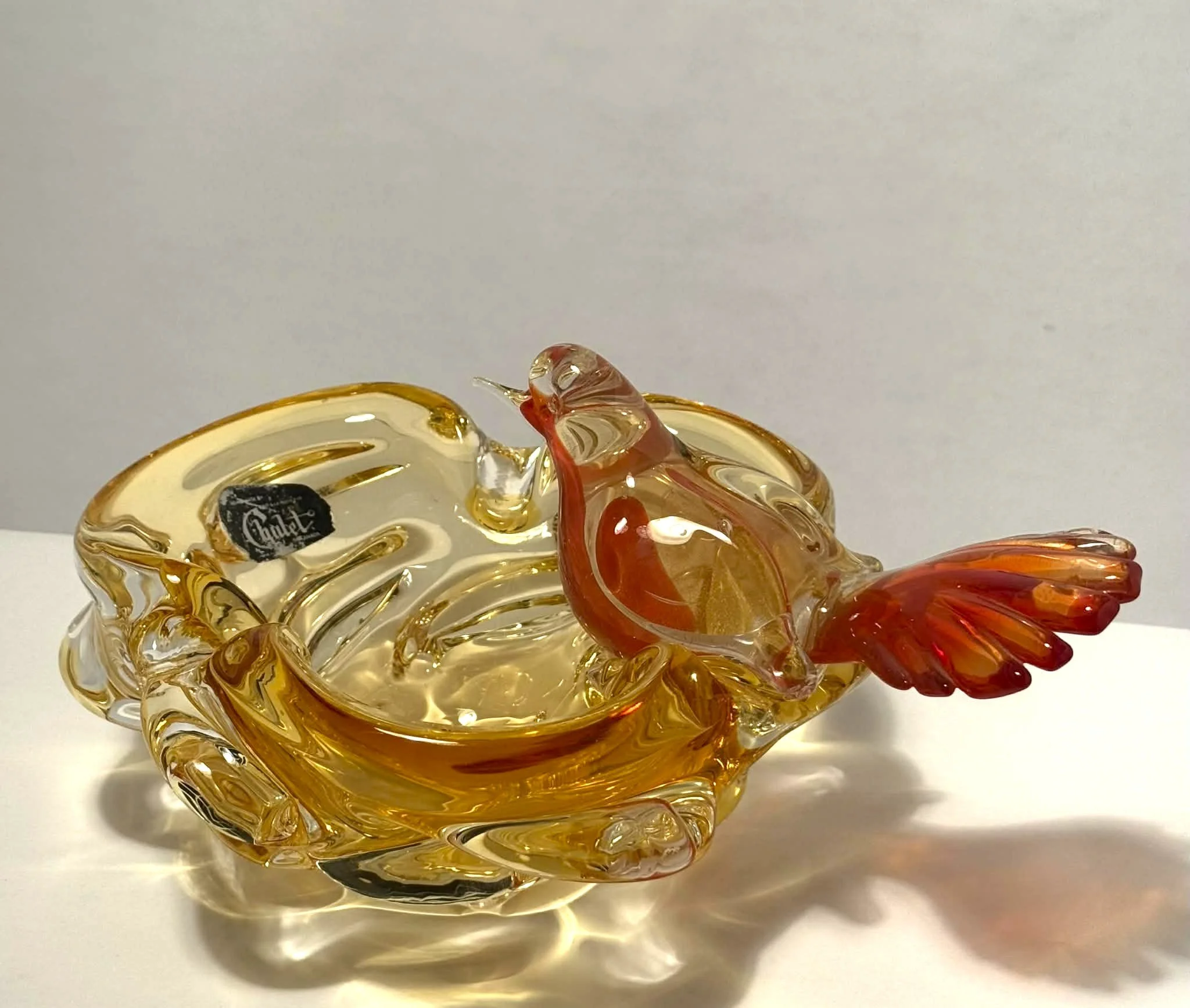
A polivere d’oro 2-tone bird figurine perching on this ashtray from the collection of Laura Zamos.
As well, Chalet used other non-metallic inclusions to add interest.
Most typically seen in Chalet paperweights:
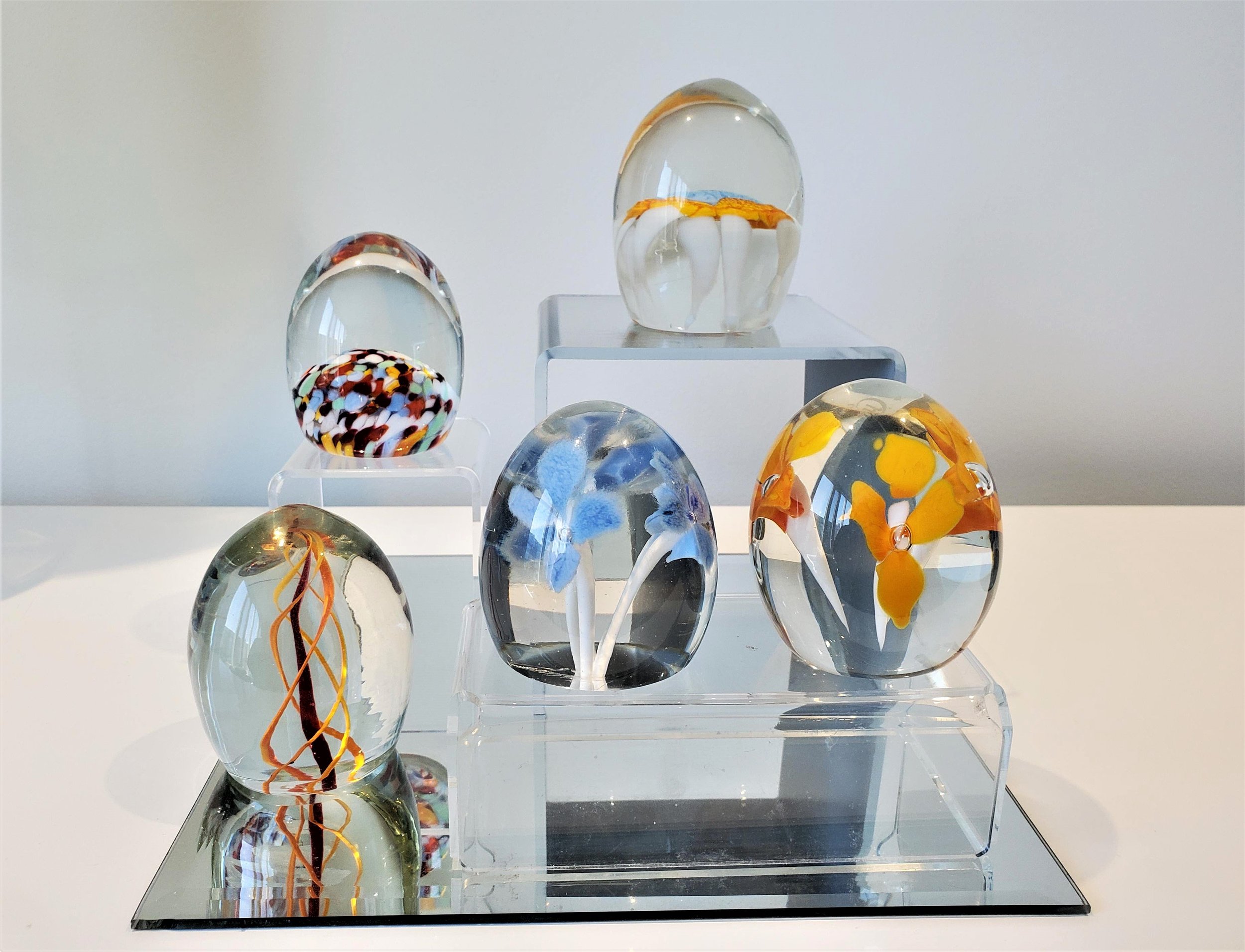
But also in a Chalet oddity ever now and then:
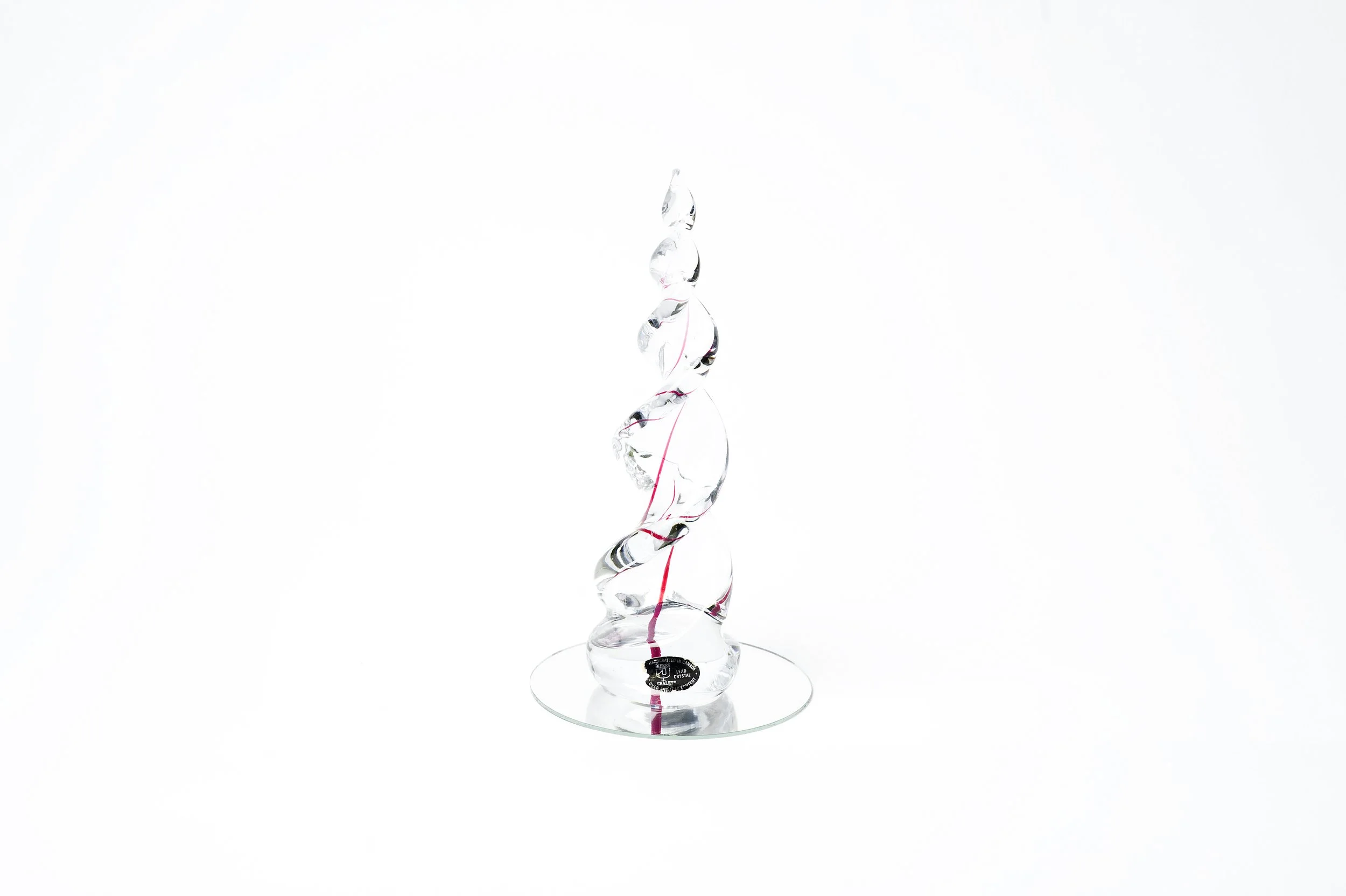
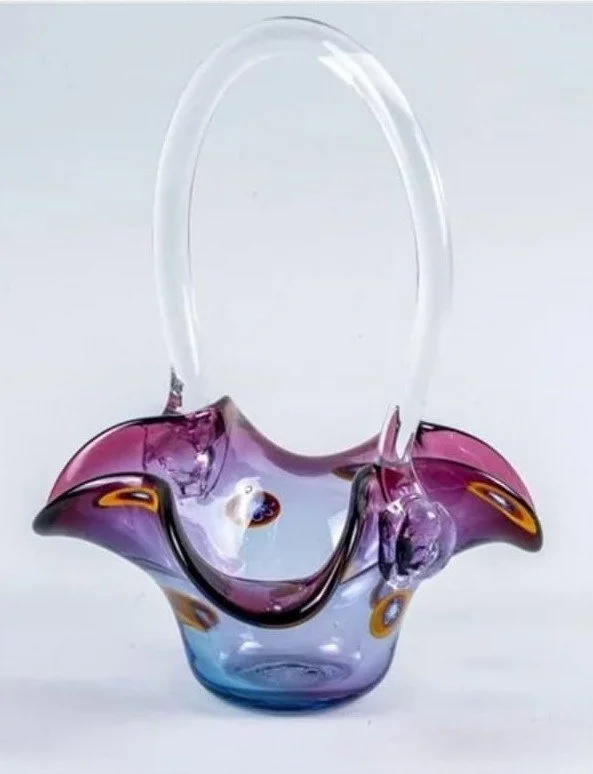
In rare Chalet millefiori.
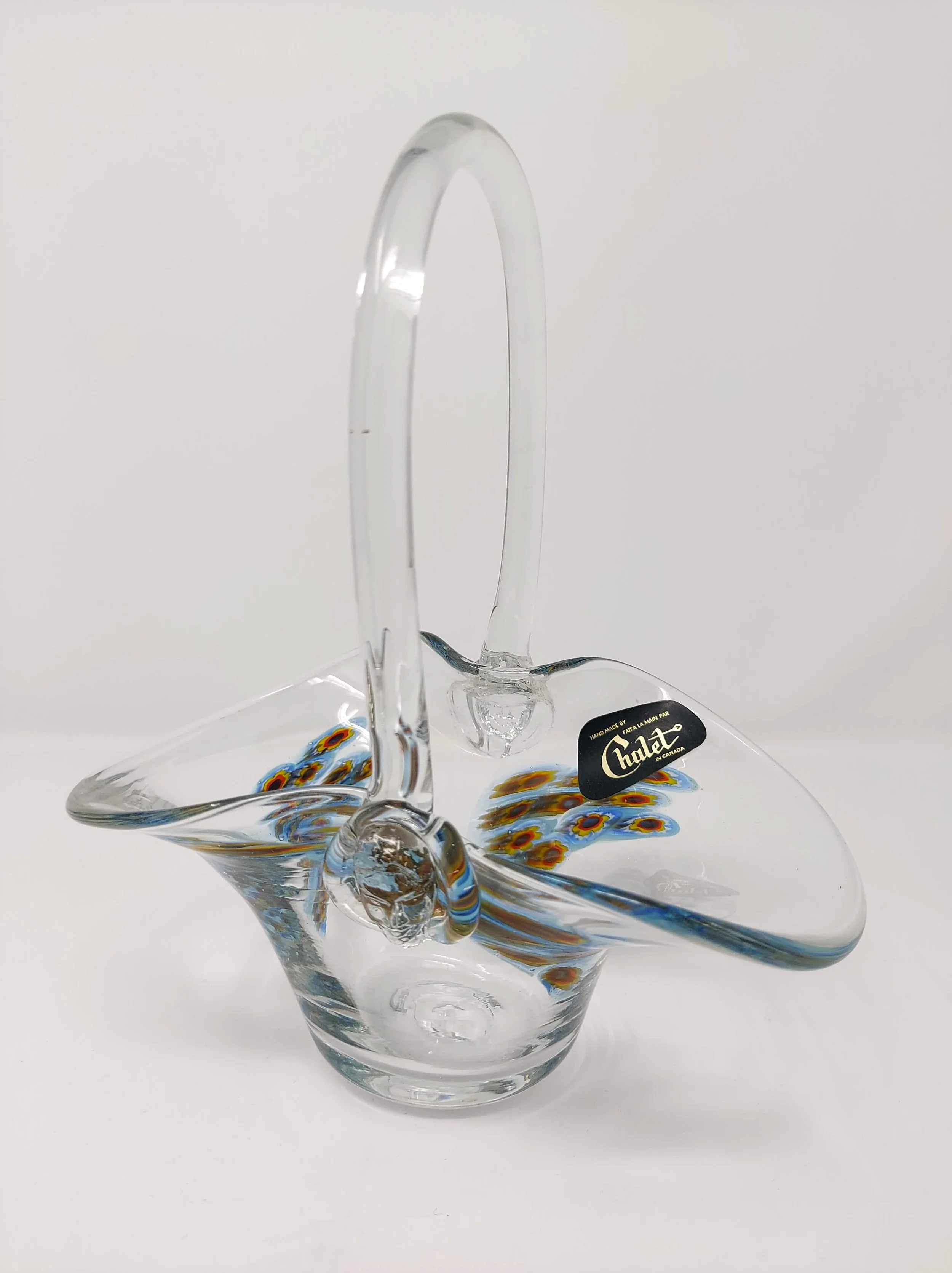
From the collection of Kevin Hall - no surprise!
And in the rarest of rare Christmas trees.
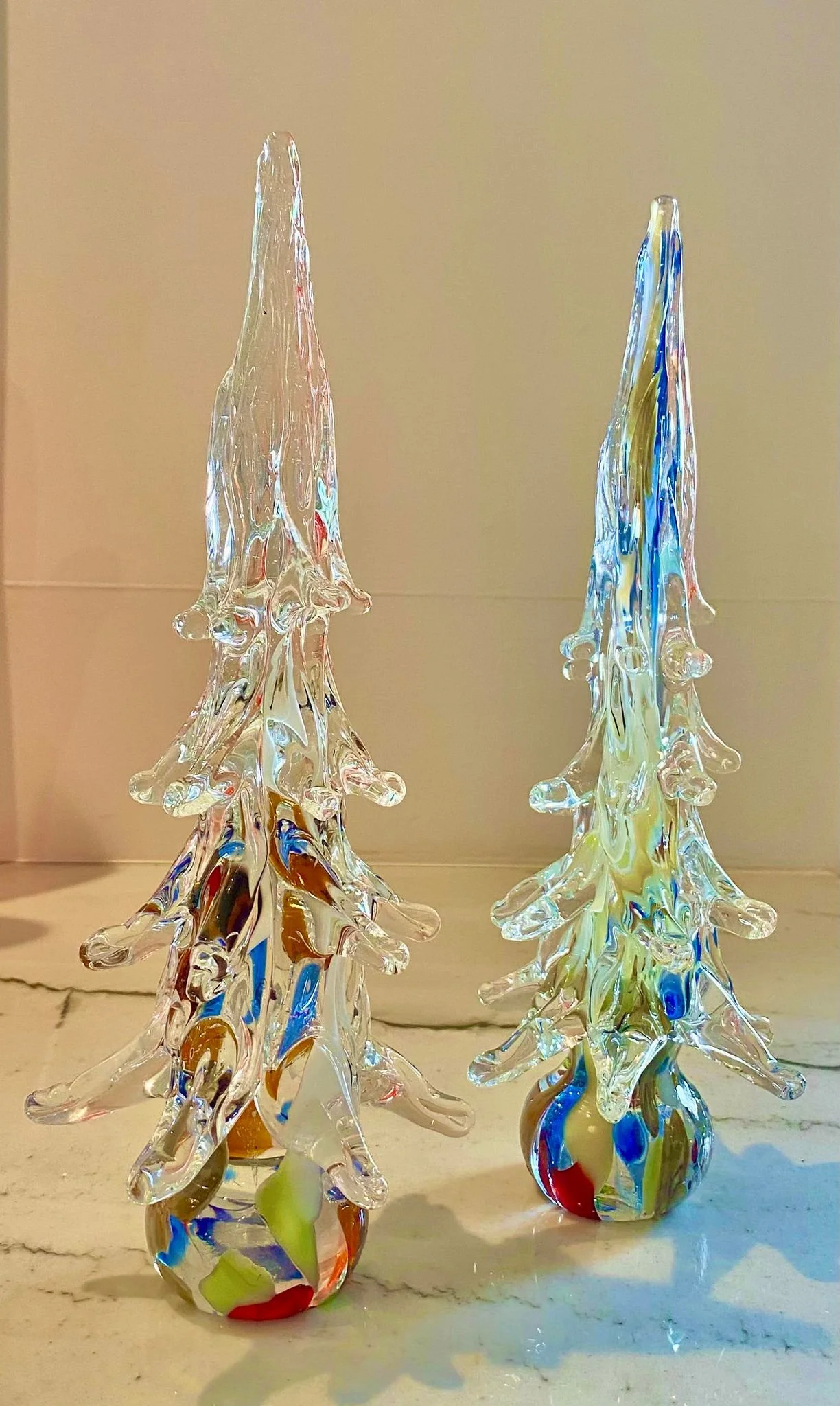
This indisputably pair from the forests of Jonathon Tremblay.
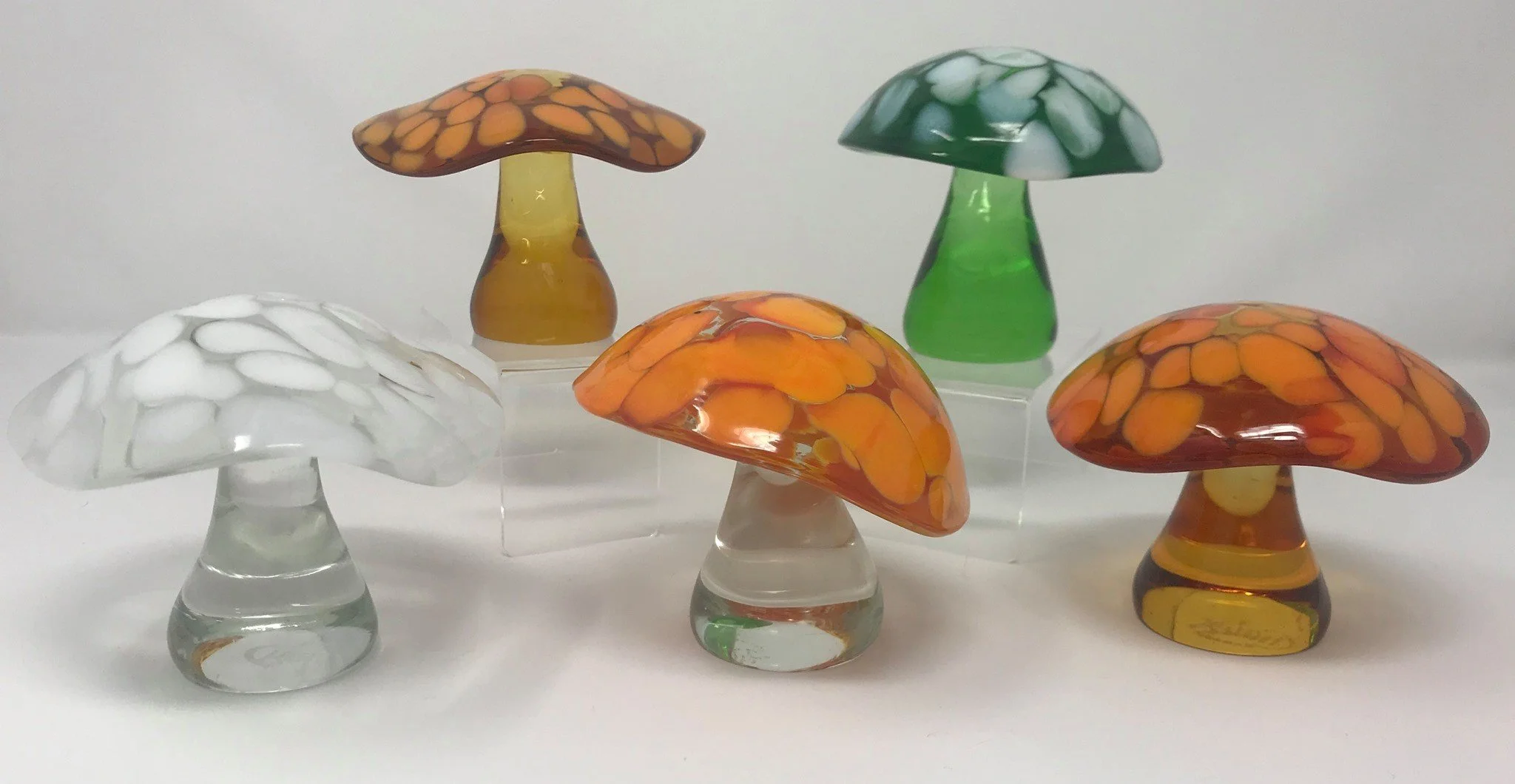
To add colour to the cap of the Chalet mushroom figurines.
Bullicante pieces definitely qualify as Chalet “Oh, so pretty” pieces.
They do not result from a surface treatment or additive to the glass but are created through a glass-blowing technique:
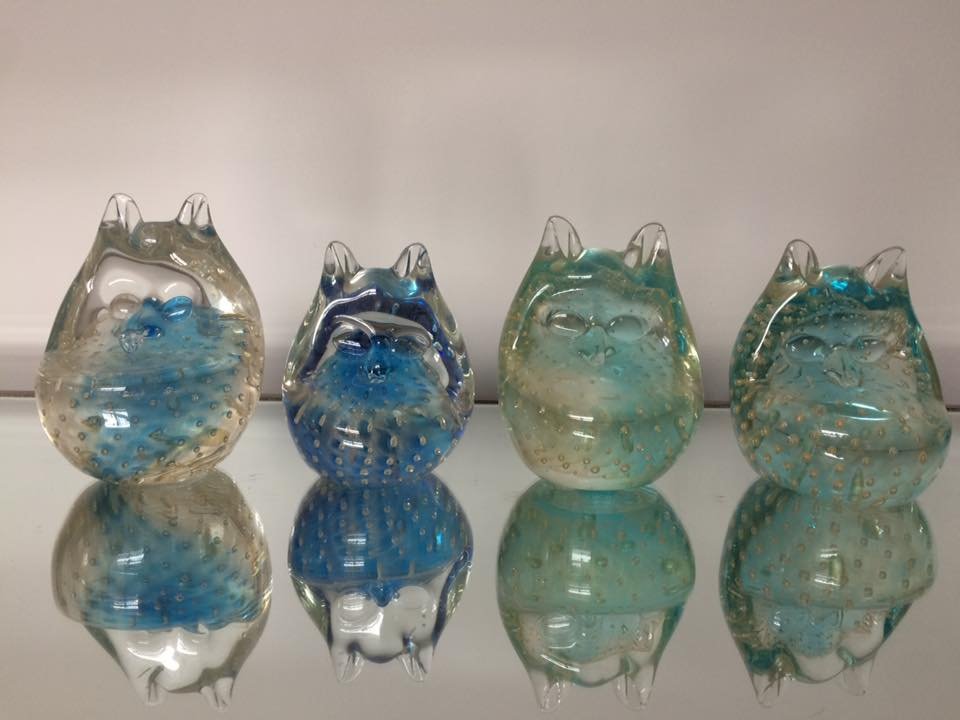
This photograph of a parliament of Buddha belly owls courtesy of Bradley Atkinson. You will note that they are also polivere d’oro pieces.
As yet, these are not verified Chalet but, in my opinion, I think likely. However, they are verified as “oh, so pretty!”
The coloured handles and petal feet would be firsts! As would a hand-molded piece being found in a multi-tone colour combination.
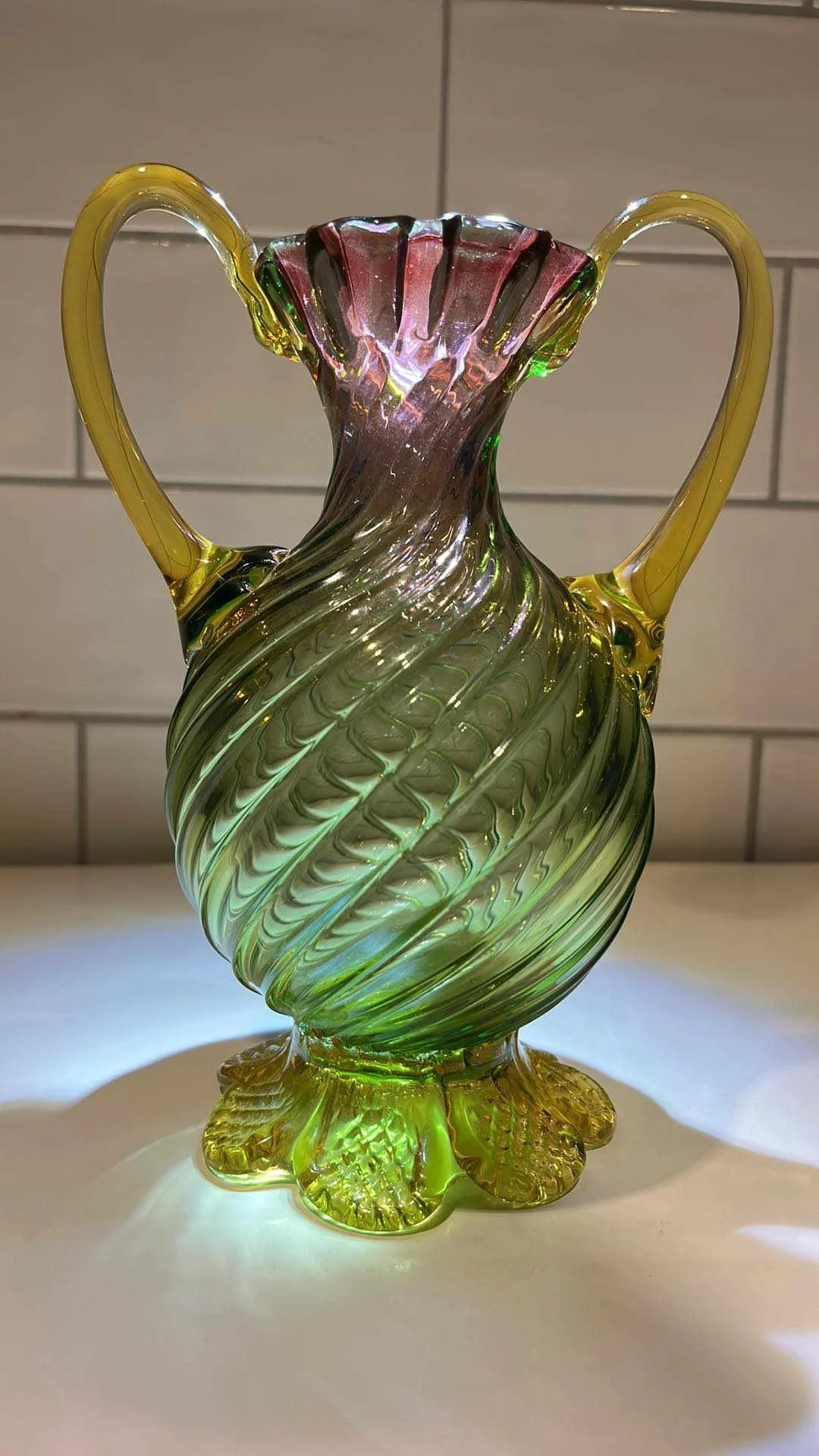
From the wonderfully eclectic collection of Kim Tersteeg.
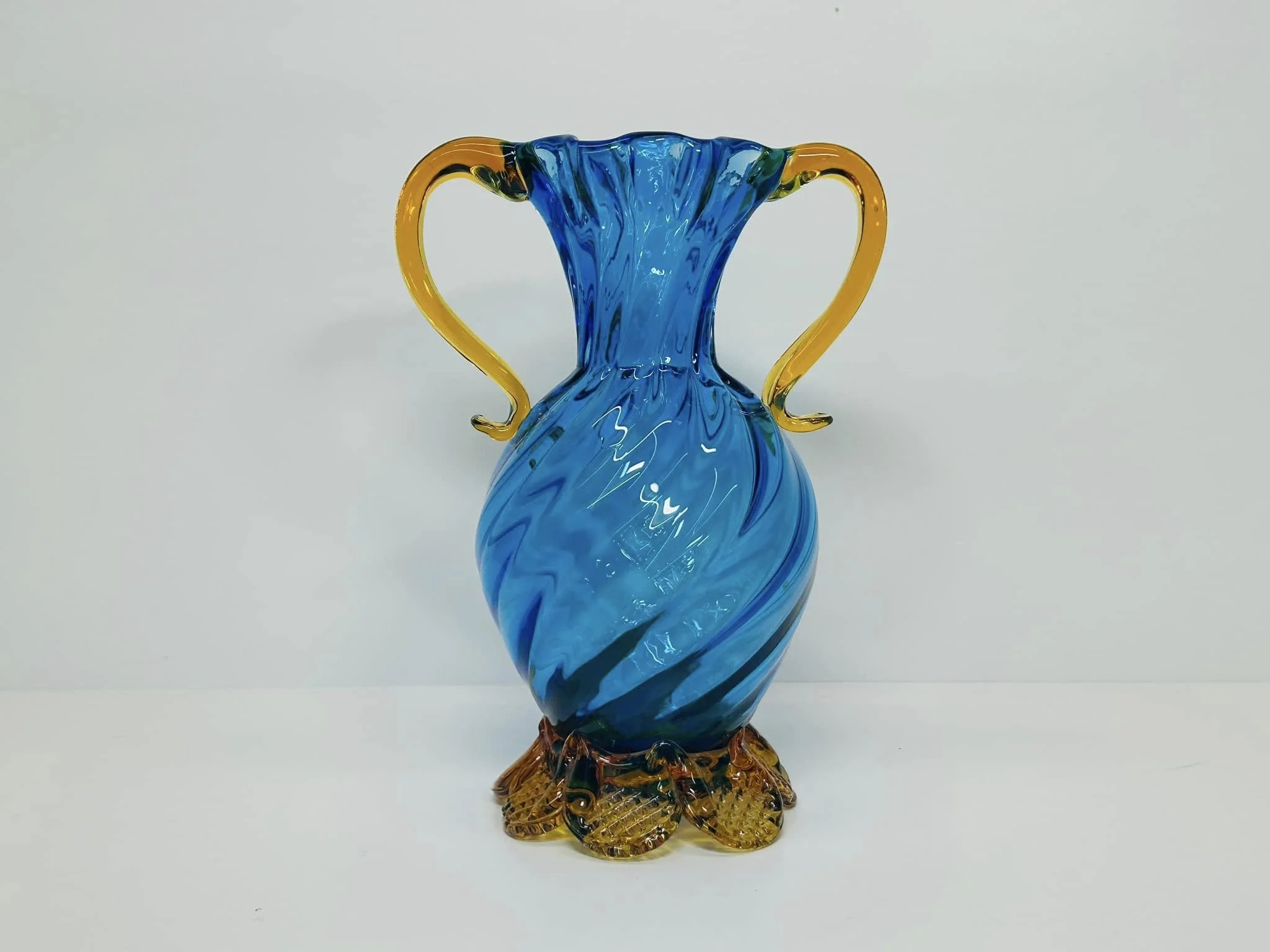
Contributed by collector Sev Gravador.
“Oh, so pretty!”
