Chalet Multi-tones
The editorial that directly preceded this article was on the topic of Chalet 2-tones. Therefore, I felt discussing the Chalet multi coloured pieces was a natural companion piece and the logical progression of this topic. As there are relatively few pieces of Chalet with more than two colours, this discourse will be much briefer. However, I still feel the subject matter is necessary and relevant to round out Chalet’s “colourful” history.
Why are there so few Chalet multi-toned pieces? The answer is time and money. The more material used to create a piece, the longer the production process. Chalet was a factory and, like all others, was bottom-line driven. Therefore, it is interesting and not unexpected to see that the majority of multi-coloured pieces that Chalet did produce are higher end and novelty/limited run pieces – not standard production forms.
Multi-toned Chalet pieces were achieved in several ways. Through the use of 3 or more colours during the hand-blowing of the form or with the addition of coloured inclusions or applied adornments.
Without further ado:
Multi-toned animal figurines. This is where Chalet’s use of multiple colours in a single form is most common.
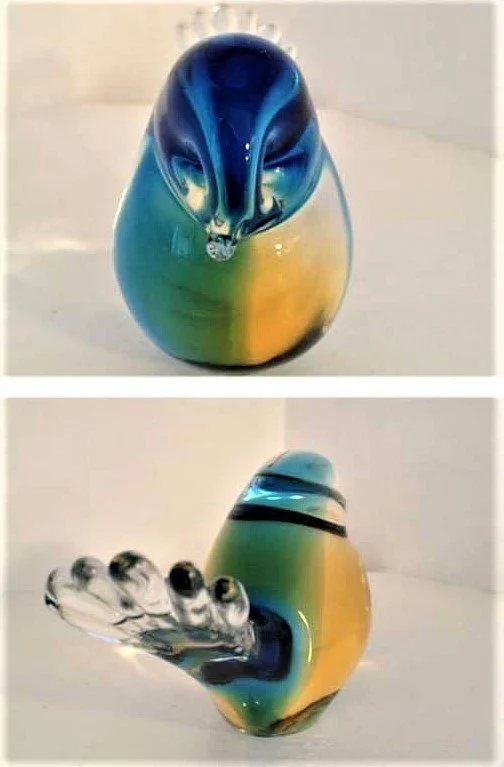
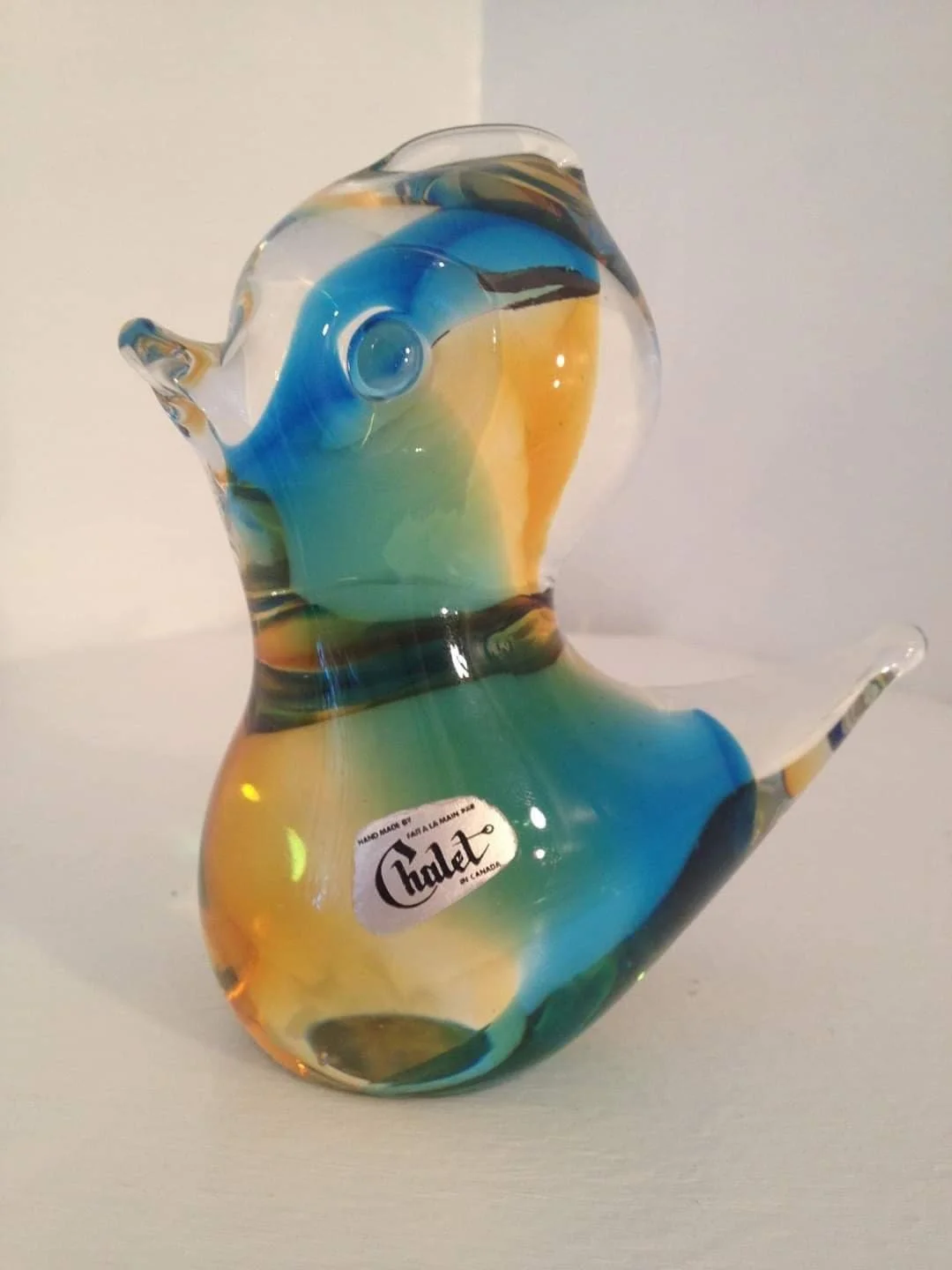
2 stunning tri-colour Chalet songbirds.
Multi-colours are the norm for the rooster figurines. The rooster figurine is the only animal figurine in which red was used:
Colour palettes:
:blue/cranberry with the head coxcomb and wattle both red and amber
:blue/emerald-green with the head coxcomb and wattle both red
:blue/olive-green with the head coxcomb and wattle both red
:blue/amber with the head coxcomb and wattle both red
:amber/emerald-green with the head coxcomb and wattle both red
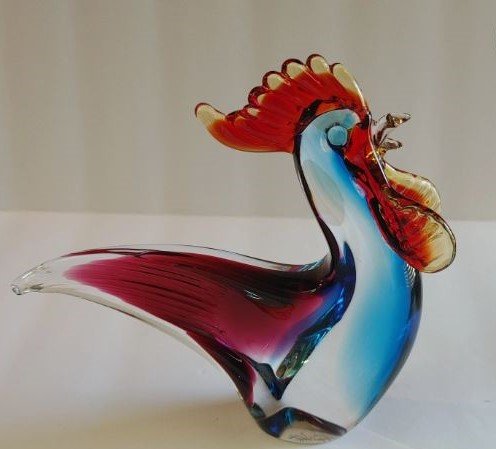
These 4-colour pieces are the most colourful Chalet forms found to date.
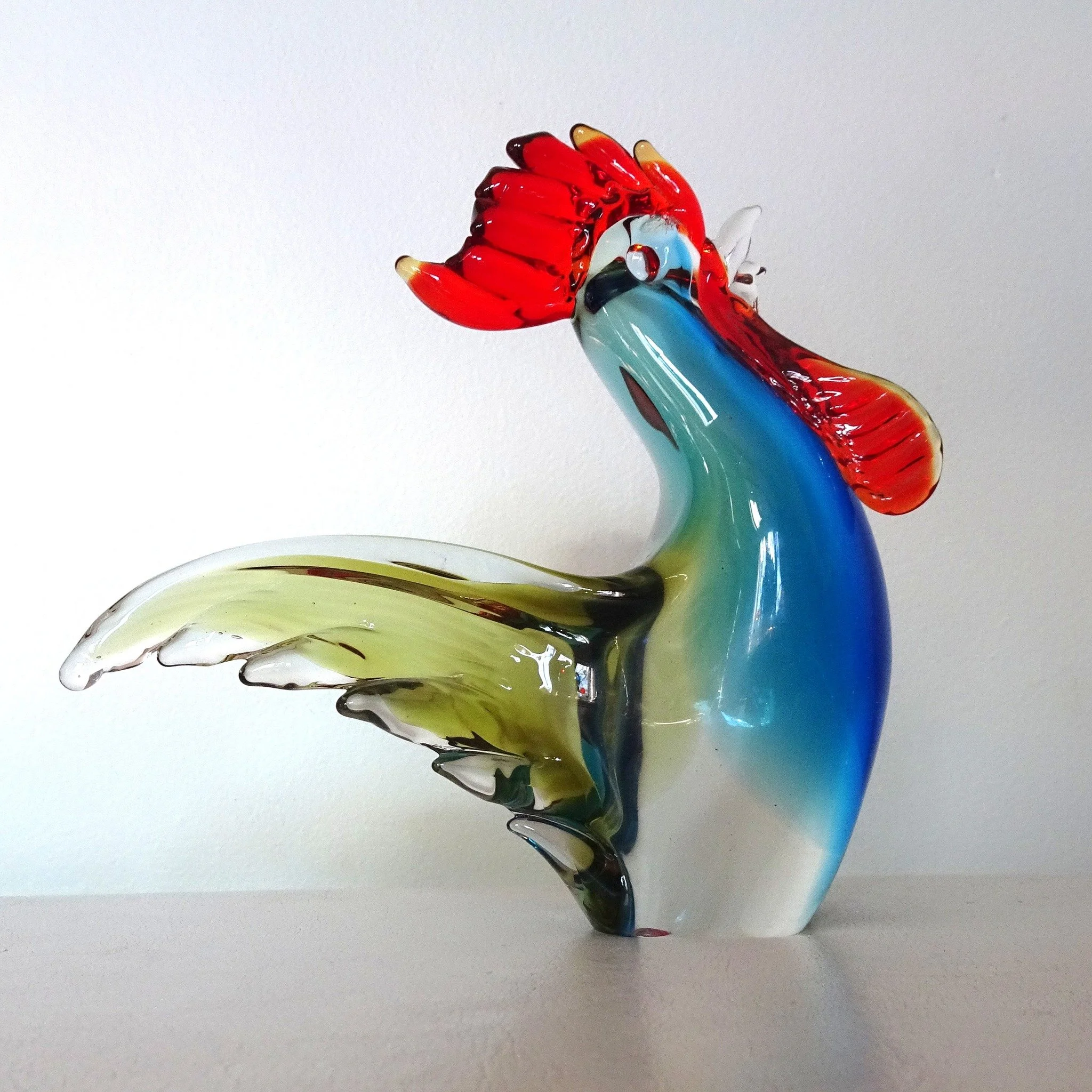
From the collection of Rita Kra.
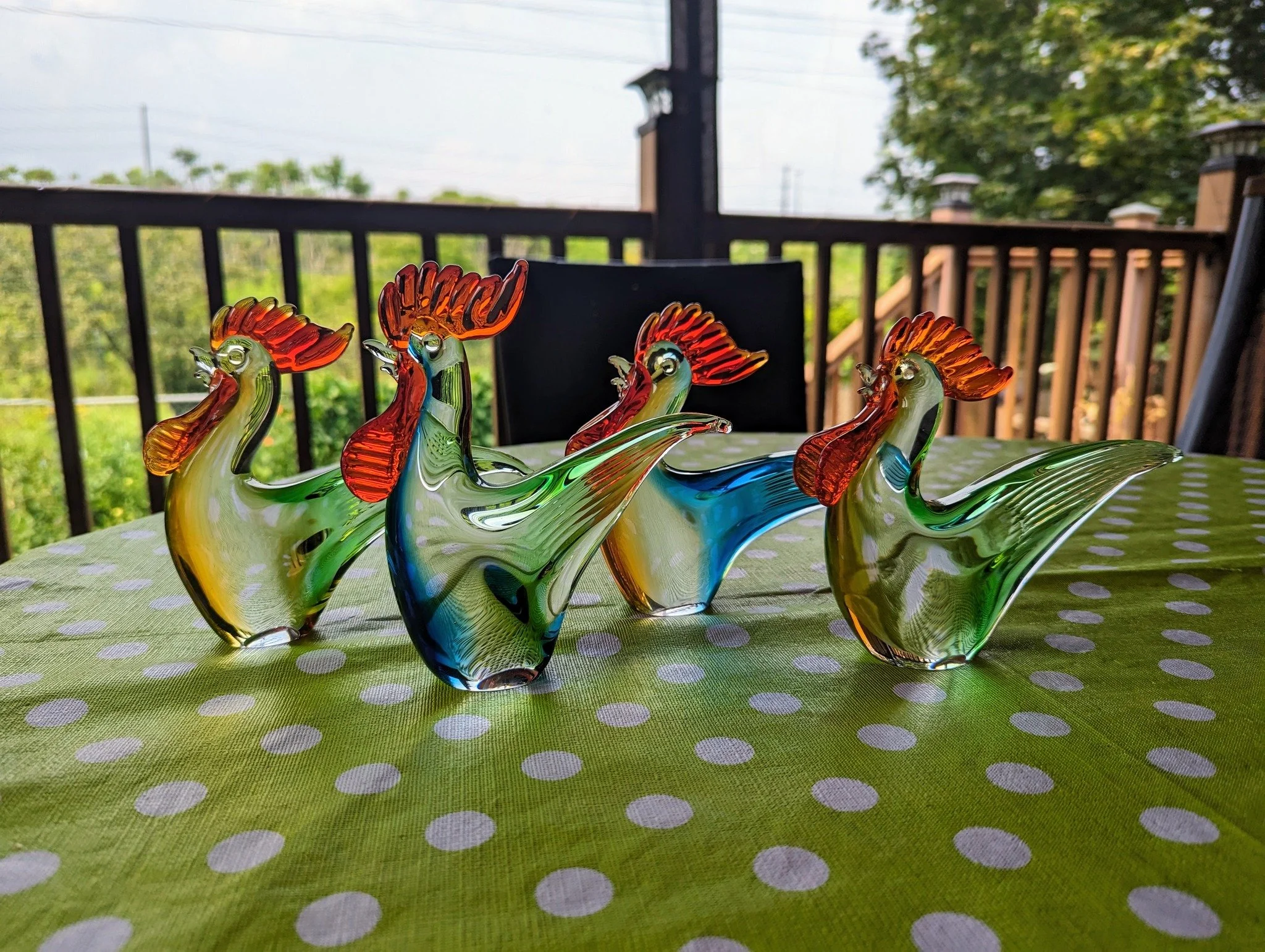
Crowing in the barnyard of Kevin Hall.
This second style of rooster figurine still boasts multiple colours.
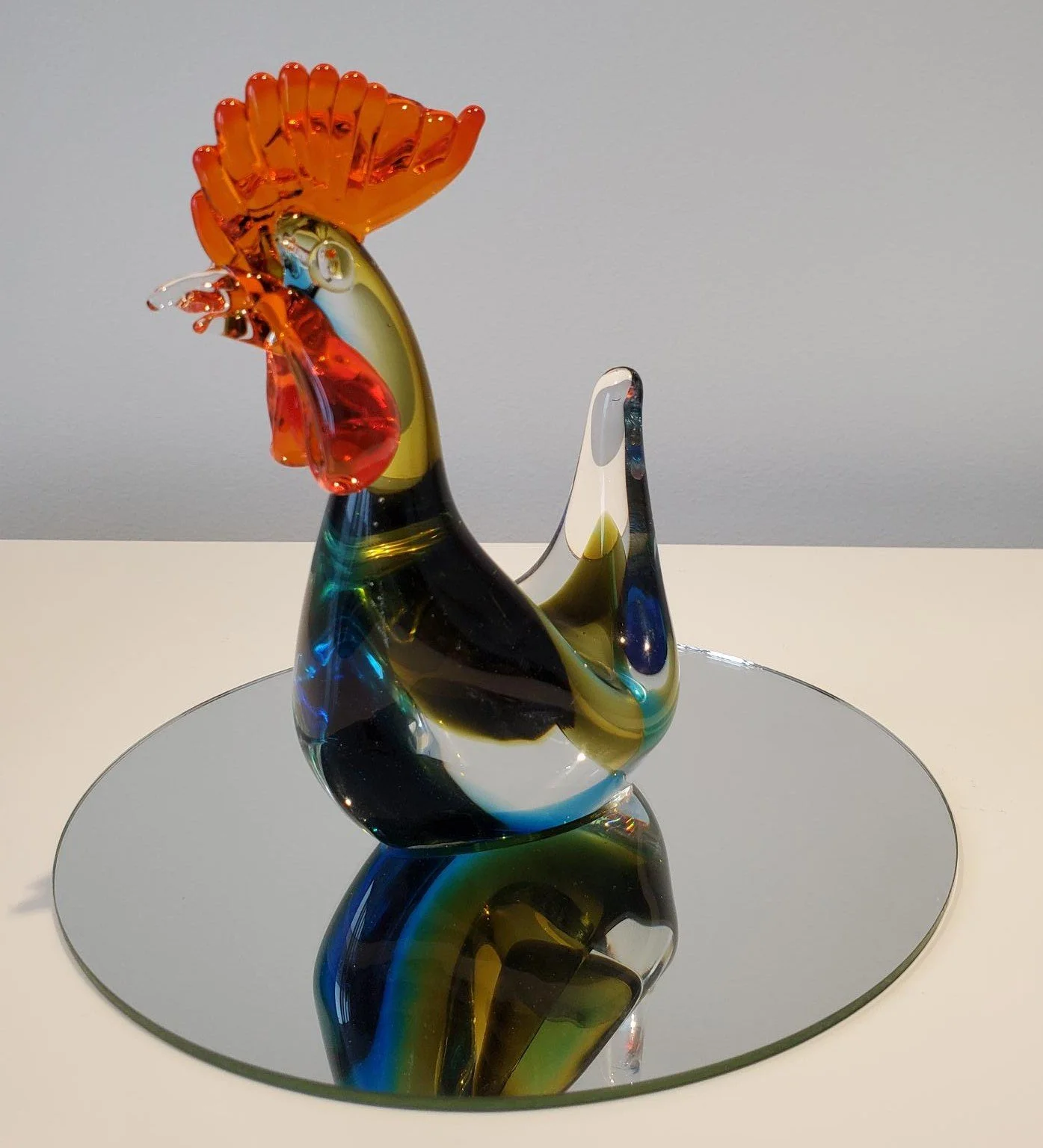
From the collection of Troy Danby.
Another exceedingly rare animal figurine – this pedestal duck. Note the applied eyes which is atypical for Chalet animals.
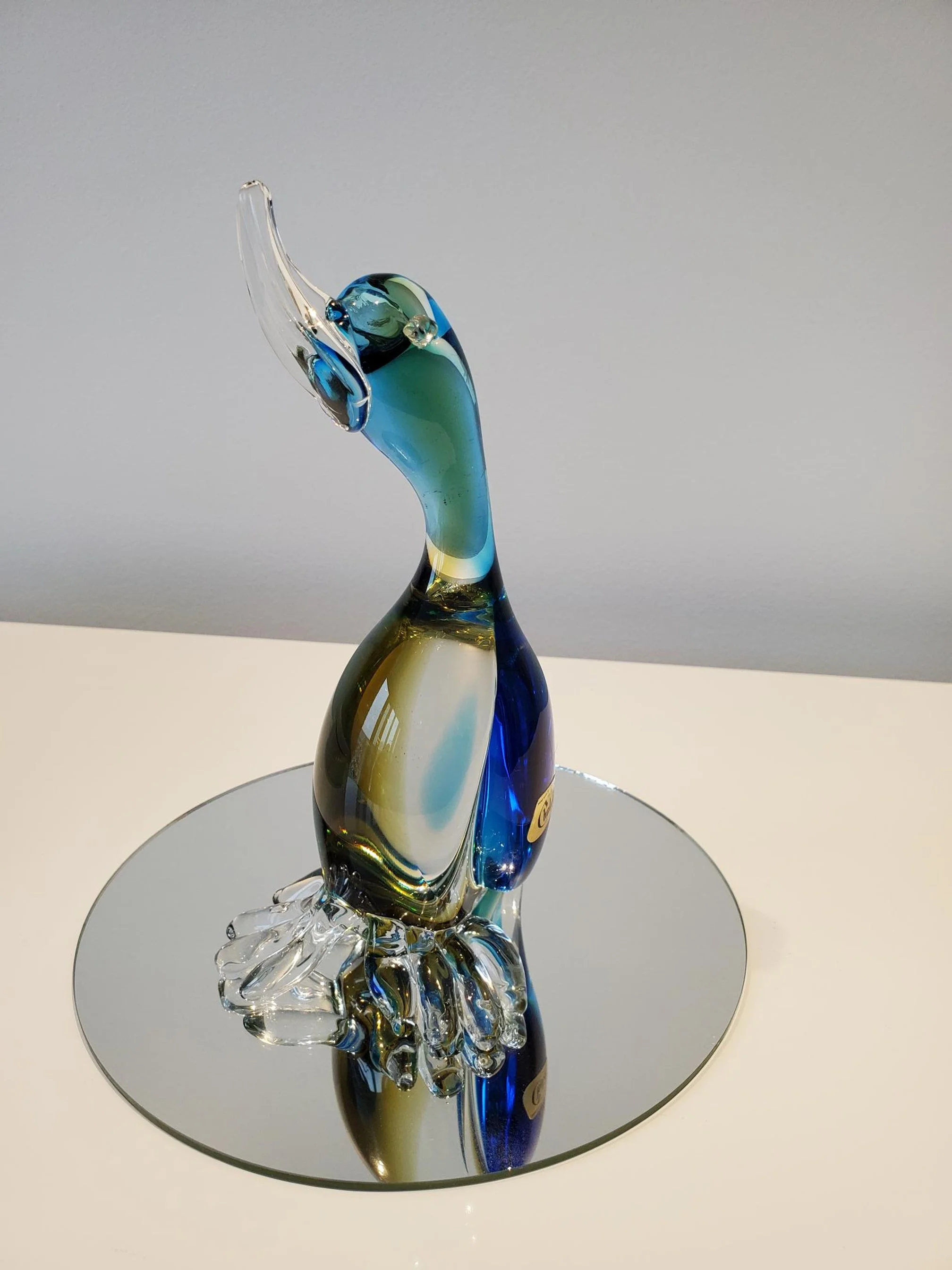
Swimming in a pond in the backyard of Troy Danby.
Use of multiple colours holds true for the Chalet opaline roosters as well.
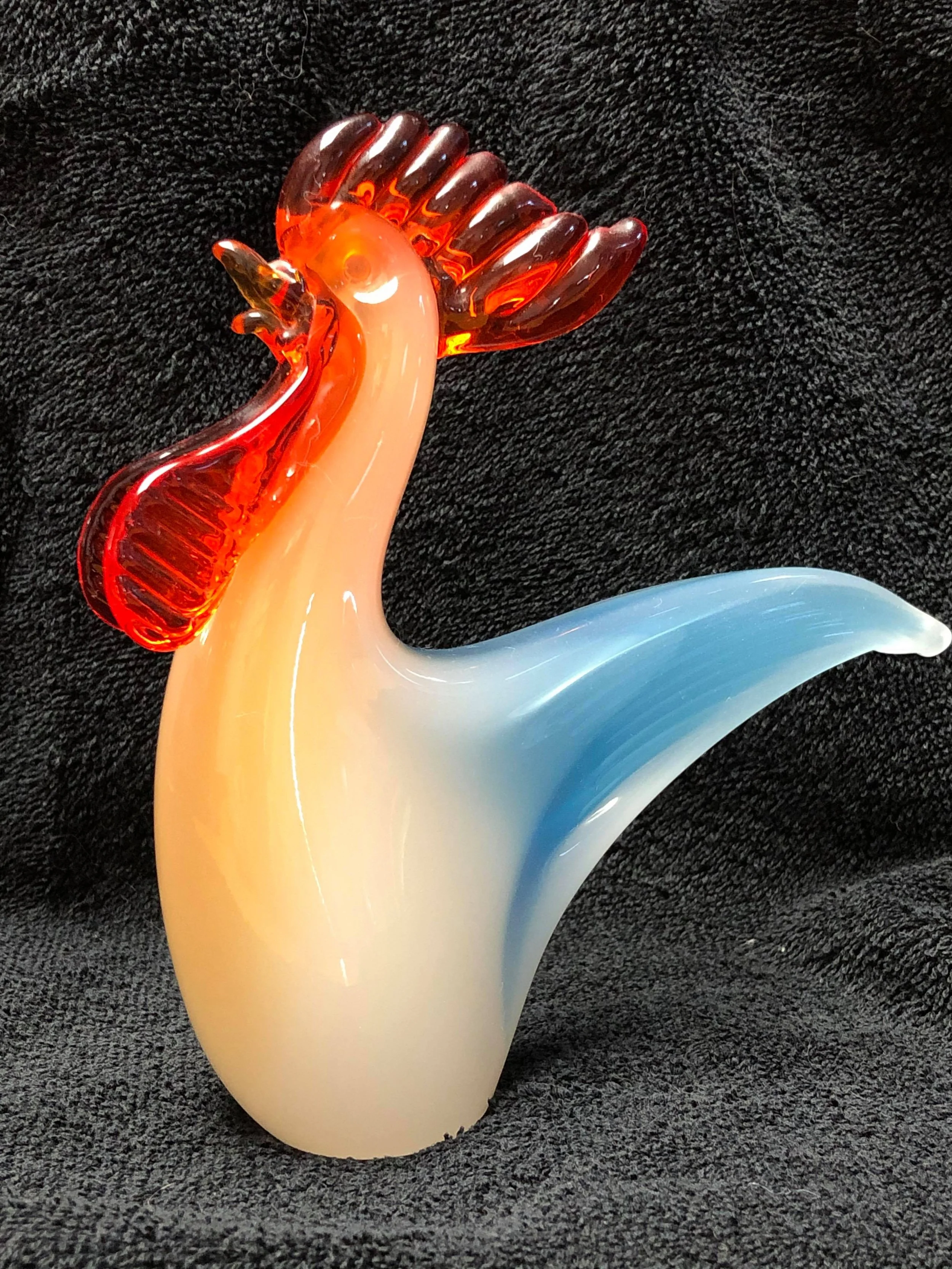
Another fowl owned by Troy!
Chalet also used multiple colours in their upright opaline cat figurine.
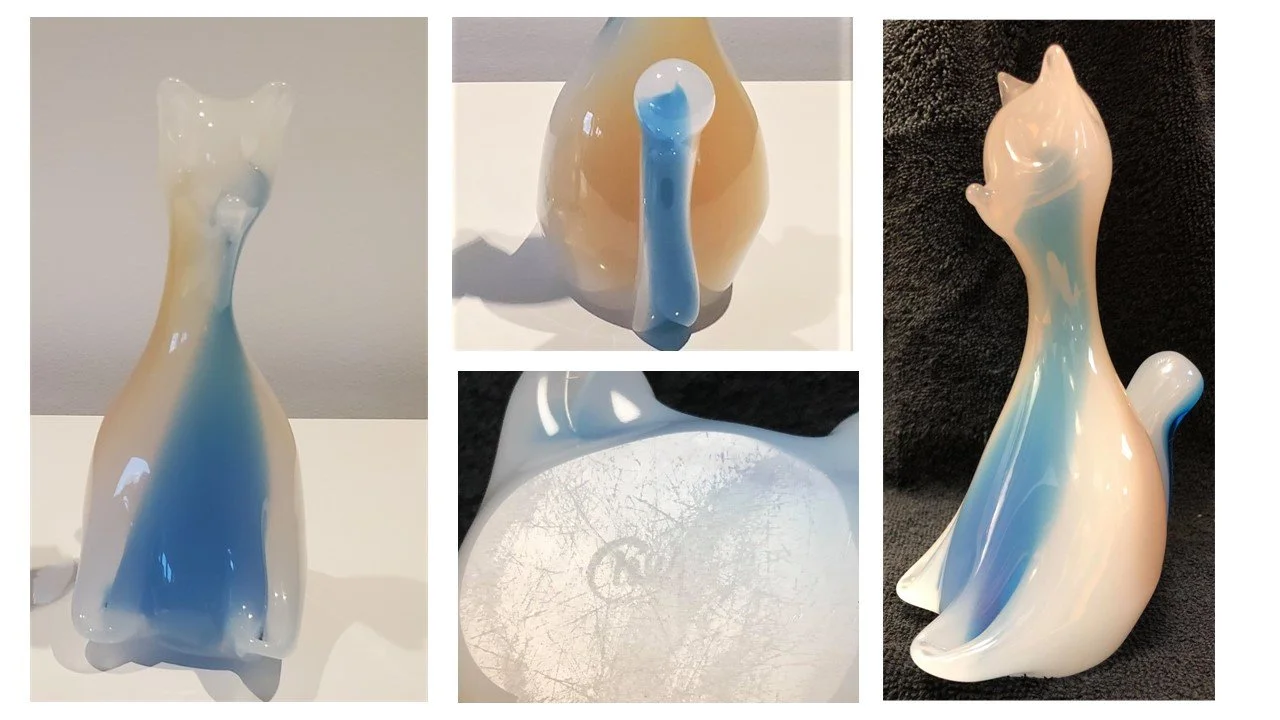
Owner – once again, Troy Danby.
However, the Chalet opaline elephants and polar bears had no colour added to the mix.
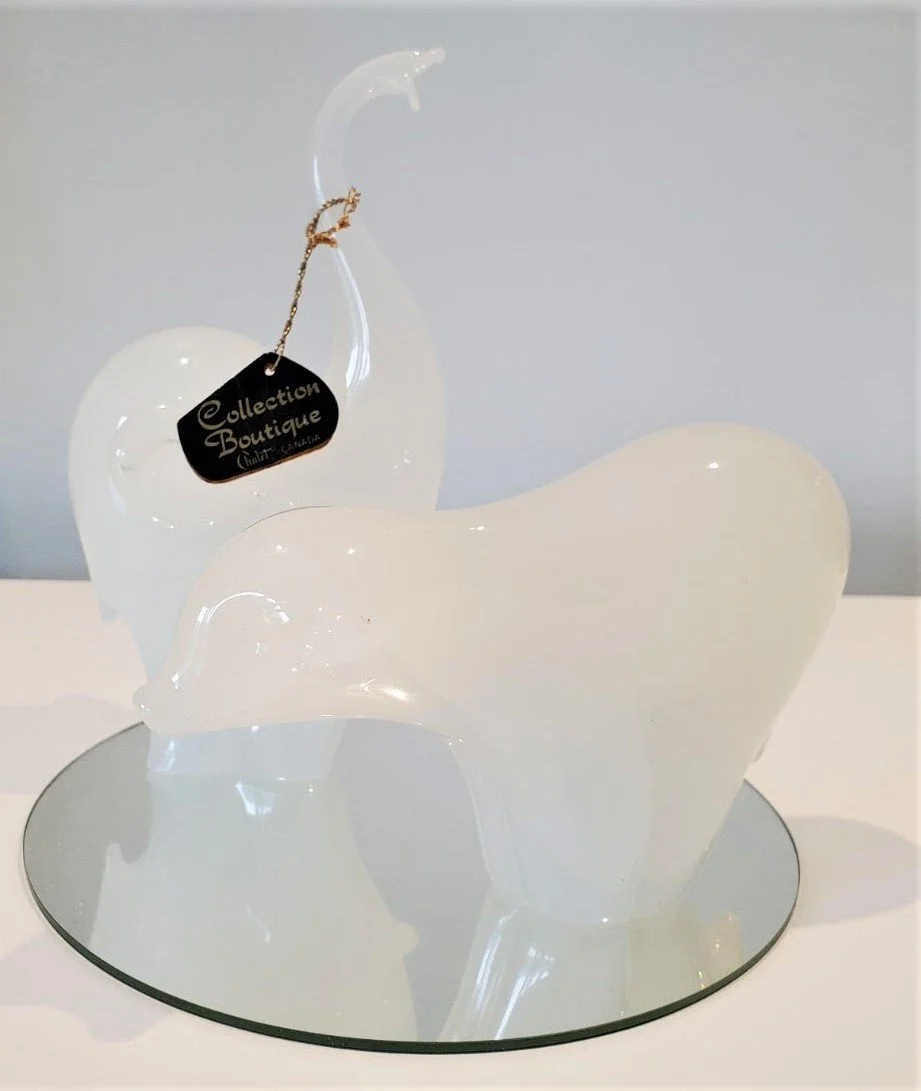
From the collection of Deborah Patterson.
Two styles of baskets.
A BB1:
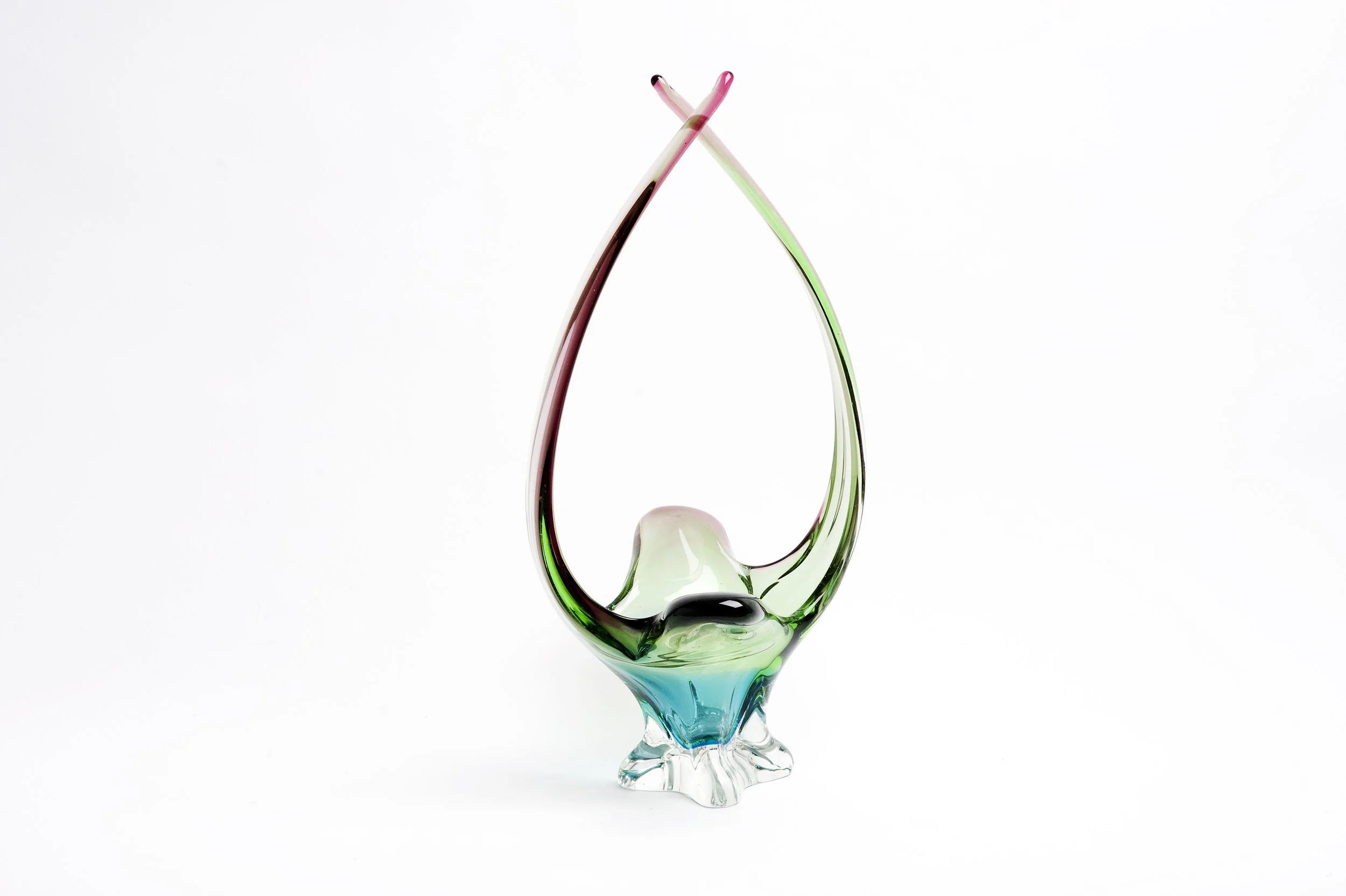
Photgraph courtesy of Grace Woods.
A millefiori:
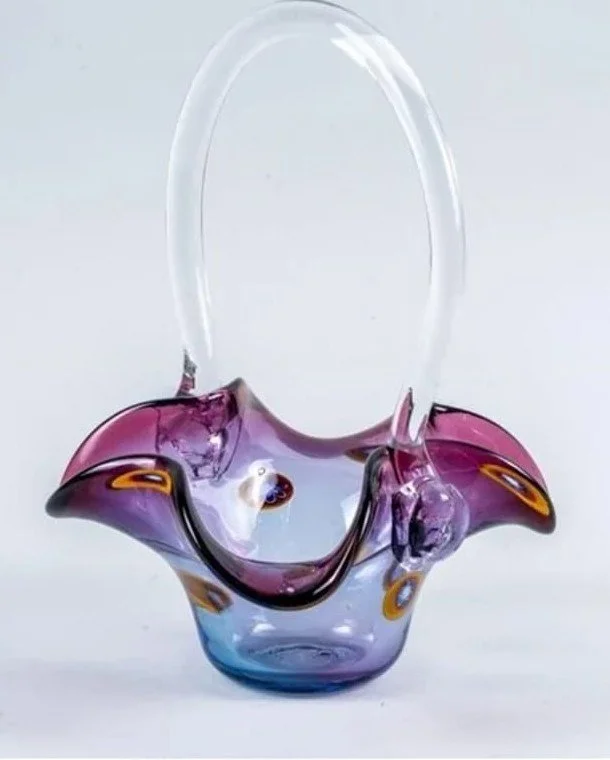
Yes – really a verified Chalet piece. The “murine” is made by fusing and pulling a bundle of different colored glass rods into a long cane. This “glass sausage” is then sliced into small discs with mosaic flower-like patterns which are then embedded in the clear crystal. Millefiori means ‘a thousand flowers.” This basket is only 1 of 3 millefiori Chalet baskets of which I am presently aware.
A stunning leaf:
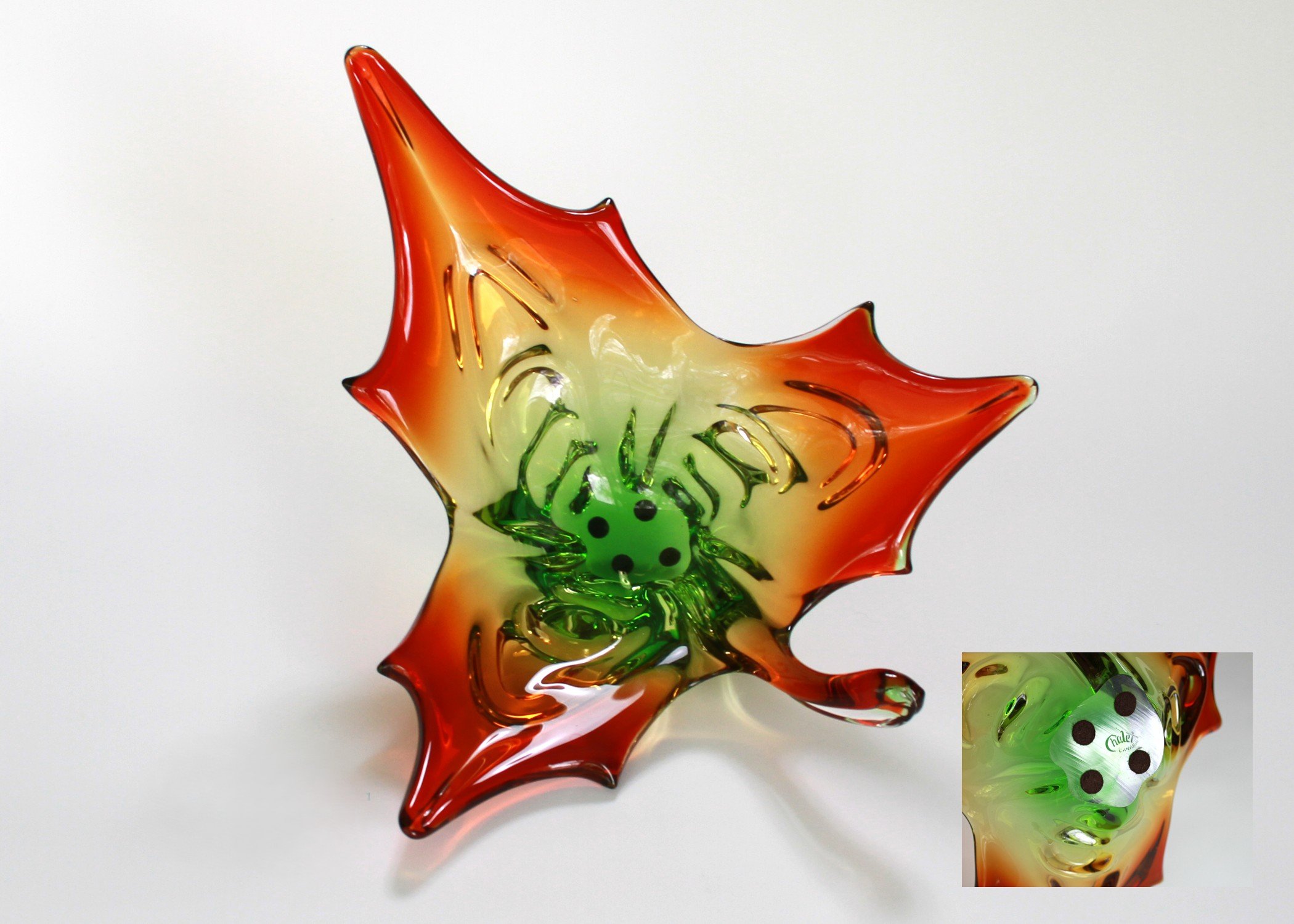
From the collection of Jon Saxon.
Two Chalet “ribbons:”
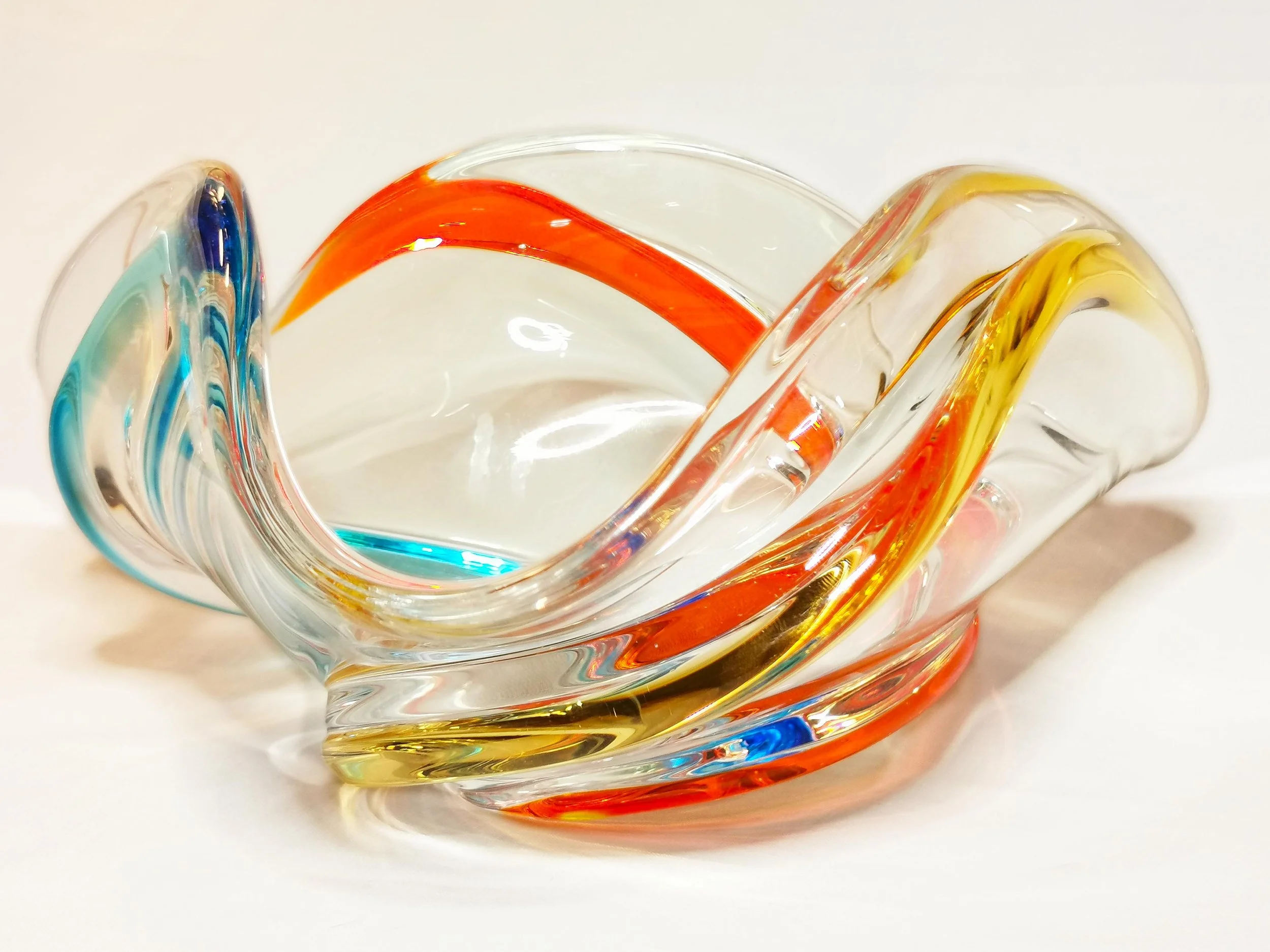
Swirling around in Bob Burgess’s “Cave of Wonders.”
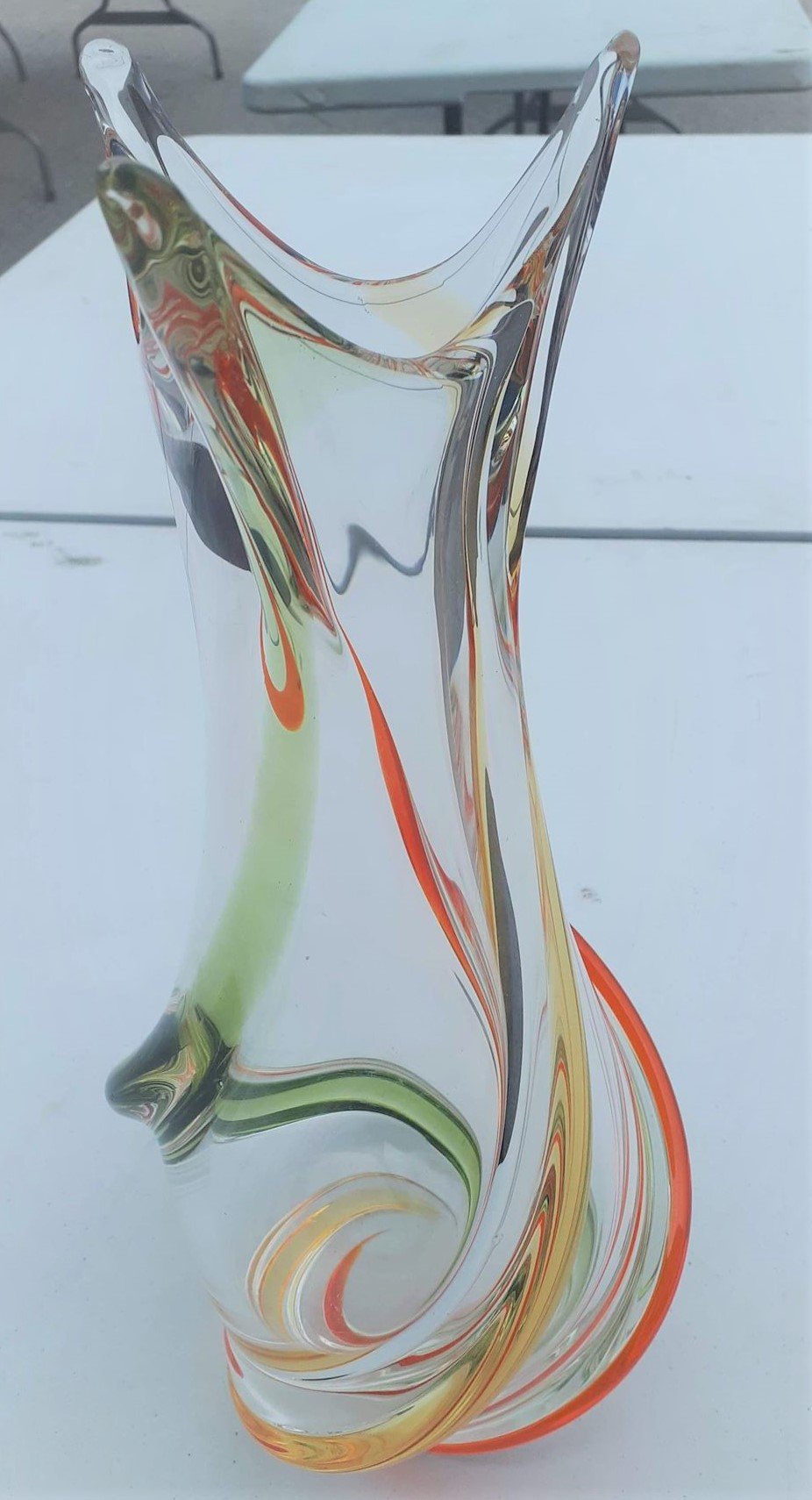
Photograph courtesy of Jeremiah Shaver.
A one-of-a-kind:
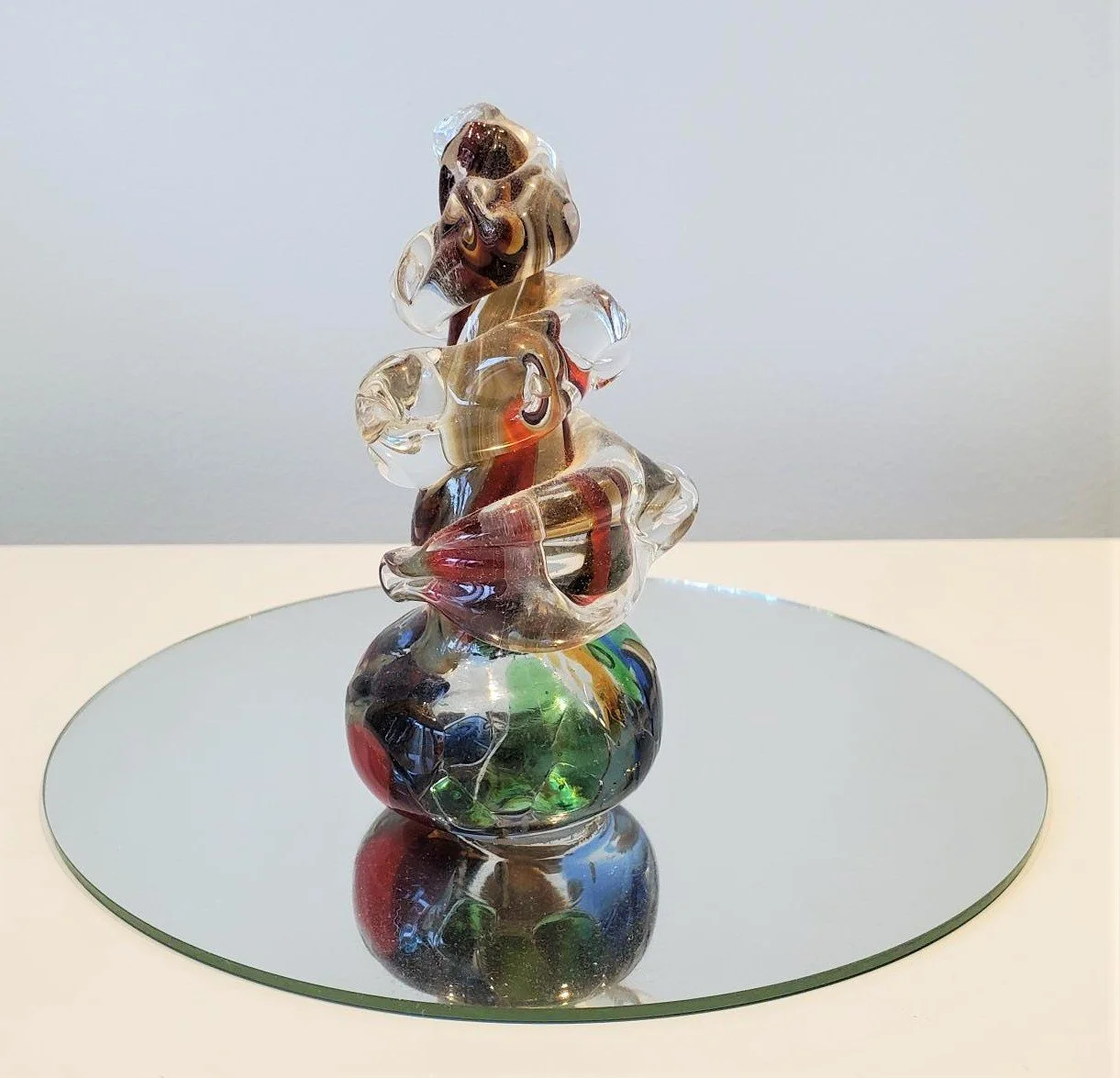
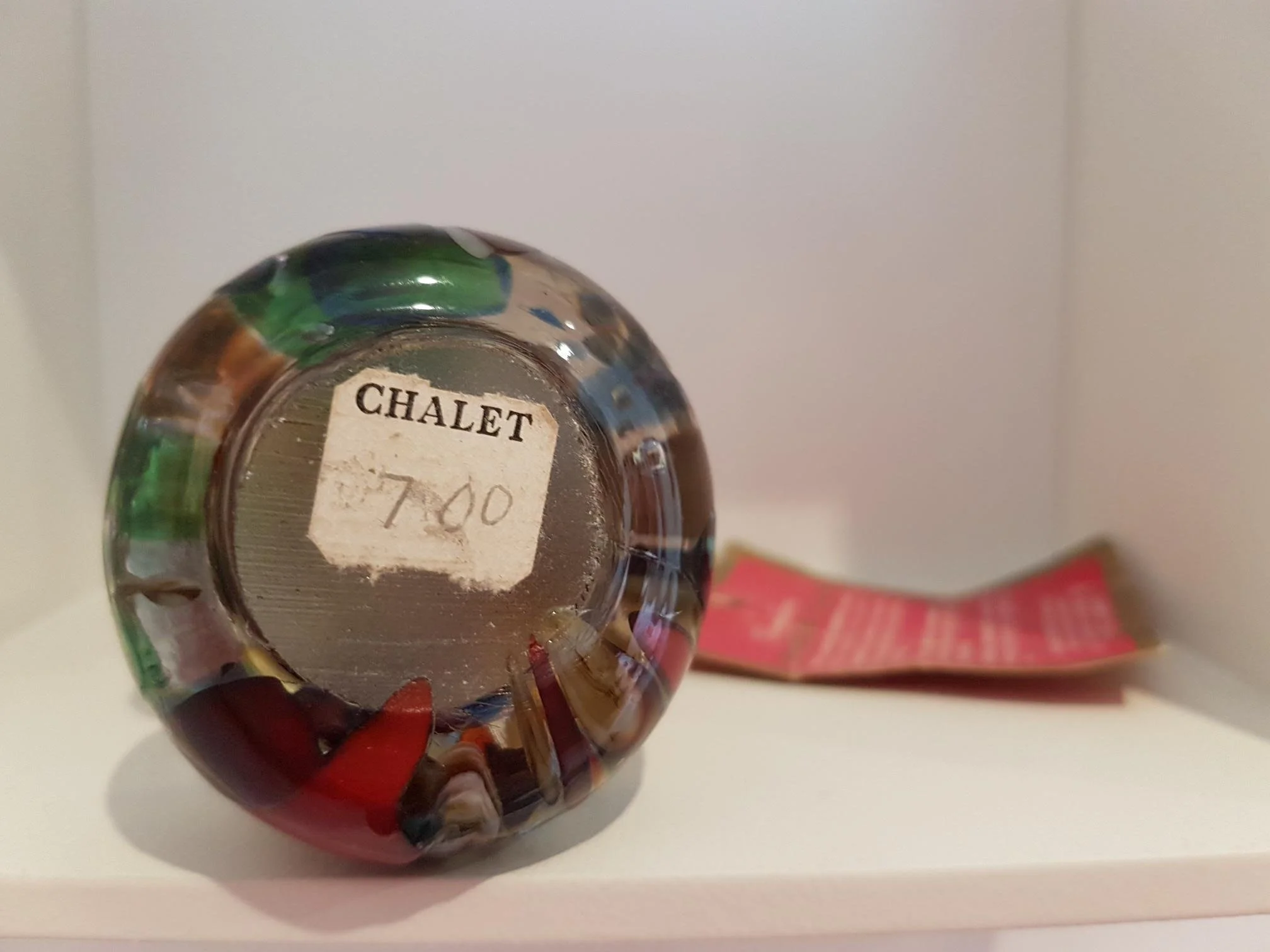
This little guy, stands only 4”, is unique not only in its styling and colouring but retains a Chalet inventory label that was used as a price sticker. I imagine this would have been sold directly from the factory showroom.
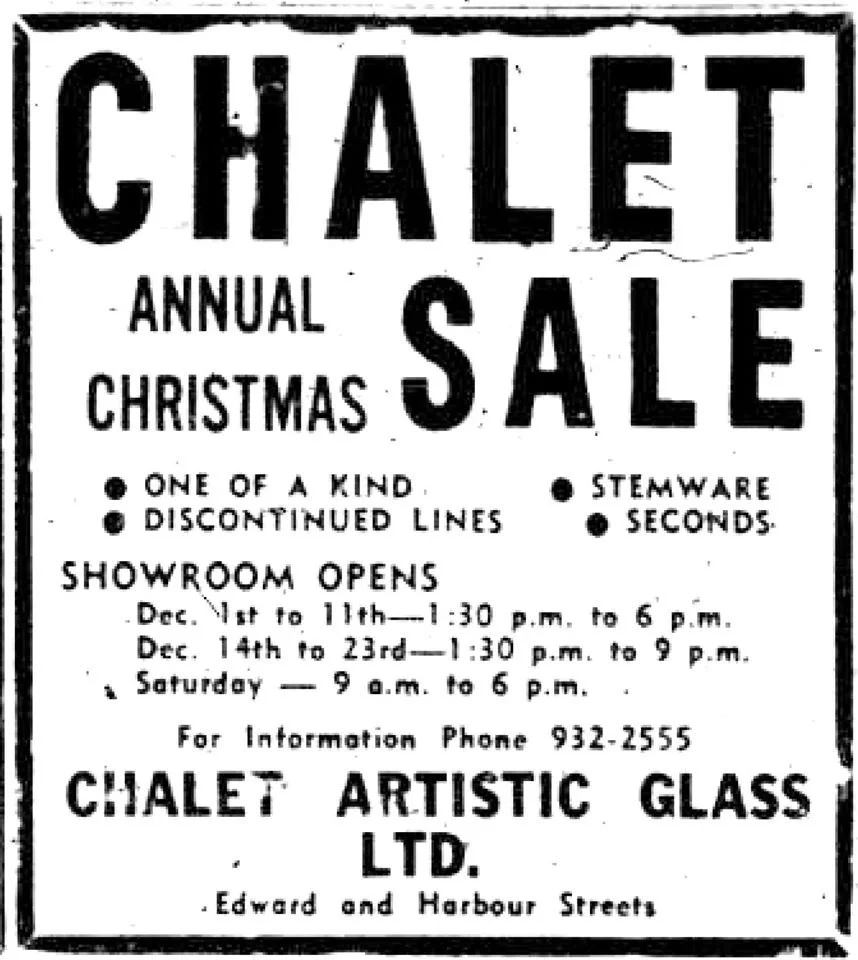
Chalet company advertising for their 1970 Christmas sale. Courtesy of the Cornwall Community Museum archives.
Multi-tone paperweights:
The Chalet Maestri and artists attending the 2010 Chalet exhibit in Cornwall were astounded to see these forms. To a man – none were aware that the company had ever produced paperweights. This suggests that only Chalet owners and master glassblowers Sergio Pagnin and/or Luigi Tedesco were involved in their creation. Moreover, the numbers of found paperweights do not contradict this theory as they are quite rare and could easily have been produced in a weekend run. We have been told by the artists that it was quite typical for the Chalet owners to work over a weekend on new designs and sample pieces.
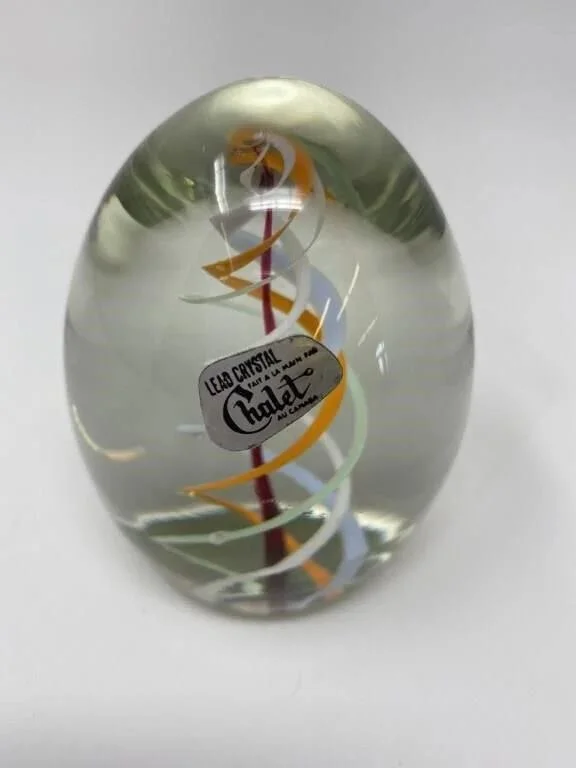
This 4 coloured inclusion “DNA” paperweight is from the collection of the Cornwall Community Museum. Photograph courtesy of curator Don Smith.
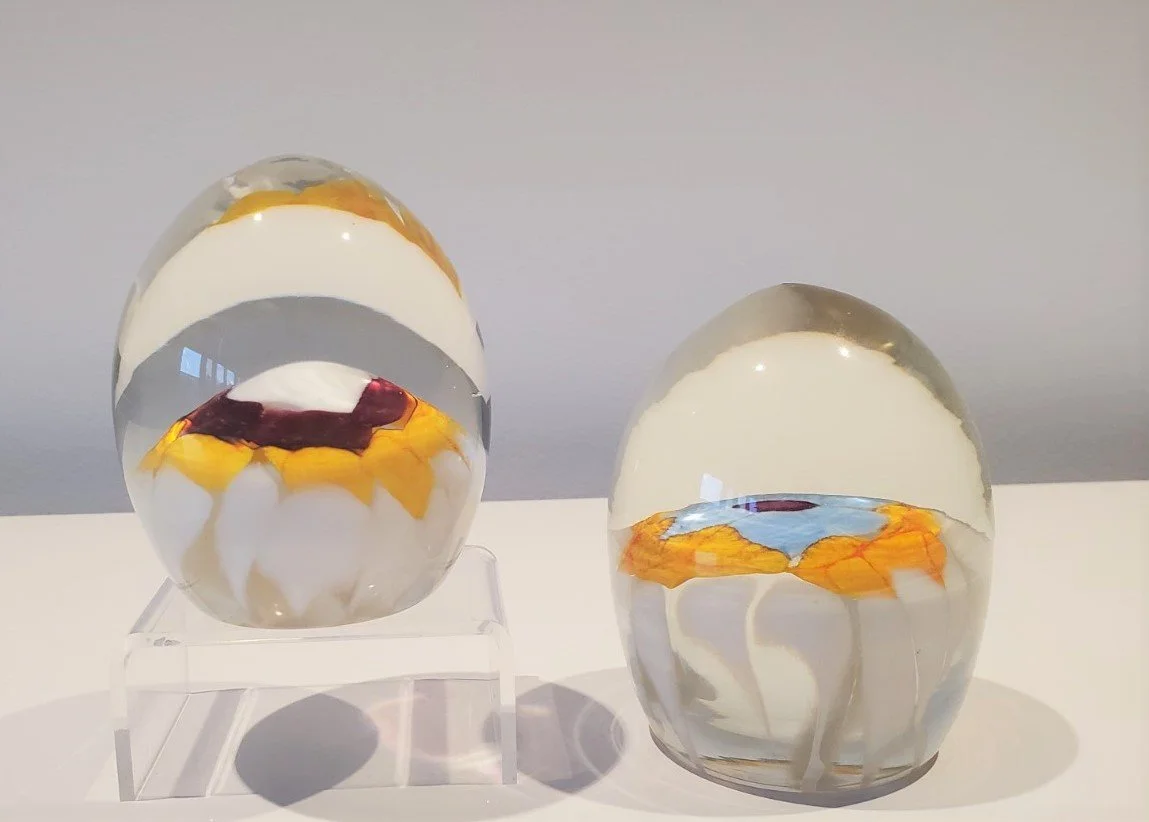
“Sea anemone” paperweights from the collection of Deborah Patterson.

This multi-toned “confetti” paperweight from the collection of Deborah Patterson.
Chalet Christmas and ring trees.
Christmas trees:
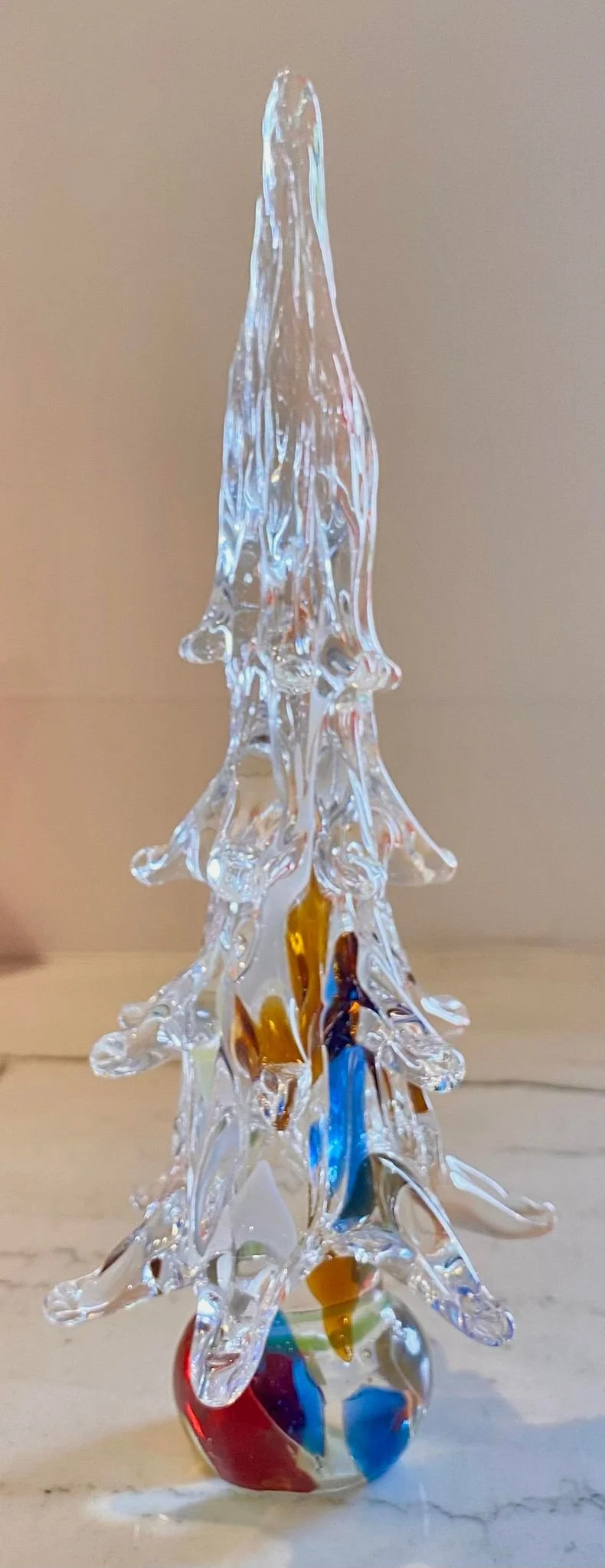
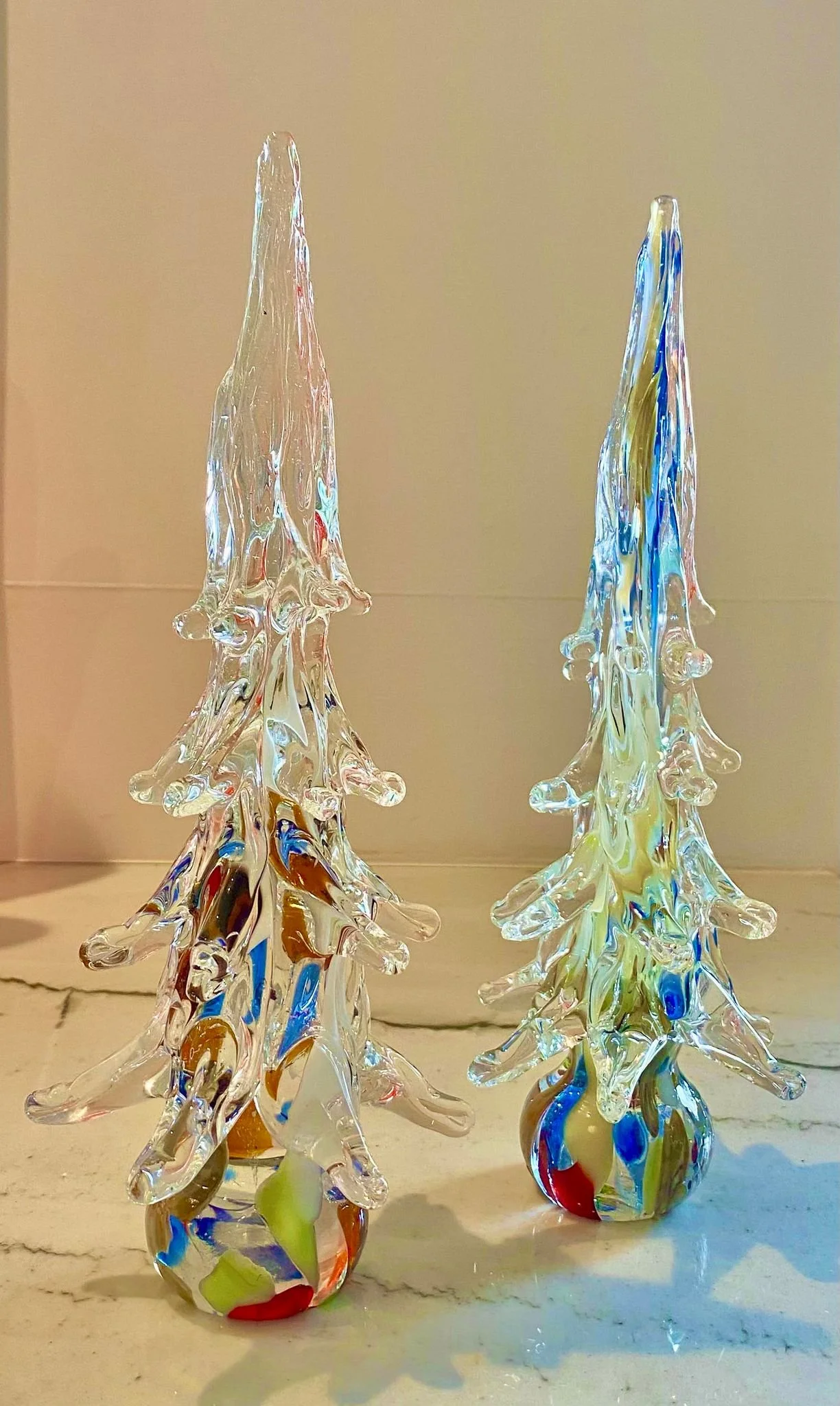
From the forests of Jonathon Tremblay.
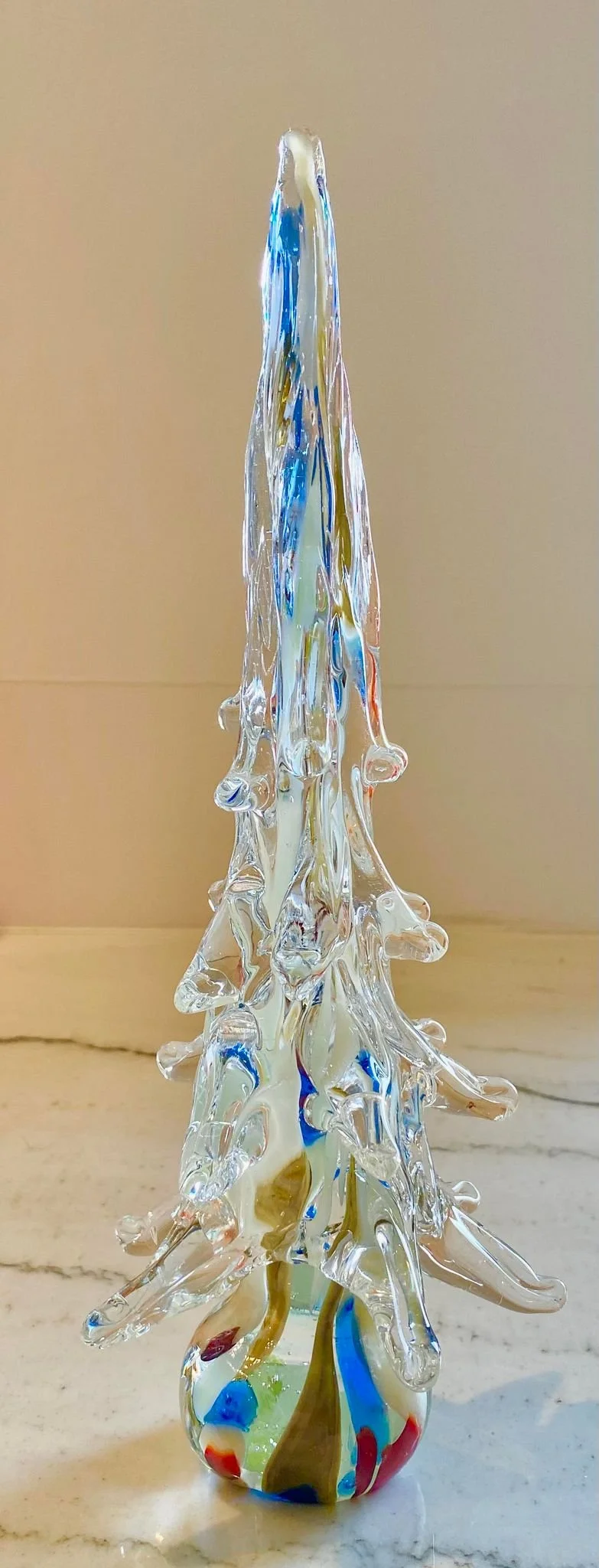
A ring tree:
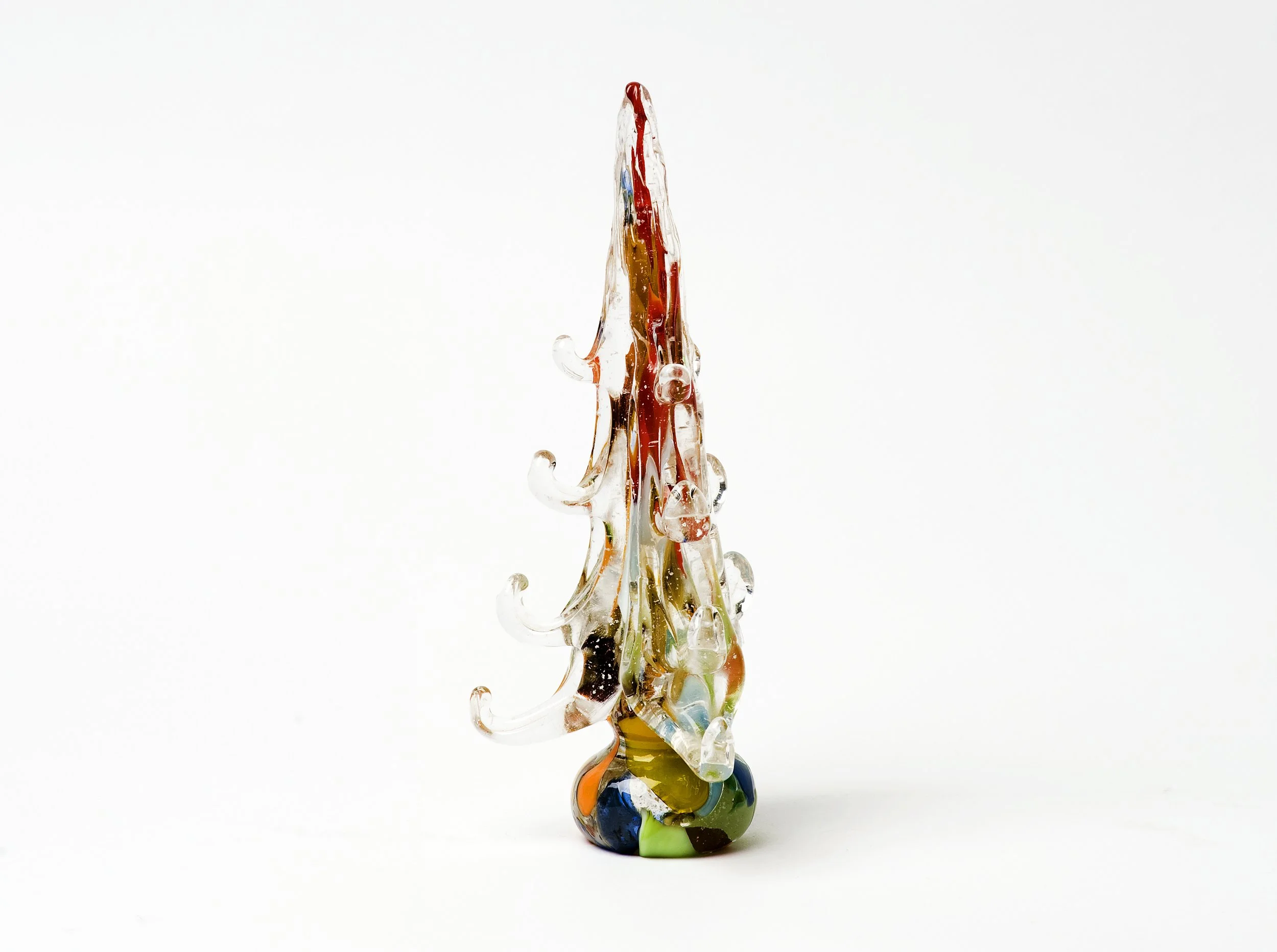
One of my first pieces.
A startling vase:
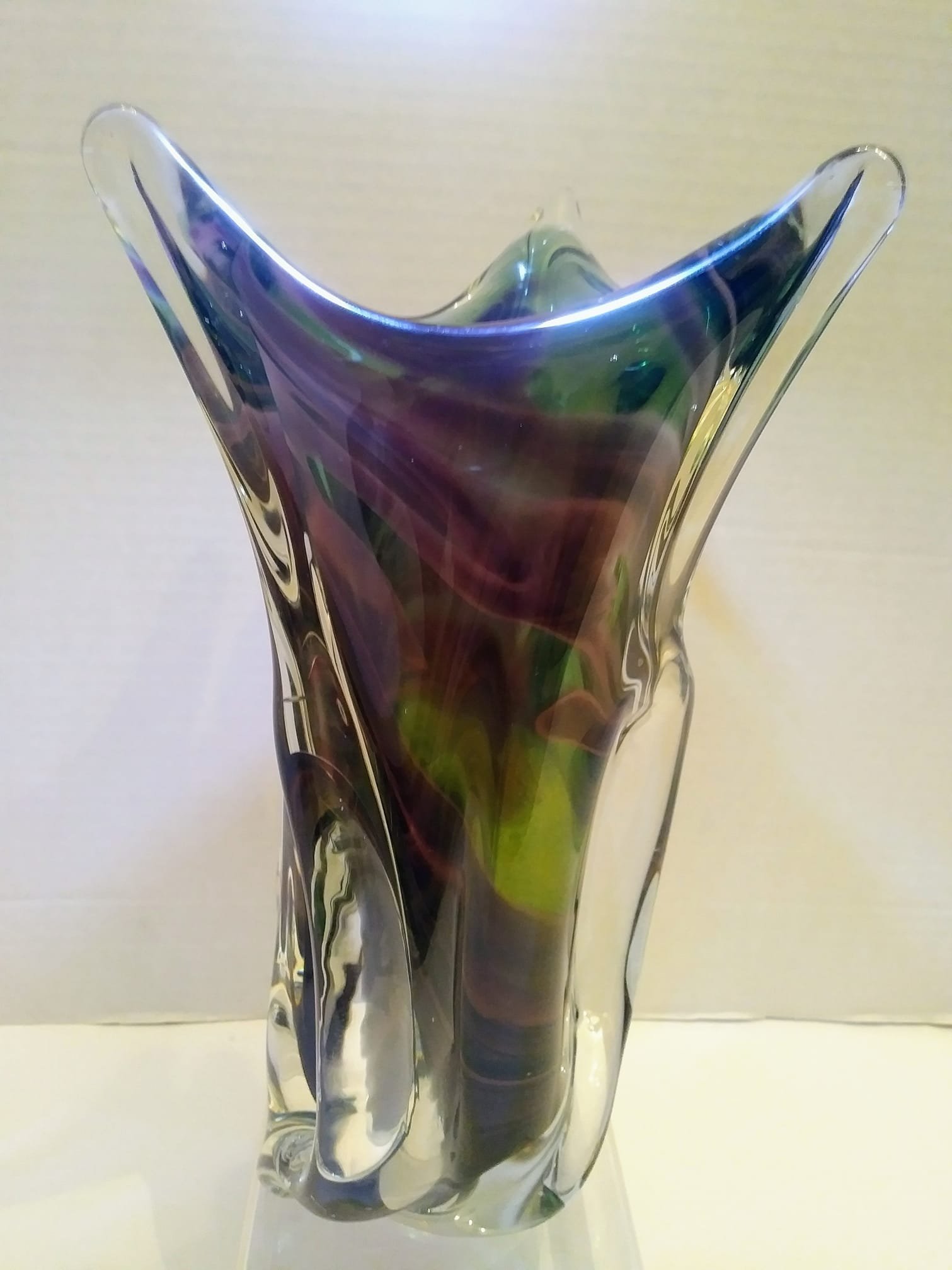
Etched “Chalet Canada.” Photograph courtesy of Cindy Bishop Laughlin.
I hope to be able to add more multi-tone forms to this article as time goes by. In fact, I am sure I will be able to do so as “Never say Never!”
