Chalet Gets its Irish On
Throughout the entire operation of Chalet Artistic Glass (from 1962 through until 1975), the most oft shade of green used by the company was olive green. However, we know that Chalet’s colour palette was composed of an always changing kaleidoscope of tones and hues. Given the day, I thought it would be fun to take a closer look at a few other shades of Chalet green – those that evoke “Irish.”
First, for interest’s sake, let’s take a look at how “The Irish” view the colour green. The colour green has complex, layered meanings in Ireland and to its people. Historically, and in folklore, green was considered unlucky. Many believed that it attracted mischievous fairies who could spirit away people wearing too much green as it was their colour. It was also believed that green would bring ill fortune, bad health, or death. This fear was likely exacerbated by the Irish potato famine from 1845 to 1852, in which more than a million people died of starvation. People sometimes took on a green pallor before they died, adding to people's superstitions about the colour. However, over time, this has largely faded in favor of a celebration of the colour, especially for St. Patrick's Day. The modern association with St. Patrick (who banished snakes from the island), and nationalist movements solidified green as Ireland's color – erasing its unlucky past for most.
Although blue was the original national Irish color, green has long since symbolized Irish national pride, and identity. This resulted largely from the Irish rebellion against British rule. A poignant example is an Irish protest song from 1798. "The Wearing of the Green" expresses both sorrow over repression and stark defiance against English rule. At this time, members of the Irish Republican Society of United Irishmen were punished, even executed, for wearing green, the symbol of their movement, whether as clothing, ribbons, or shamrocks. Its lyrics emphasize that while the British were trying to suppress the color green, the spirit of Ireland (represented by the shamrock) would endure. Dramatically lamenting Irish oppression, "They're hanging men and women for the wearing o' the green," the song also conveys hope and resilience, suggesting that the love for Ireland and its symbols would never falter. This tradition of “wearing of the green” is still seen today with green being worn by Irish sports teams (rugby, soccer) and in the uniforms and colours of Ireland’s national airline - Aer Lingus.
Green is also an enduring symbol of Irish faith. The shamrock, a three-leaf clover, primarily symbolizes in Ireland, faith, hope, and love. Even before Christianity, it was tied to ancient pagan and Celtic connections to nature and the power of three. The Celts valued the number three, associating it with the past, present, and future, or the earth, sky, and underworld. It may have also related to Celtic triple goddesses, representing maiden, mother, and crone. The shamrock was then famously used by St. Patrick to explain the Holy Trinity (Father, Son, Holy Spirit) to pagan Celts. While often confused with the lucky four-leaf clover, the shamrock's meaning is rooted in its three distinct leaves, representing core Christian and Celtic concepts. The modern symbolism of the shamrock in Ireland today – it remains a national emblem, deeply tied to Irish identity and St. Patrick's Day. It is still believed to bring good fortune through the virtues of virtues of faith, hope and love. The three-leaf shamrock is different from the four-leaf clover. The rare fourth leaf adds luck, making it an exceptional good fortune charm. Finding one is considered extremely lucky, as the odds of finding one is about 1 in 10,000 clovers.
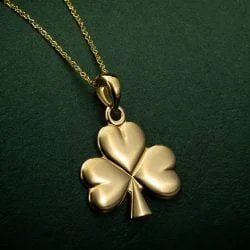
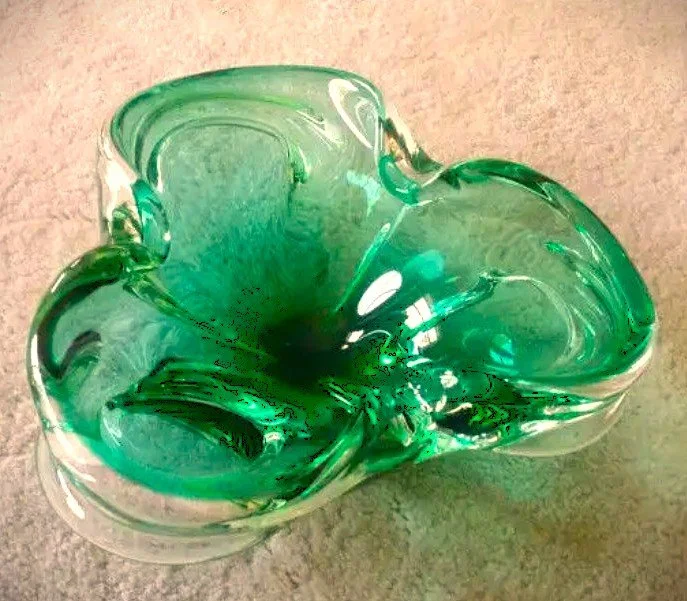
The Chalet version of an Irish shamrock.
While clovers grow globally, the "luck of the Irish" associates them most closely to Ireland. This saying originated in 19th-century America during the Gold and Silver Rush. Many prominent, successful miners were Irish immigrants. Non-Irish miners, perhaps envious or dismissive, suggested their success came from mere "luck," not skill or effort. However, it evolved from a sarcastic jab into a celebration of Irish resilience, hard work, and good fortune, with ties to Celtic folklore like leprechauns and four-leaf clovers. The negativity of the phrase shifted as the Irish community demonstrated incredible perseverance through hardship, transforming the "luck" into a symbol of inner strength, spirit, and making your own fortune. The meaning also merged with traditional Irish folklore, linking it with lucky charms like the four-leaf clover and mythical leprechauns guarding pots of gold. Today, it remains generally a positive expression, meaning uncanny good fortune or success against the odds, often used as a well-wish.
Green is also a symbol of nature to the Irish. To them, it reflects Ireland's famous green, rolling countryside. Linked to the regenerative powers of the natural world and spring. In essence, green is deeply Irish, today primarily representing both its beautiful land and resilient spirit but still retaining ancient ties to the supernatural, Irish folklore and heritage and the struggles of the Irish people for independence.
There are 3 shades of green associated with the “Emerald Isle” and each represents Irish pride and spirit, nature, as well as being symbols of renewal, growth, and energy. The three are vibrant, natural greens.
“Kelly green” which is a medium-bright, pure, intense green. It was named after a common Irish surname. This green shade is strongly linked to heritage and pride - Irish identity, St. Patrick's Day, and leprechauns.

“Emerald green” which is a deeper, rich, jewel-toned green evokes Ireland's famously lush green landscapes and the Irish countryside. It symbolizes abundance and vitality.

Johnny Cash was inspired to write “40 Shades of Green” during a trip to Ireland. in 1988, he sang it backstage at RTE’s Late late Show.
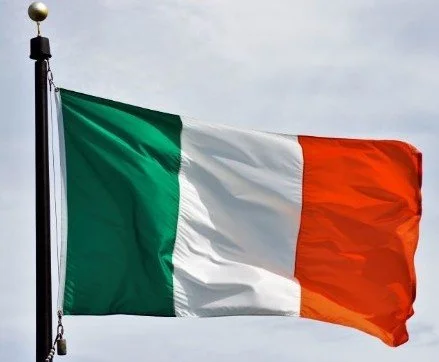
“Irish green” which is a specific green often used in official symbols – such as the Irish flag adopted in 1937. The Irish flag colors of green, white and orange are arranged as vertical stripes with green at the hoist (left), white in the middle, and orange on the right. The three colours symbolize the dual nature of the Irish people and their history. Green symbolizes the Irish Catholic community, Irish nationalists, and Gaelic tradition. Orange represents the Irish Protestant minority specifically associated with William of Orange. White symbolizes the hope for peace and unity between the two traditions.

Chalet did not restrict the use of bright, vibrant, or deeper jewel tone greens to their animal figurines.

The most typical use of bright, vibrant greens were in Chalet’s animal figurines.
But bright greens are often also found in both the crystal hand-blown forms and the glass hand-molded bomboniere. And in quite the range of each.
So, let’s see how Chalet wears “Irish greens”:
Through this St. Patrick’s Day celebration of how Chalet does “the wearing of the green.”
In the Chalet hand-molded bomboniere, bright, vibrant greens are seen as often as Chalet’s iconic olive.
Green was not restricted to either a particular bomboniere form, branding, or distributor. Both rare and common forms have been found:
Common.
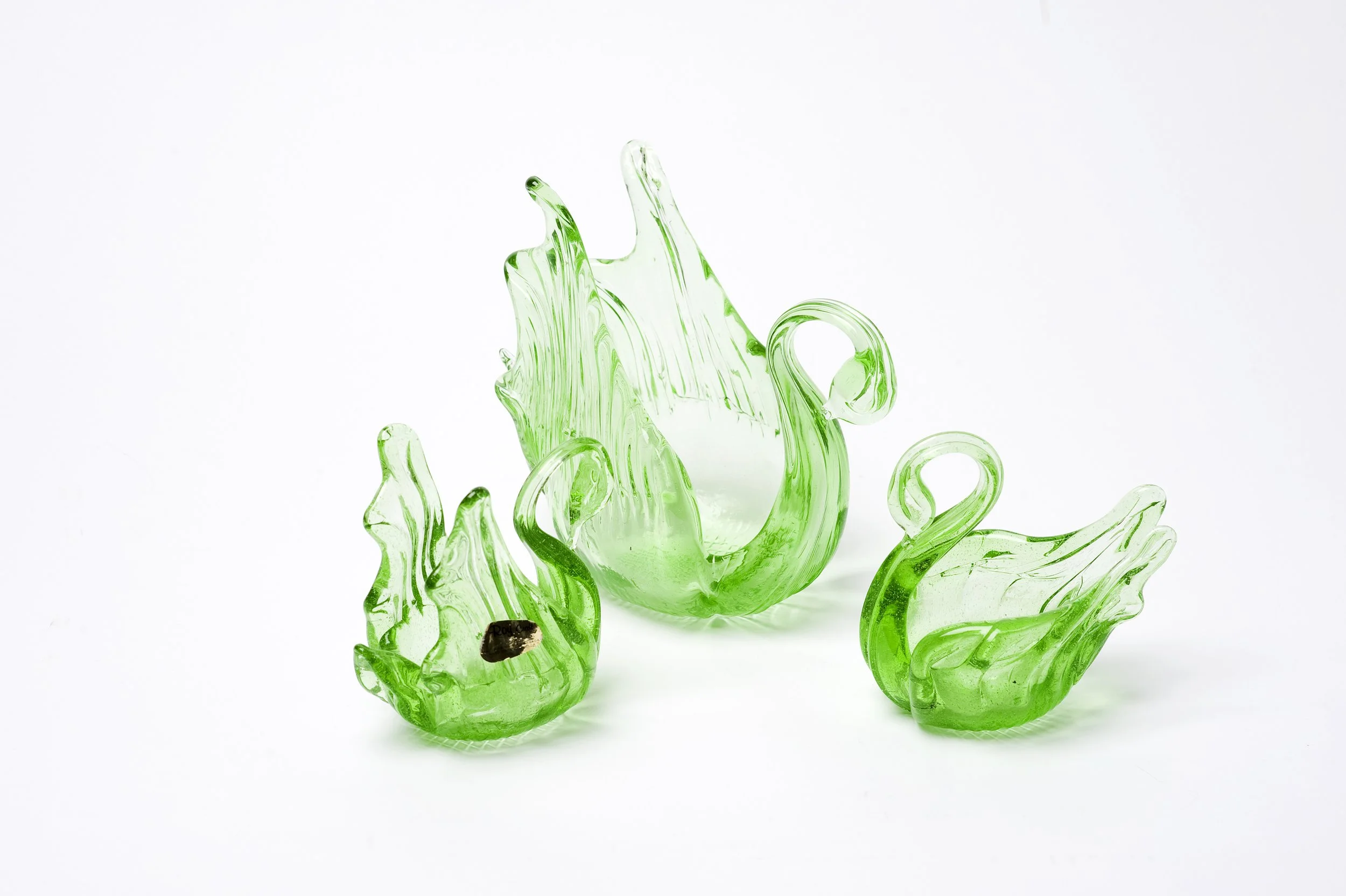
Swan bomboniere at left retains its original Roy Craft distributor’s label.
Rarer.
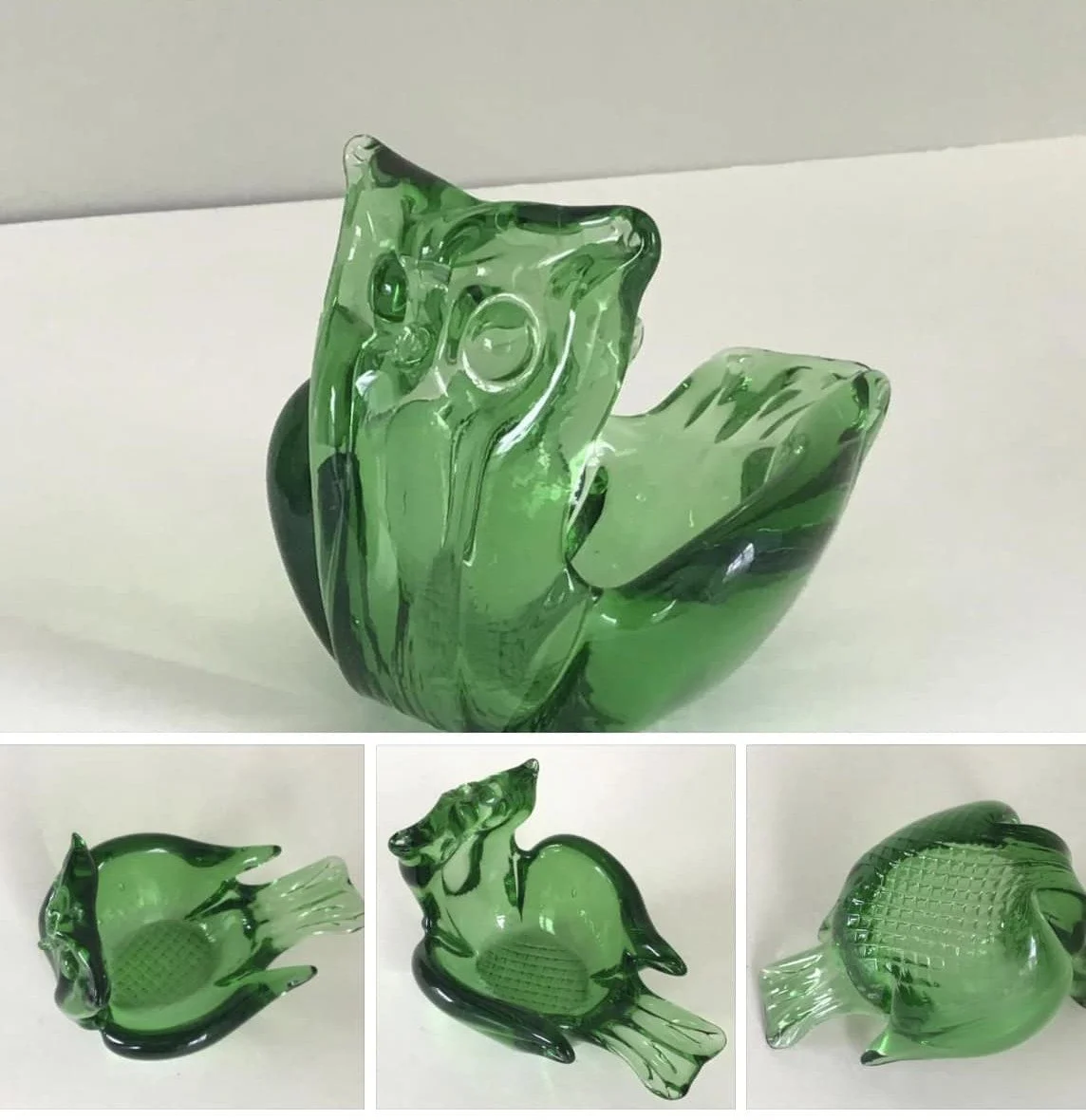
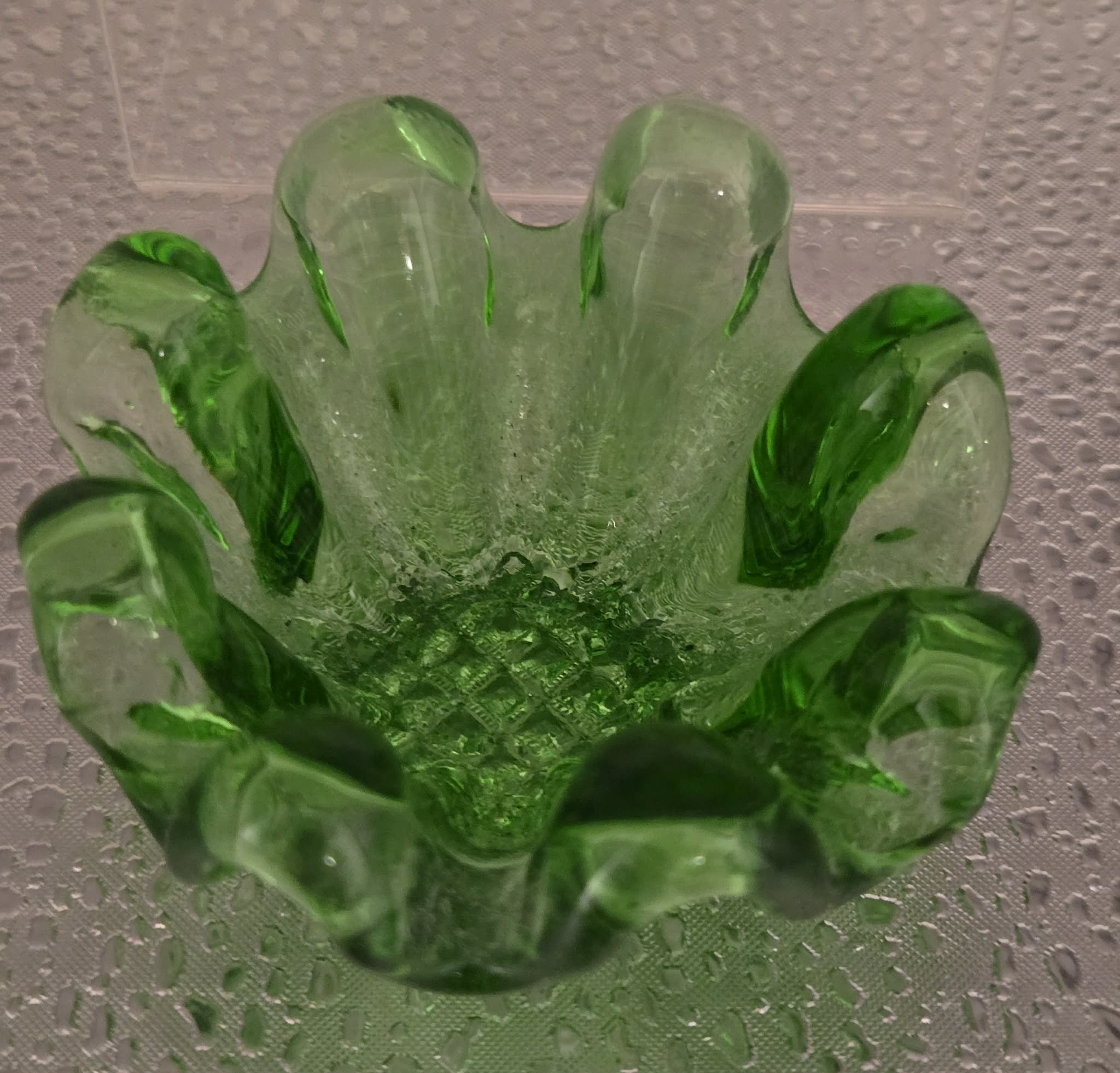
From the collection of Pina Pina.
Very rare.
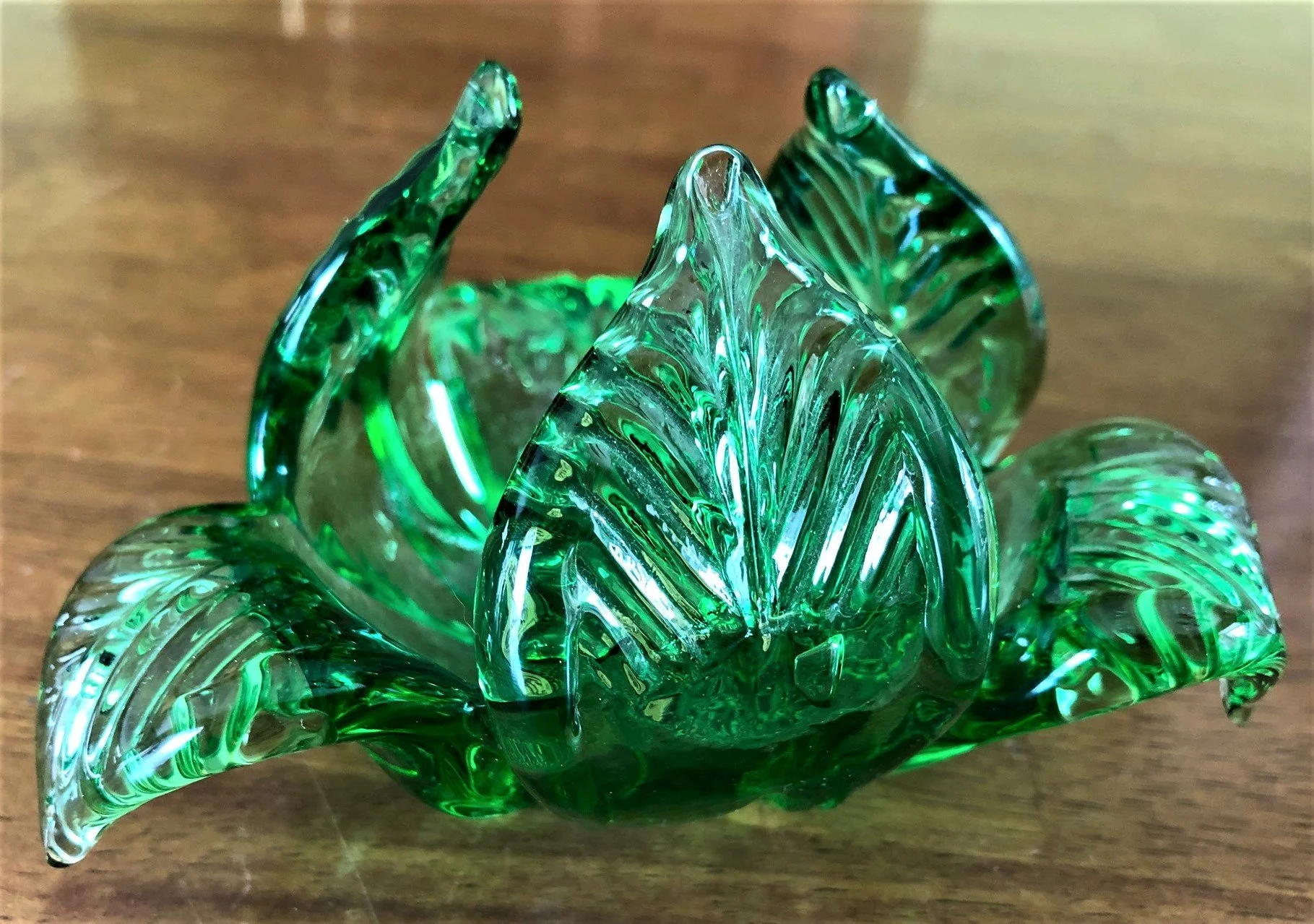
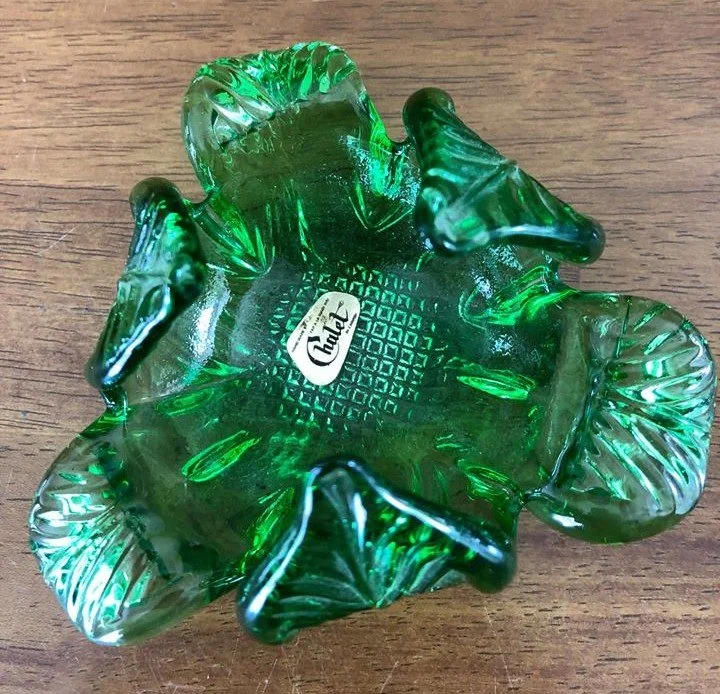
This Chalet company branded flower bomboniere from the collection of Joan Jet.
A few more:
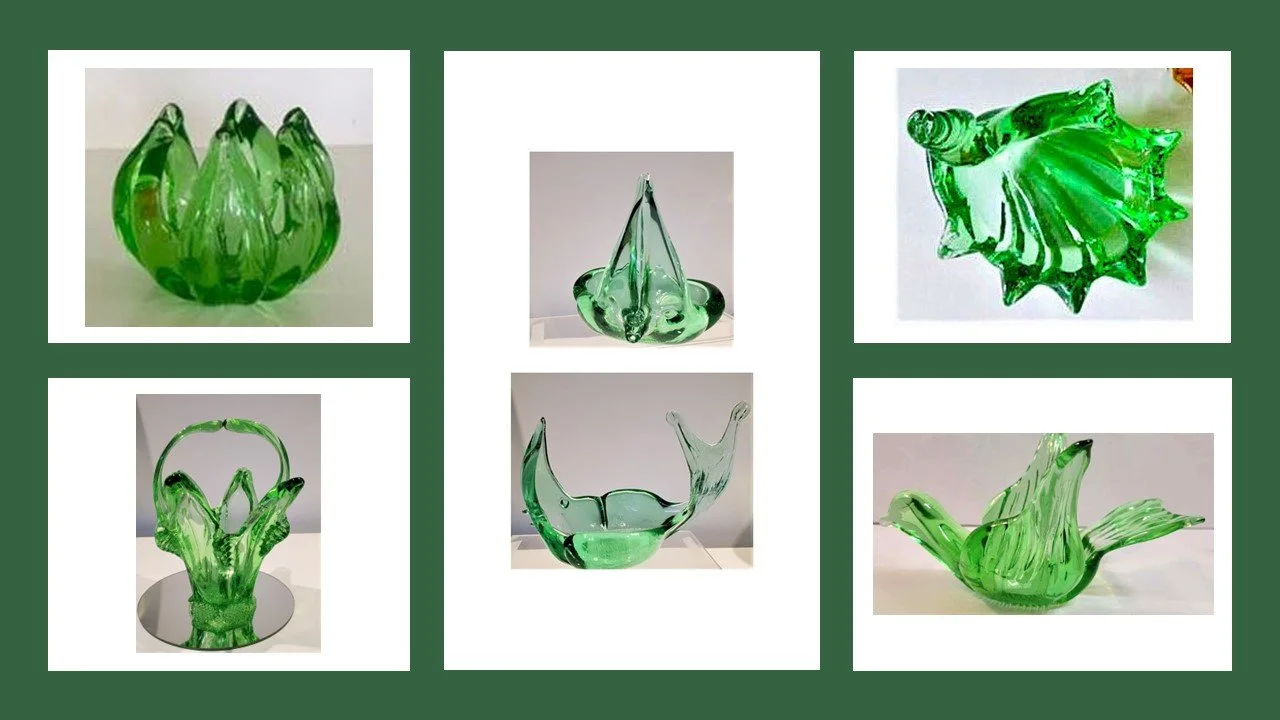
Shell bomboniere at top right from the collection of 50 Shades member Jo Highland.
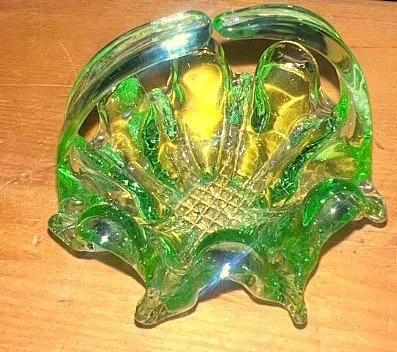
This diversity is also seen in the Chalet larger, hand-blown forms. However, with the exception of Chalet “ribbons,” Irish green Chalet is much rarer.
A most unusual and stunning Chalet polar bear figurine.
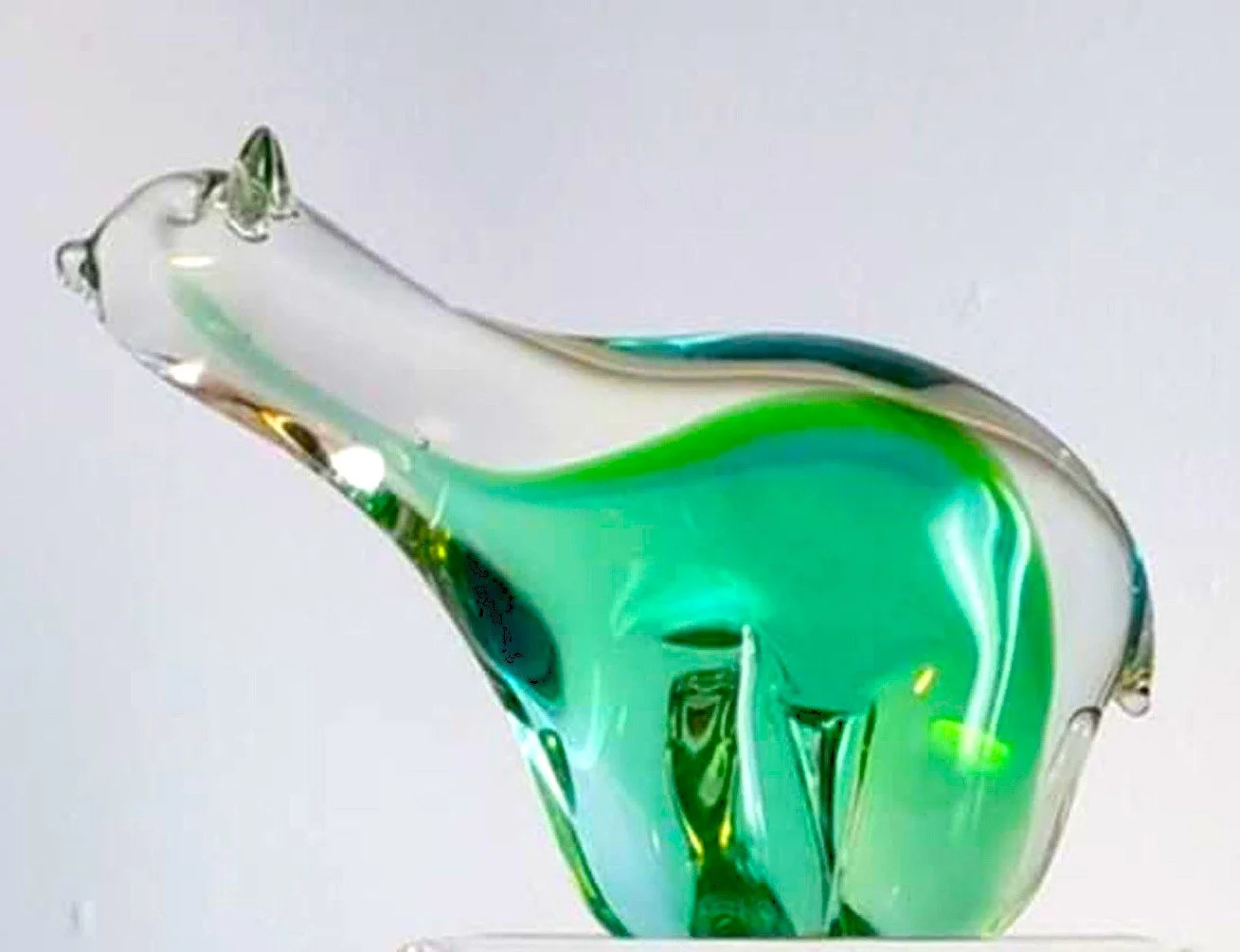
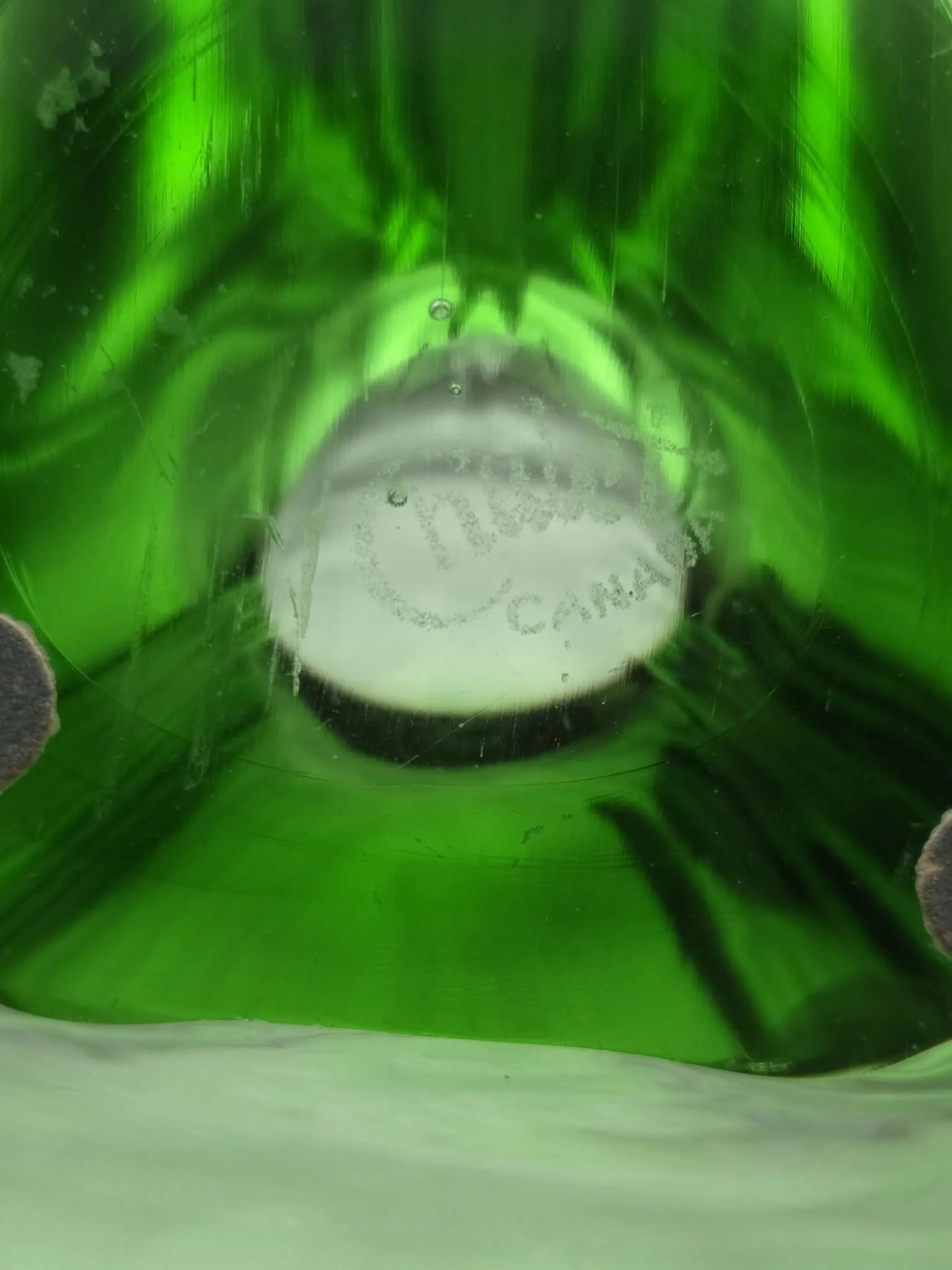
Etched “Chalet Canada.” Photograph courtesy of Cathy Antonyshyn.
Two exceptional vases:
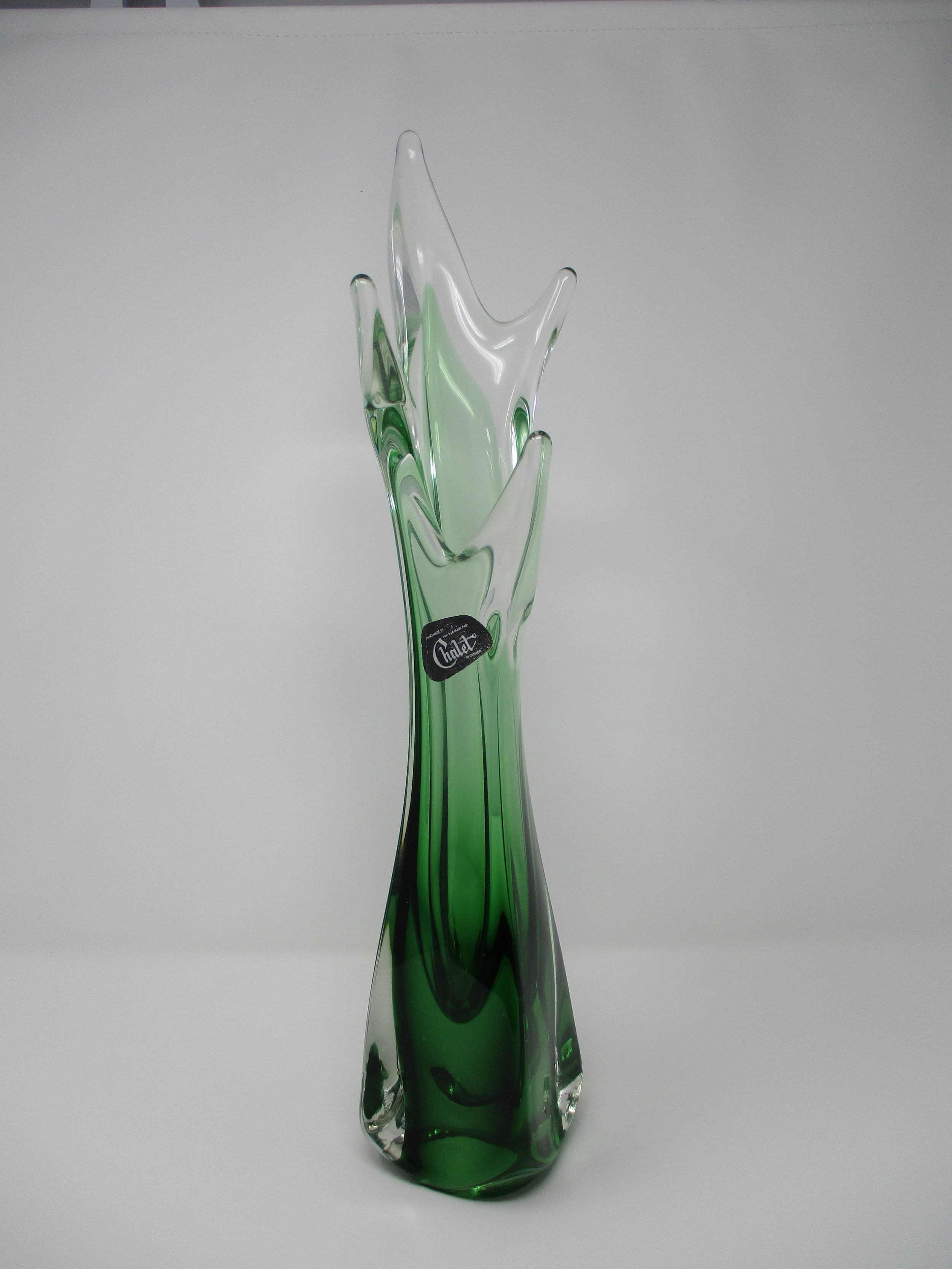
Note another Chalet company branding on this emerald green beauty.
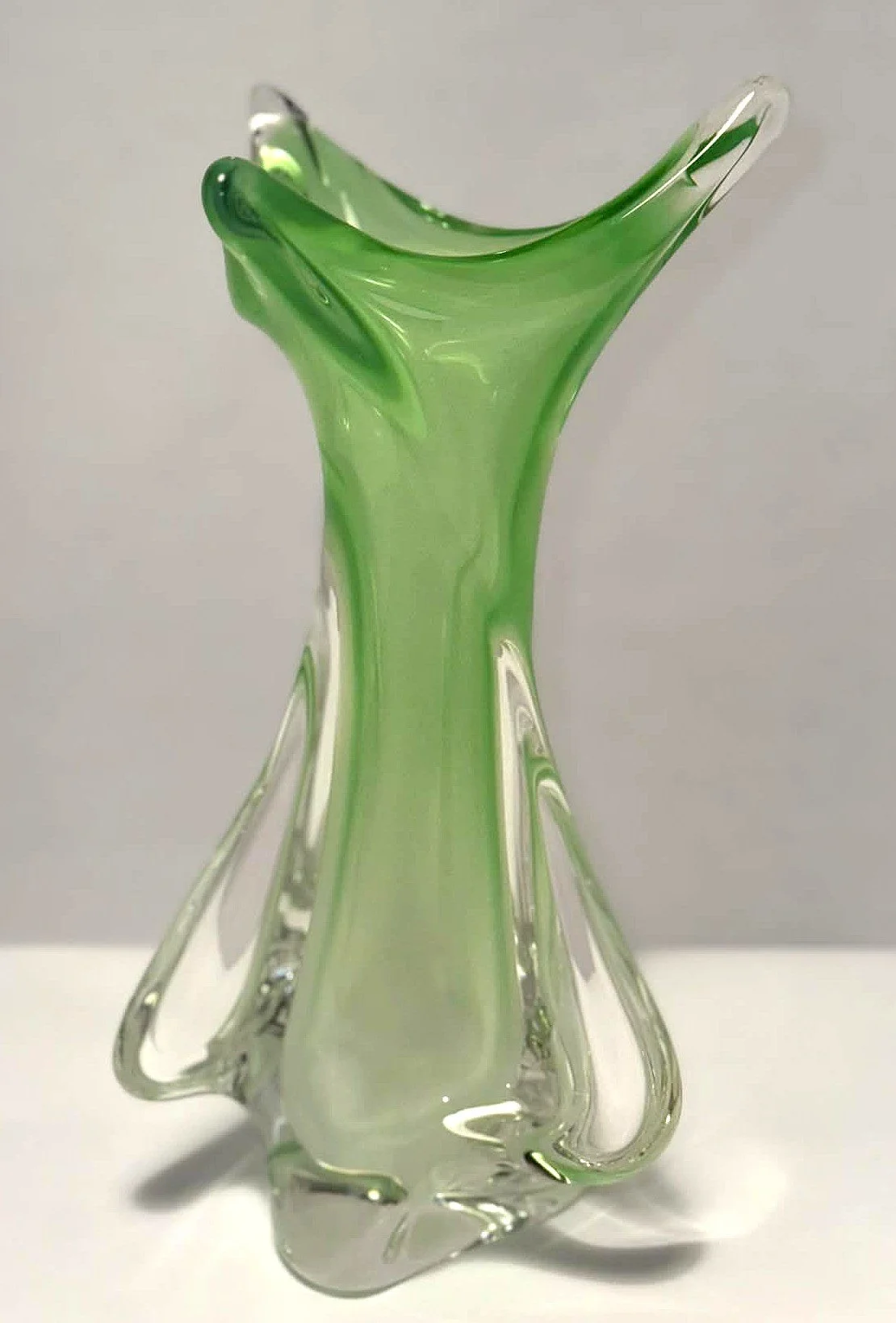
This “Kelly green” twist brings good fortune to Laura Zamos.
The Chalet “ribbons” in green just seem to vibrate with energy:
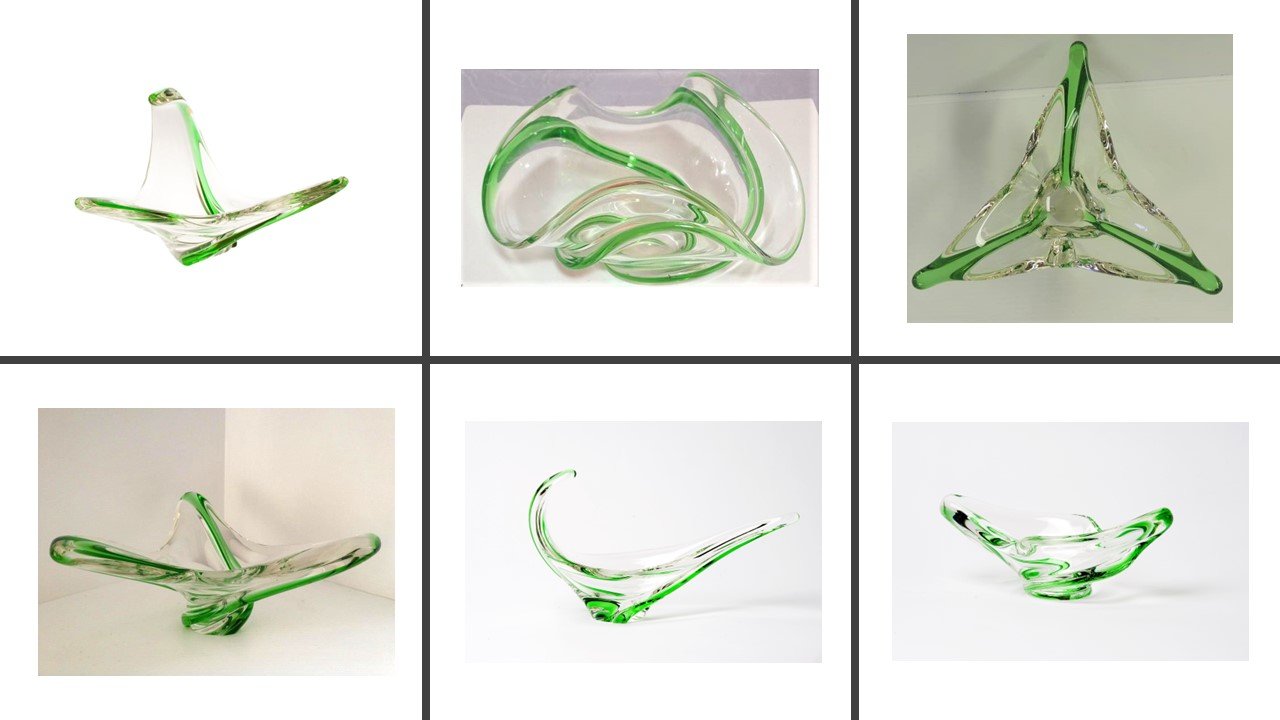

A display of four from the collection of Roy Prins.
We have found some rare forms:
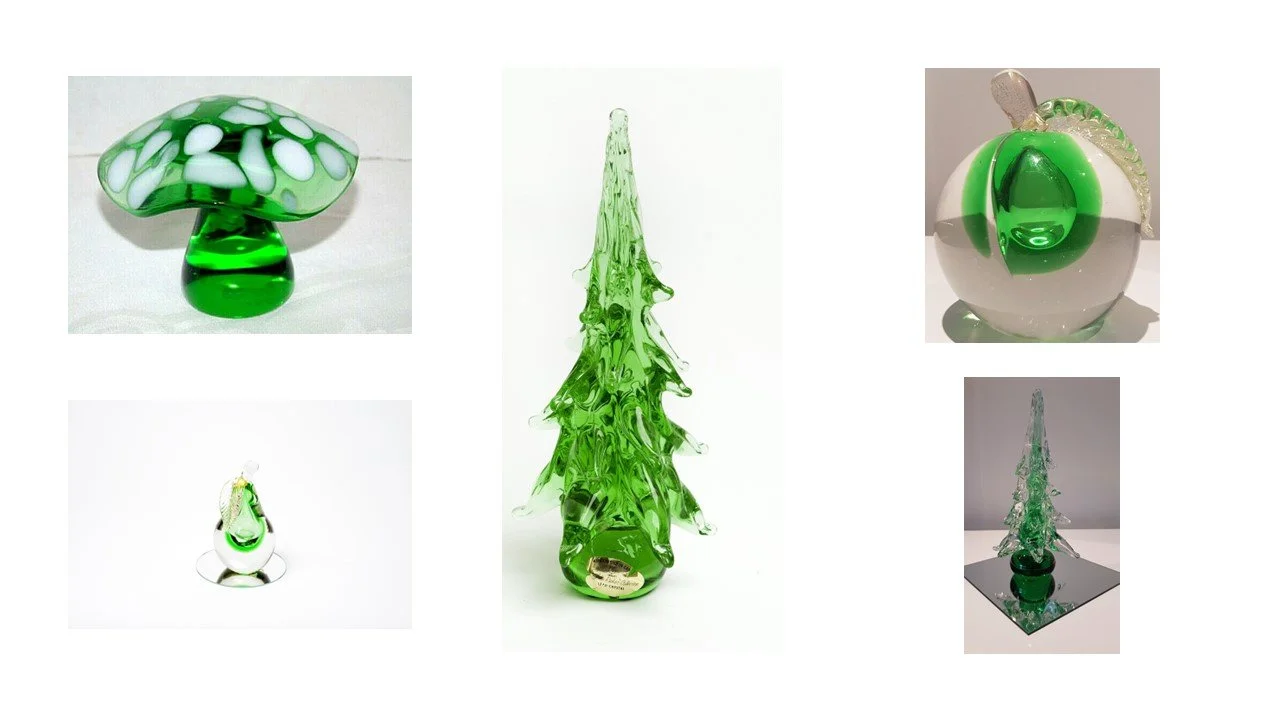
A leprechaun could be hiding behind this (top left) Chalet mushroom belonging to Melissa Patterson. Note that the Chalet Christmas tree in middle does not have “ice” coating it’s branches as does the one at lower right.
An exceedingly rare pitcher.
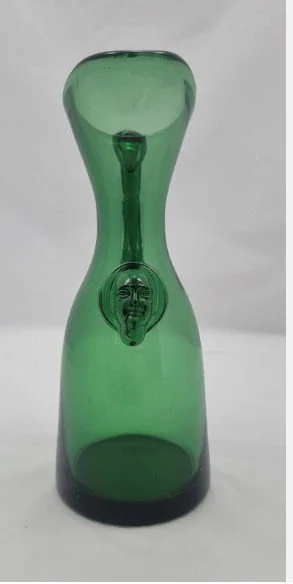
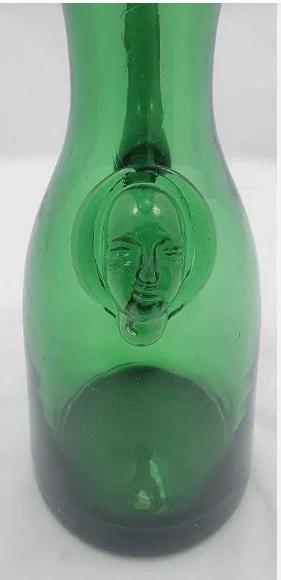
With the applied “face” prunt designed by Chalet Maestro, chemist and owner - Sergio Pagnin.
Seldom seen “sleigh” center pieces:
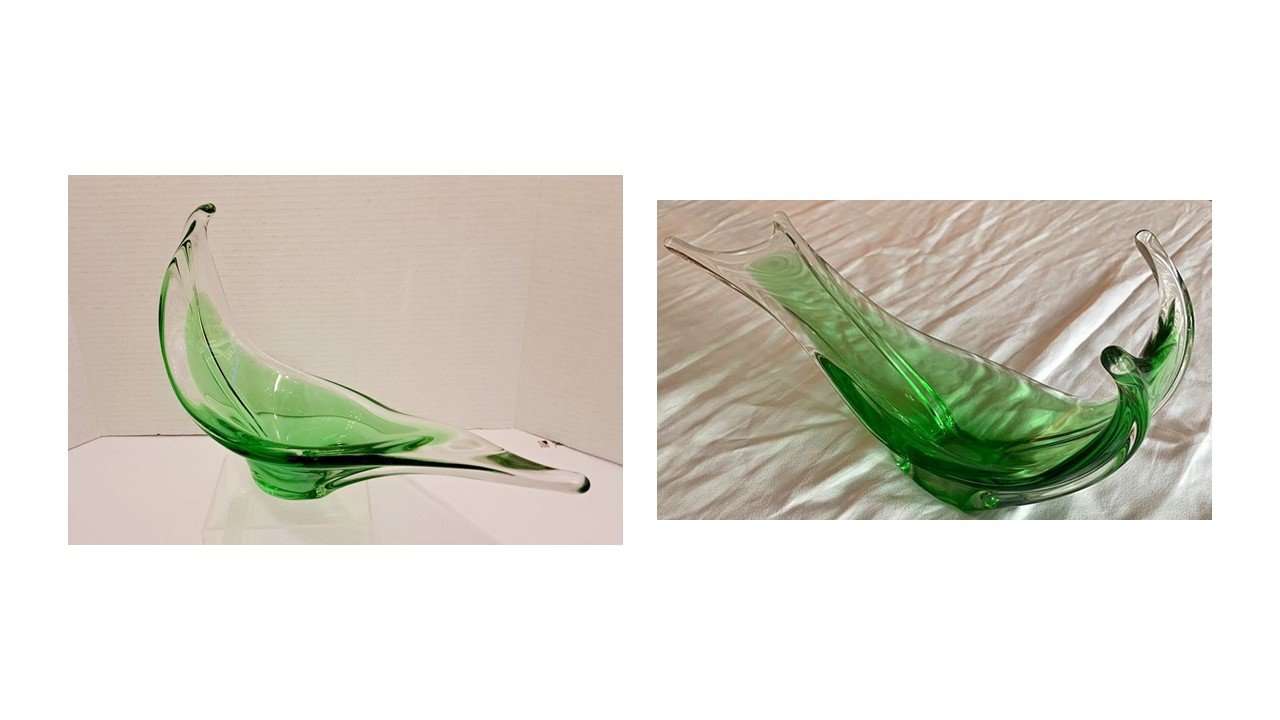
Photograph at left courtesy of Cindy Bishop-Laughlin.

Pina Pina collects good glass!
Another exceedingly rare centerpiece.
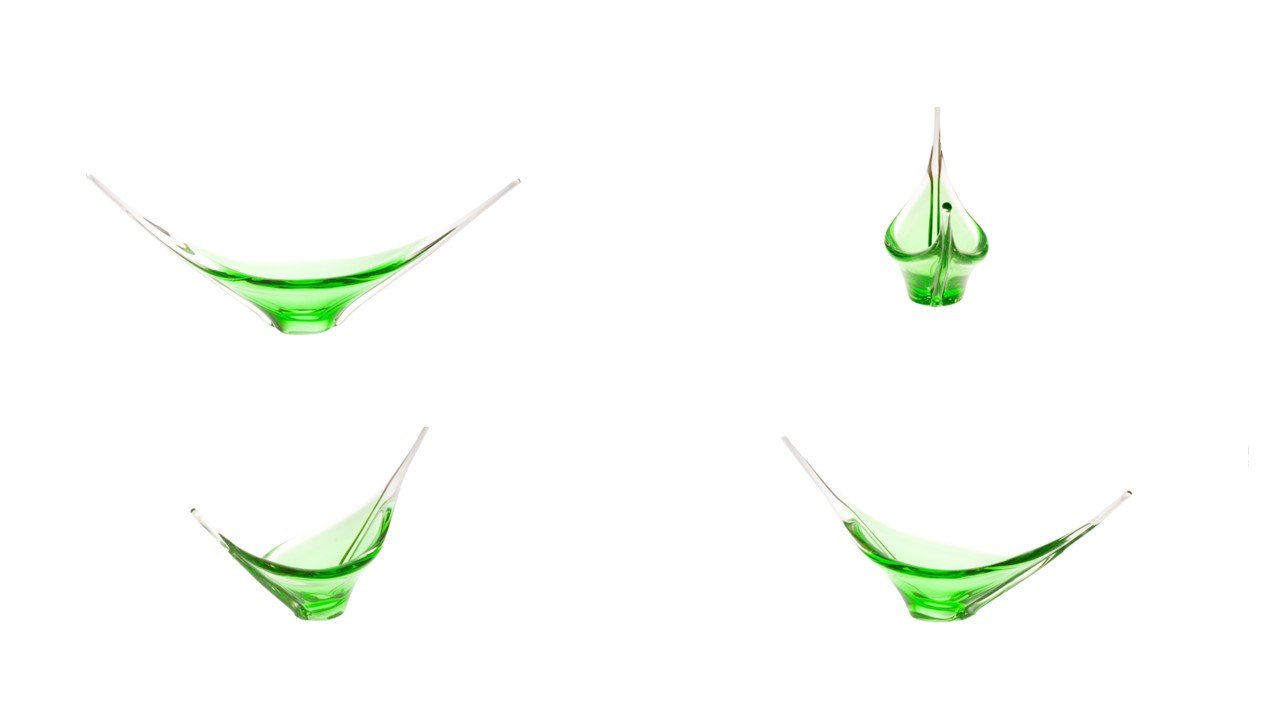
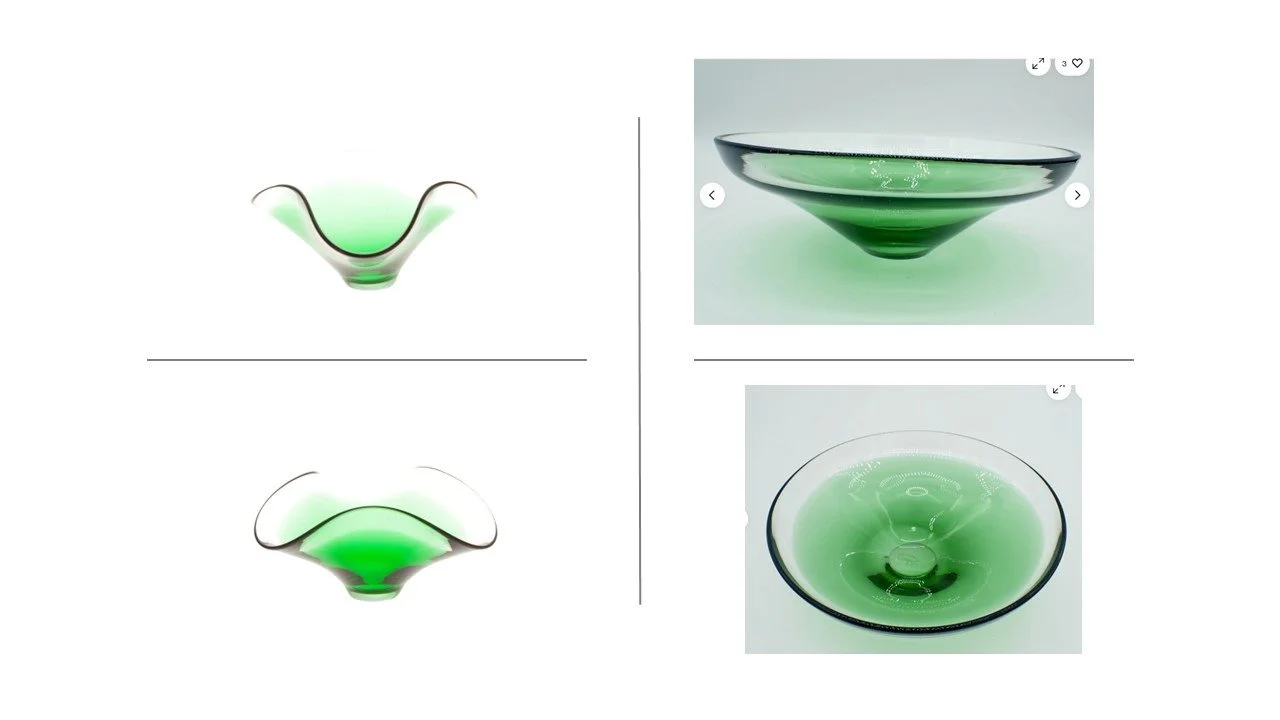
Two different styles of Chalet bowls.
Even a special order!
To honor Canada's 1967 Centennial, Grace Plastics (Howards & Sons Ltd., the Cornwall subsidiary of this worldwide company) ordered these for their employees. This also coincided with the company's expansion in Cornwall.
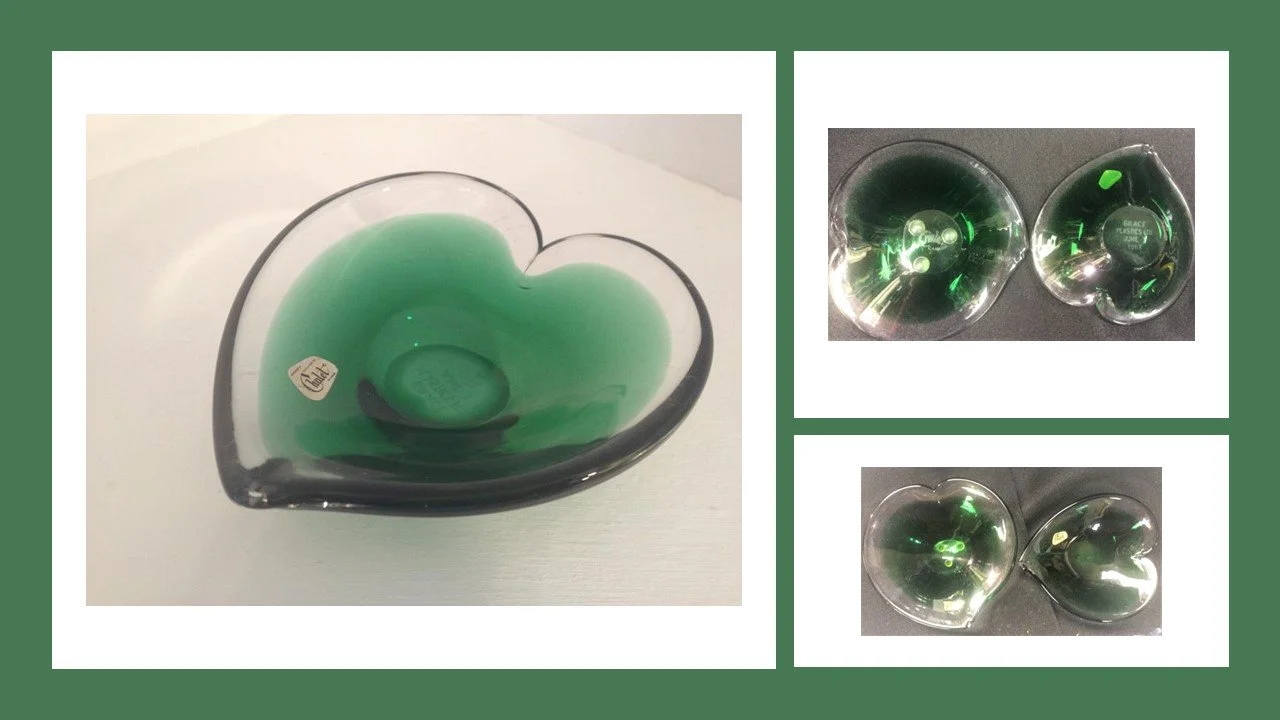
For more details, please refer to pages 100 and 101 in the chapter “Chalet Unusual” in “Chalet Crystal Clear Continued.”
Some iconic shapes:
An exceedingly rare “longarm stretch” center piece in an “Irish green.”
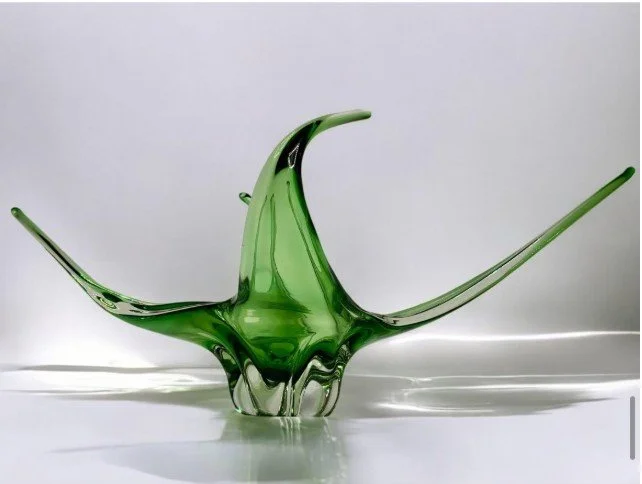
This trio of “hook and curls” centerpieces are all so different one from the other:
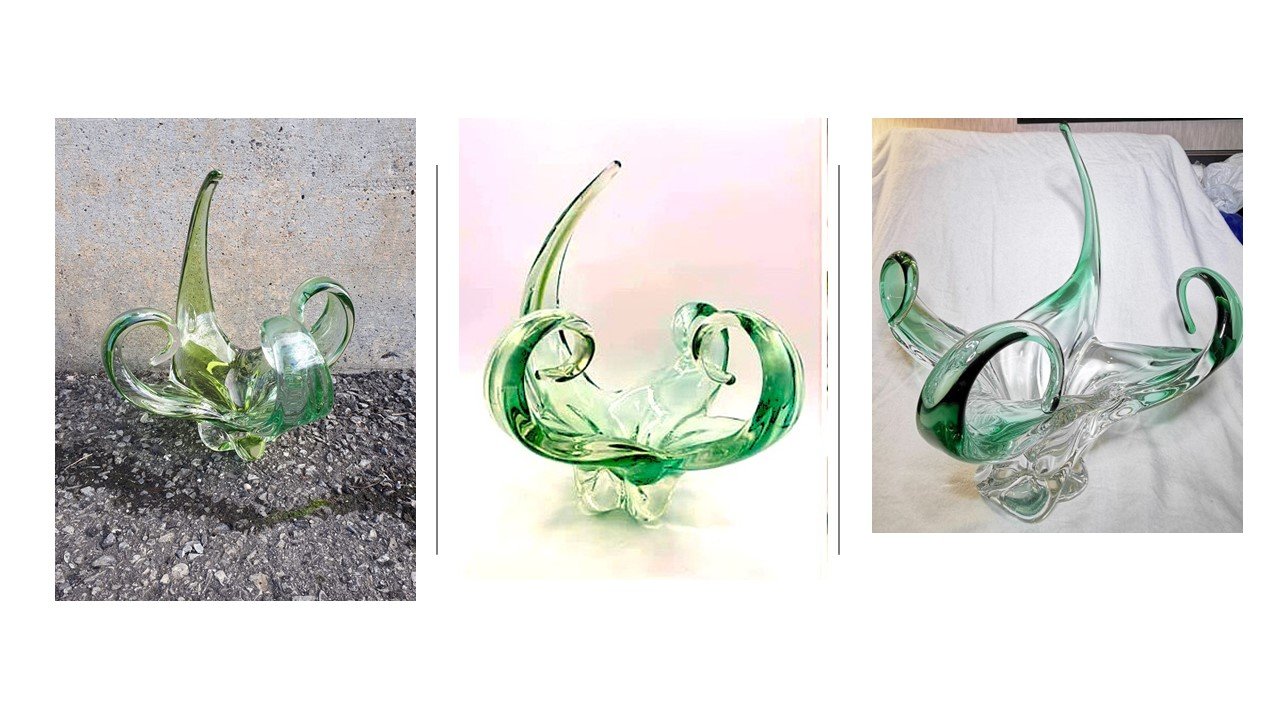
The 2-tone “Irish greens” center piece at left from collector Steve Allen and the crystal and green “hook and curls” is tucked away in Bob Burgess’s “Cave of Wonders.”
A swan centerpiece.
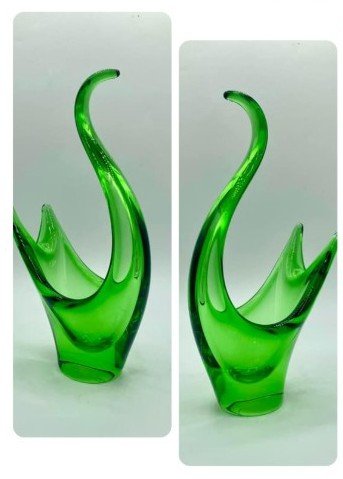
This swan centerpiece is 11 ½ inches in height. Photograph courtesy of Sabrina Brunetti.
A unique shape for Chalet. No – these are both not Scandinavian!
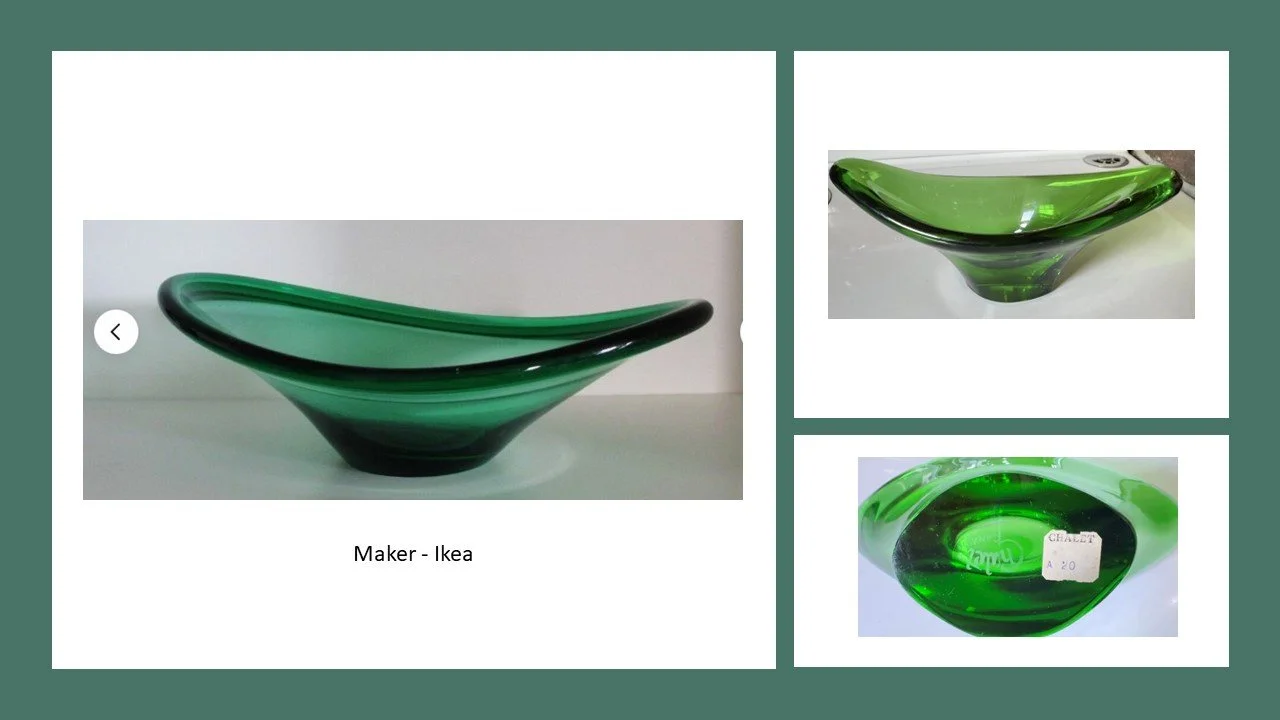
At right, top and bottom, this rare piece etched with the iconic Chalet branding and retaining a Chalet company inventory sticker. From the collection of Ken Brewer.
This little one is seen every now and then.
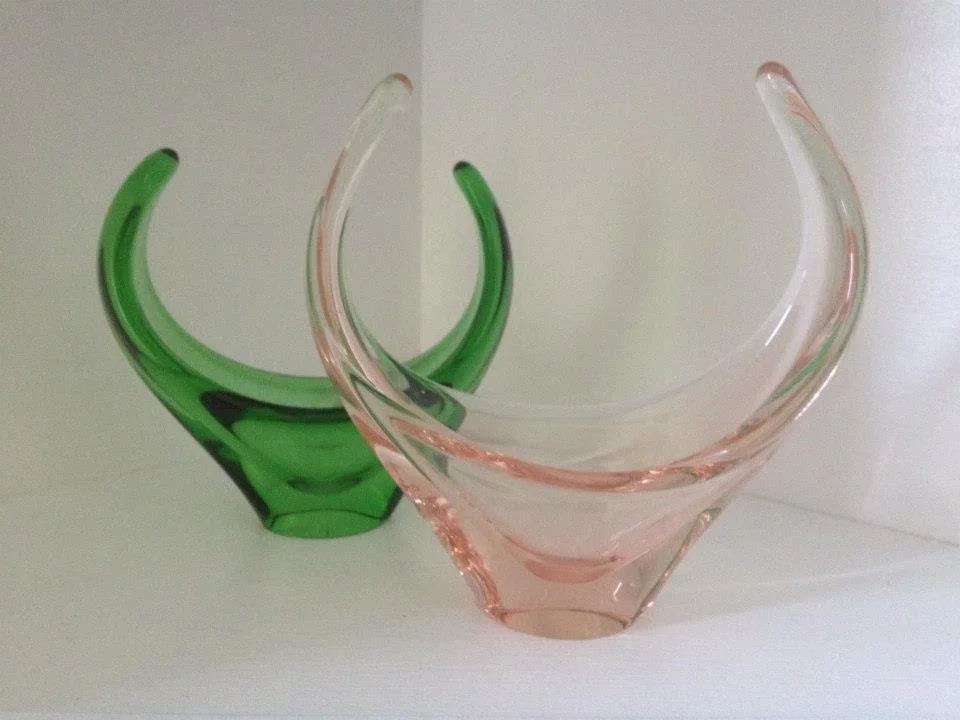
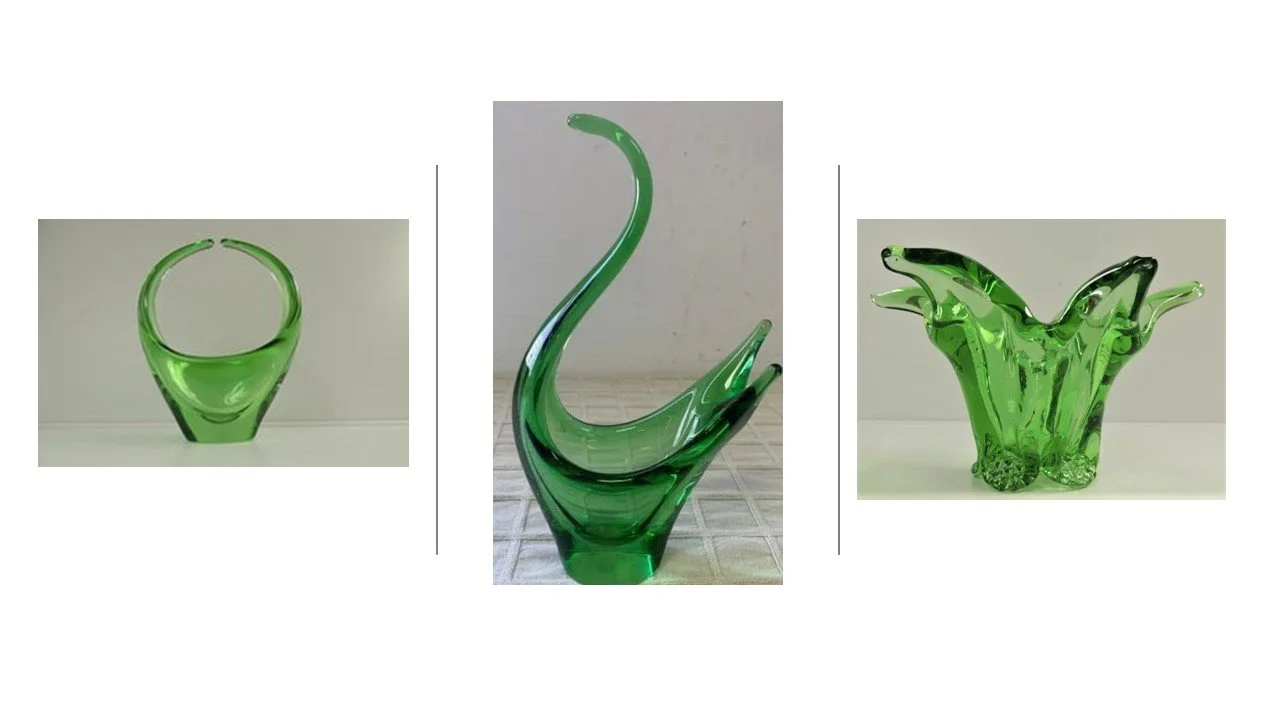
The mini Chalet swan center piece (middle photo) is not the same piece as shown earlier. This piece is from the collection of Cindy Bishop Laughlin and stands less than 10 inches.
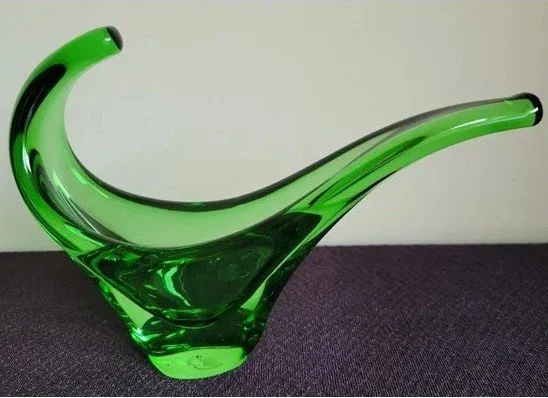
An exceedingly rare piccolo from the collection of the Cornwall Community Museum:

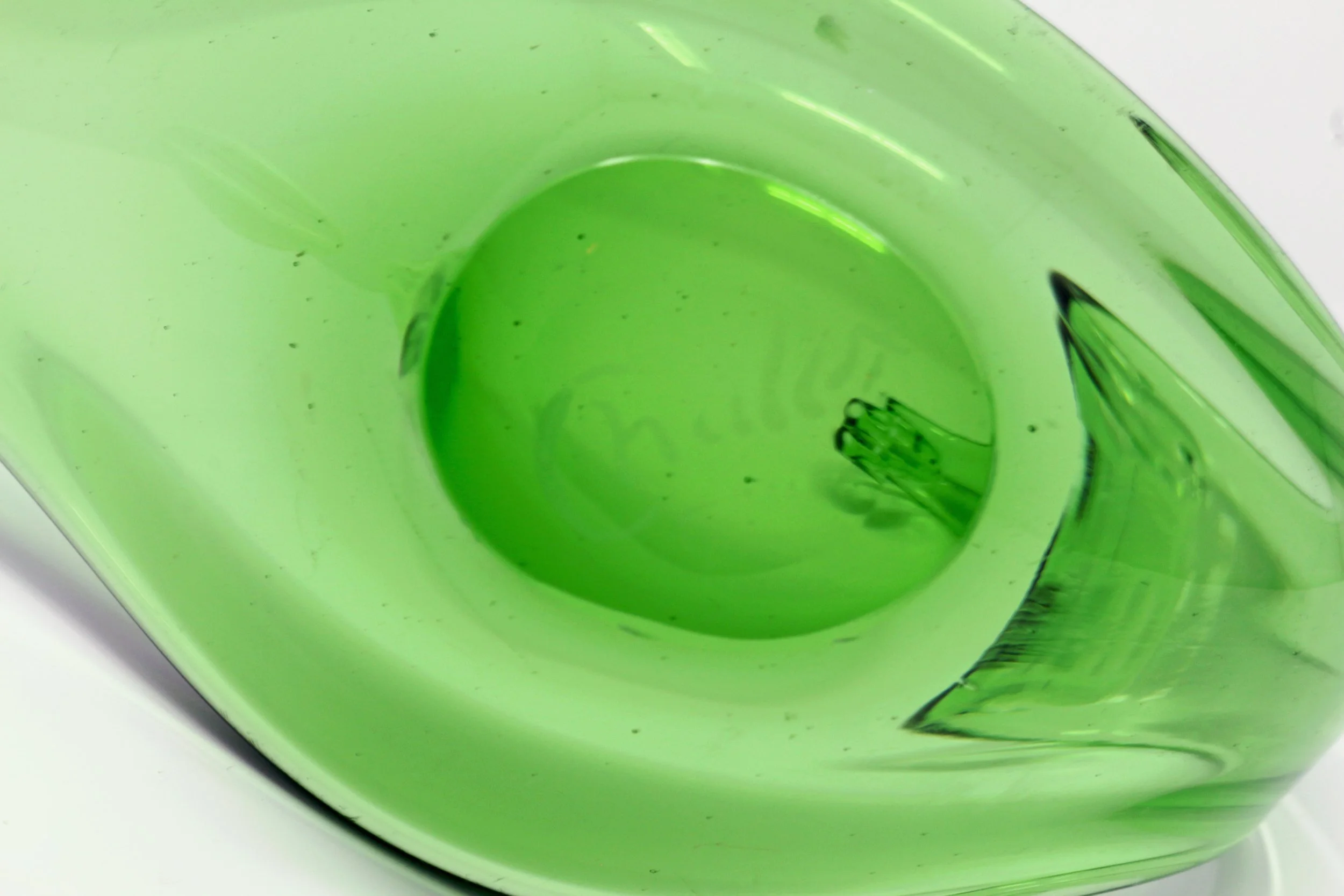
Another from collector Karen Usifer Keller. It is “similar yet different” from the one shown directly above.
A variety of ashtrays. Some forms are more familiar than others:
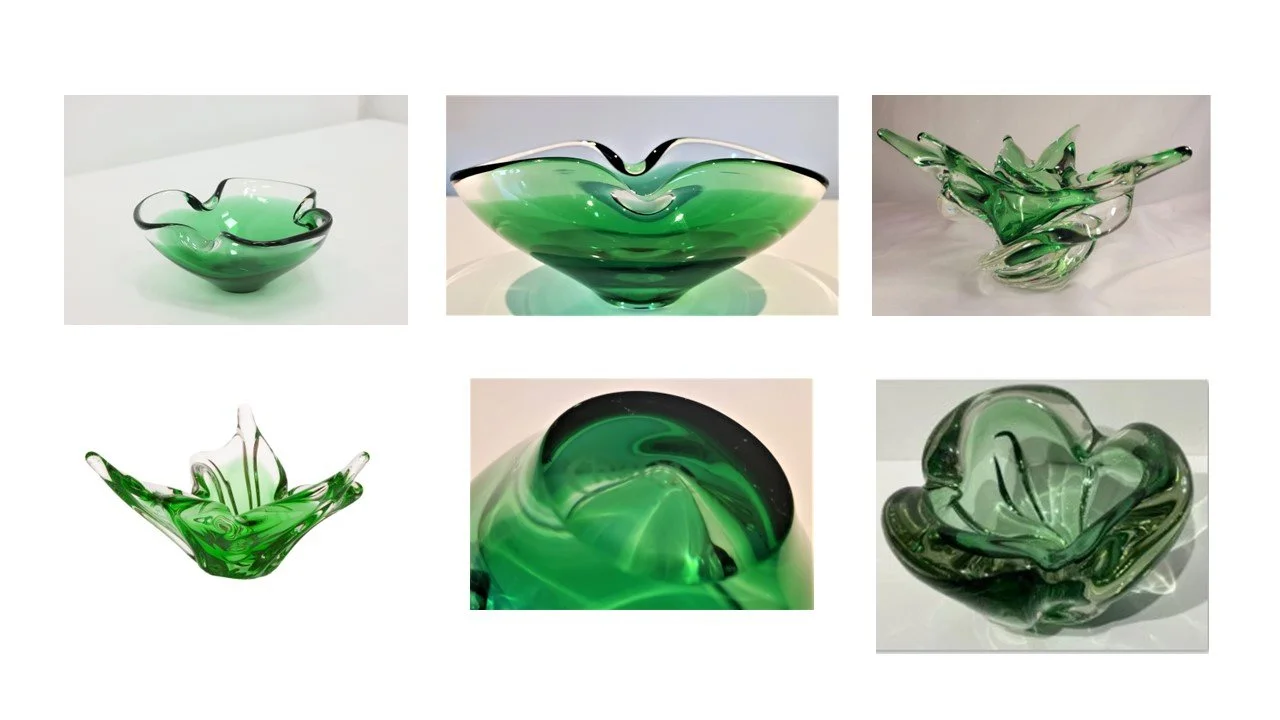
Each of these ashtrays are etched “Chalet Canada” with the exception of the ashtray at lower right. It bears the engraved “Canada Art’ signature. For comprehensive details regarding this Chalet branding, see pages 155 through 168 in the chapter “Chalet Engraved Signatures” in “Chalet Crystal Clear Continued.”
Both styles of the Chalet cigar bowl:
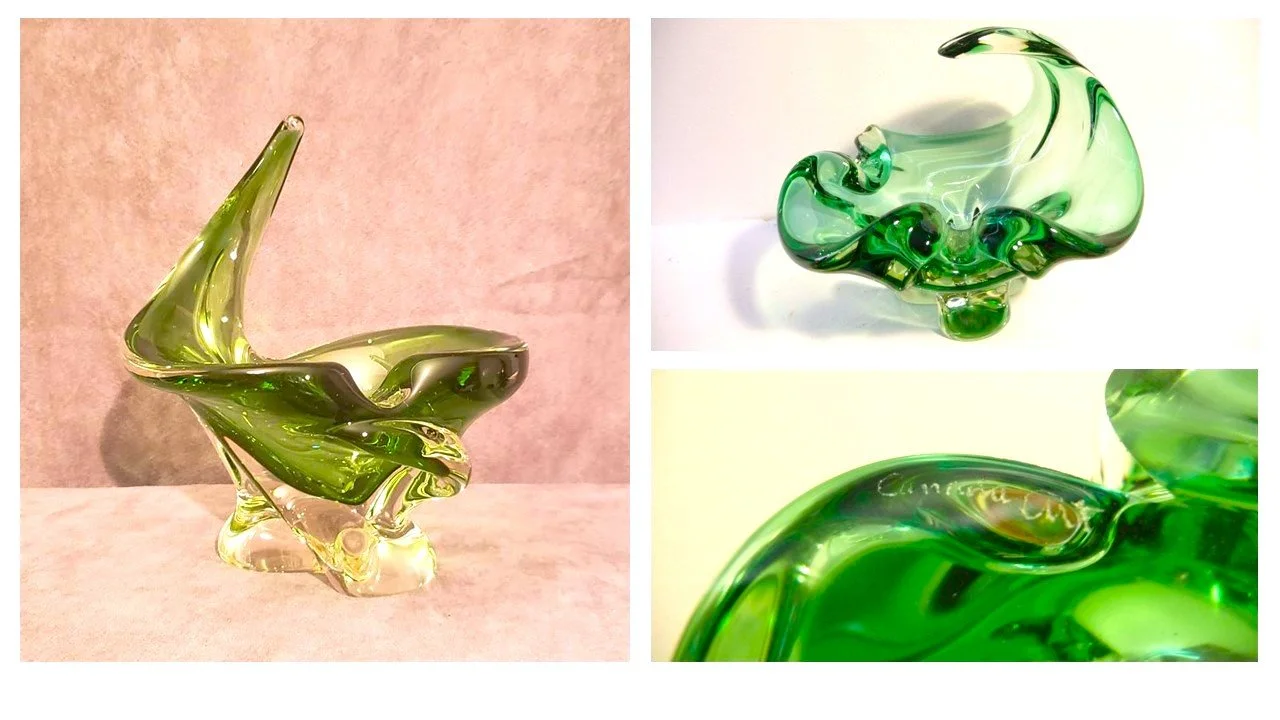
The “finger” cigar bowl at left from the collection of Andy Rodgers. The footed pedestal cigar bowl to the right also is an engraved “Canada Art” piece.
These are the only “Irish green” Chalet basket forms of which I am aware:
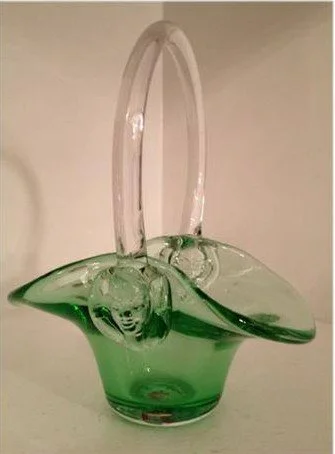
Both baskets are from the amazing collection of Kevin Hall.
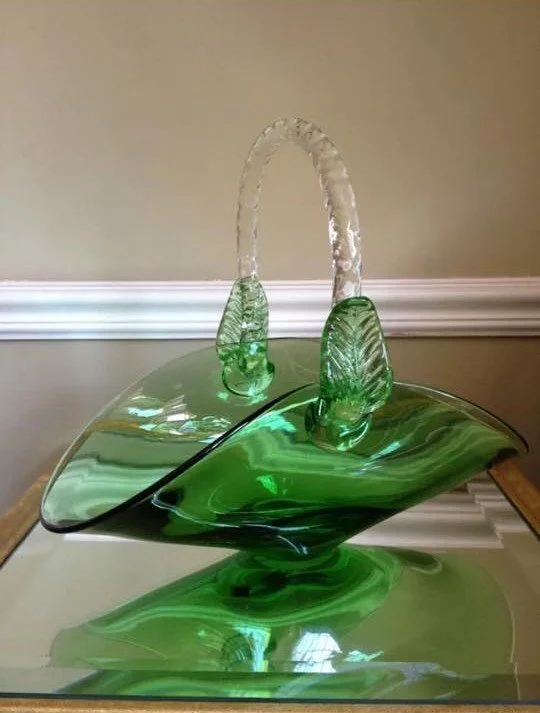
Who is maybe chuckling over this poor relative of his basket. Being described and sold online as “… a Chalet Green Bowl Hand Blown Trinket Décor … Great Condition. This was a basket that previously had a handle. Handle has broken off.”
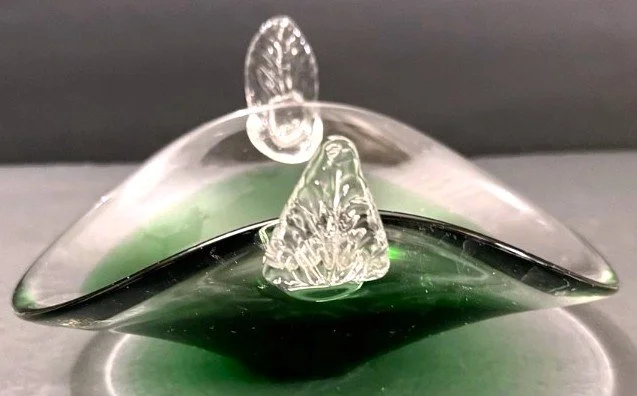
After seeing this, the Irish would say “Go hiontach!” (pronounced: Guh hoon-tukh!). An Irish phrase for "Wonderful!" or "Great!" and is used to express admiration for a sight or experience. Happy St. Patrick’s Day!
