Chalet “piercings” - the Chalet “perforato”
In the art glass world, "perforato or forato" means "pierced" or "with a hole" in Italian. This is specifically referring to art glass featuring unique and deliberate openings - decorative gaps, open handles or loops. This design style originated in the 1950’s by master glassmakers in Murano, Italy. It is most famously associated with pieces designed by Fulvio Bianconi for the renowned Venini glasshouse. While primarily a Murano phenomenon (including makers like Archimede Seguso), both Chalet Artistic Glass and EDAG also pierced some of their glass. In Chalet’s case, this happened very rarely with EDAG perforato/forato forms being much more common.
Creating "perforato" pieces requires immense skill. The glassmaker must blow the molten glass and then manipulate the walls inward to fuse perfectly together. Then a specialized tool is used to pierce a hole into the cooling piece - leaving a finished, polished opening. It is most commonly found in decorative forms such as ashtrays, the bowls of stretch baskets, freeform vases, and platters where the stretched perforations form natural folds or lobes. Glass piercing is very time consuming and as Chalet was a factory, time was money. Therefore, this is probably the reason that Chalet perforato/forato was limited and most likely confined to the very first year of operation.
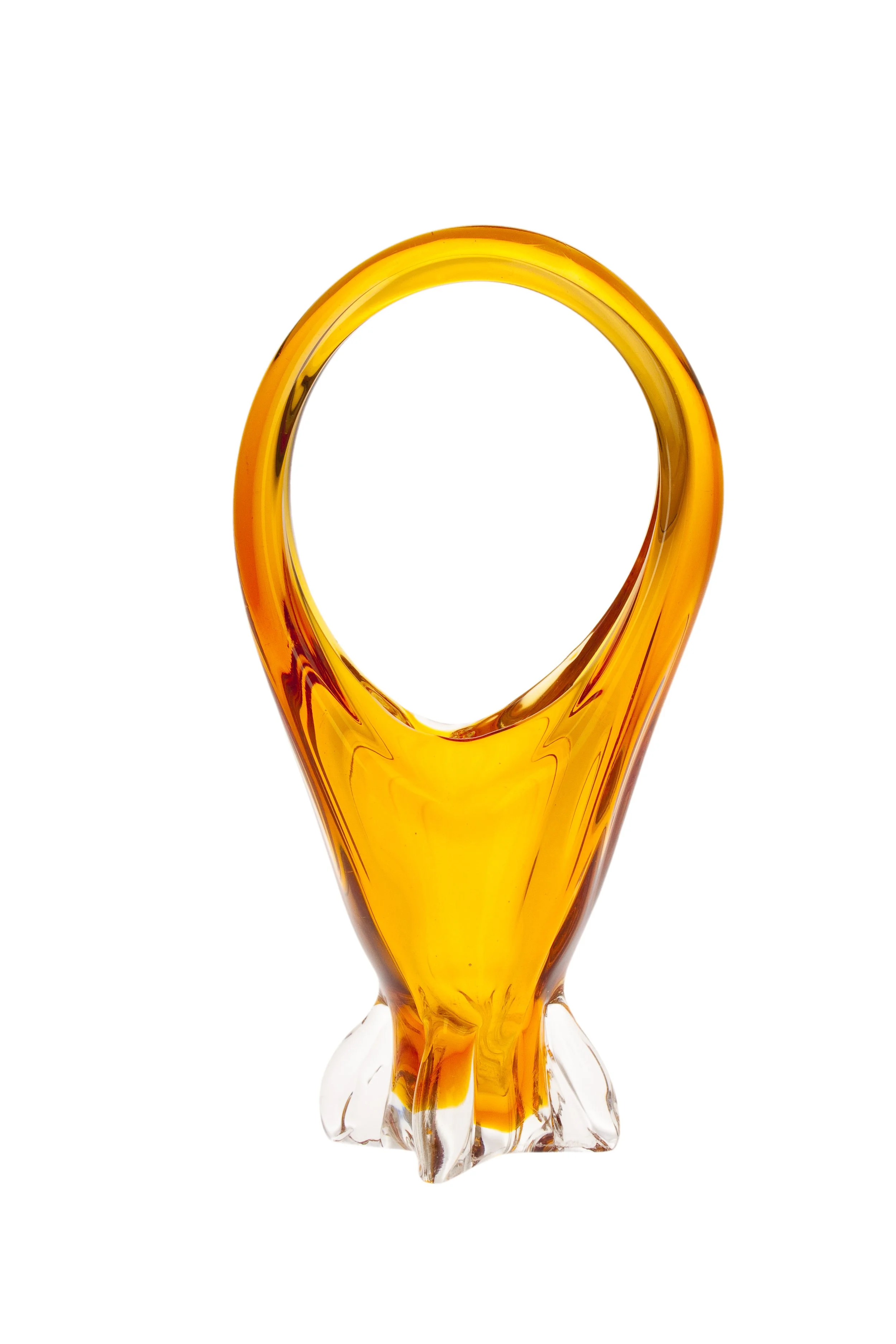
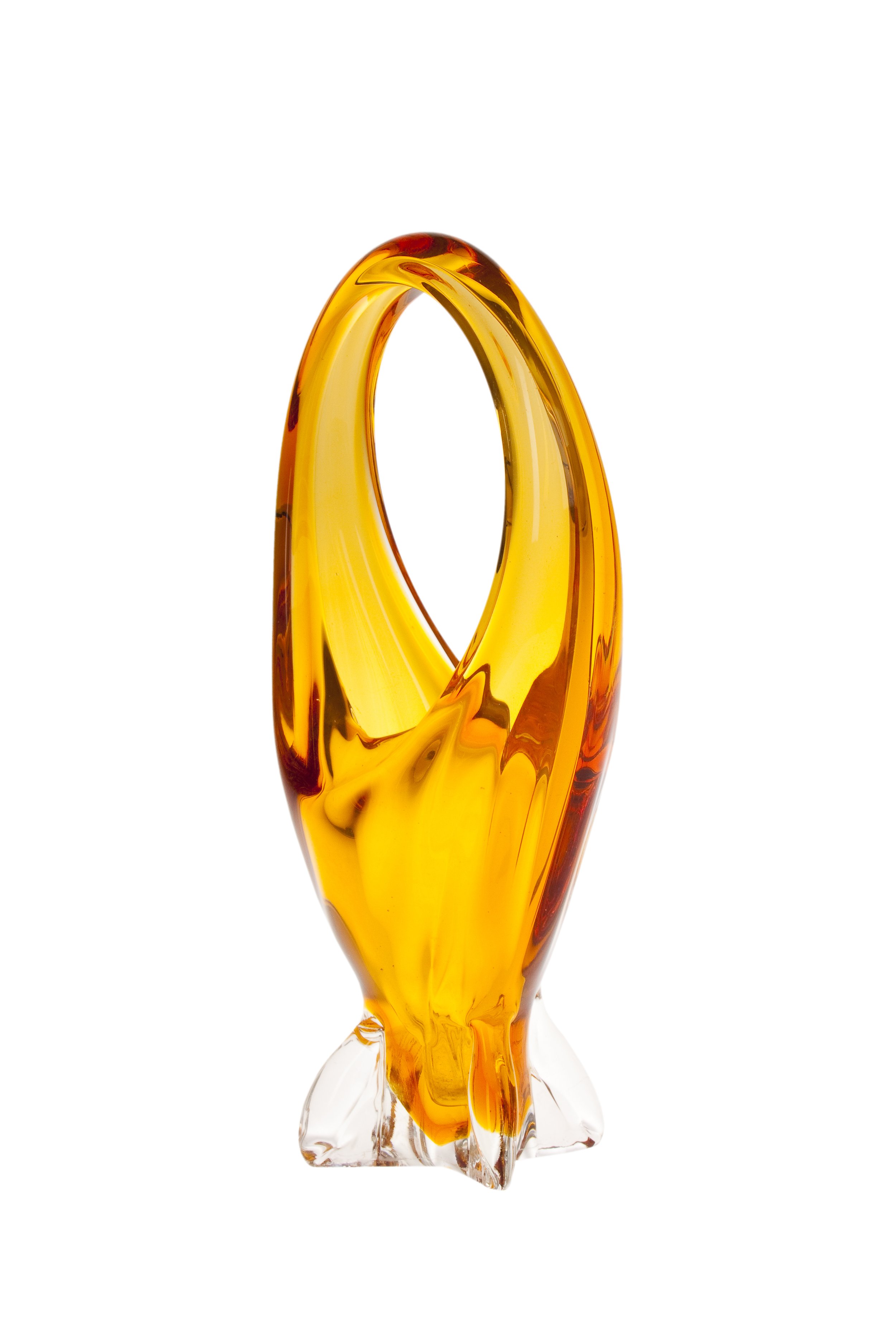
One style of pierced glass was featured on Chalet’s 1963 “Items Available” catalogue page. It is item A40.
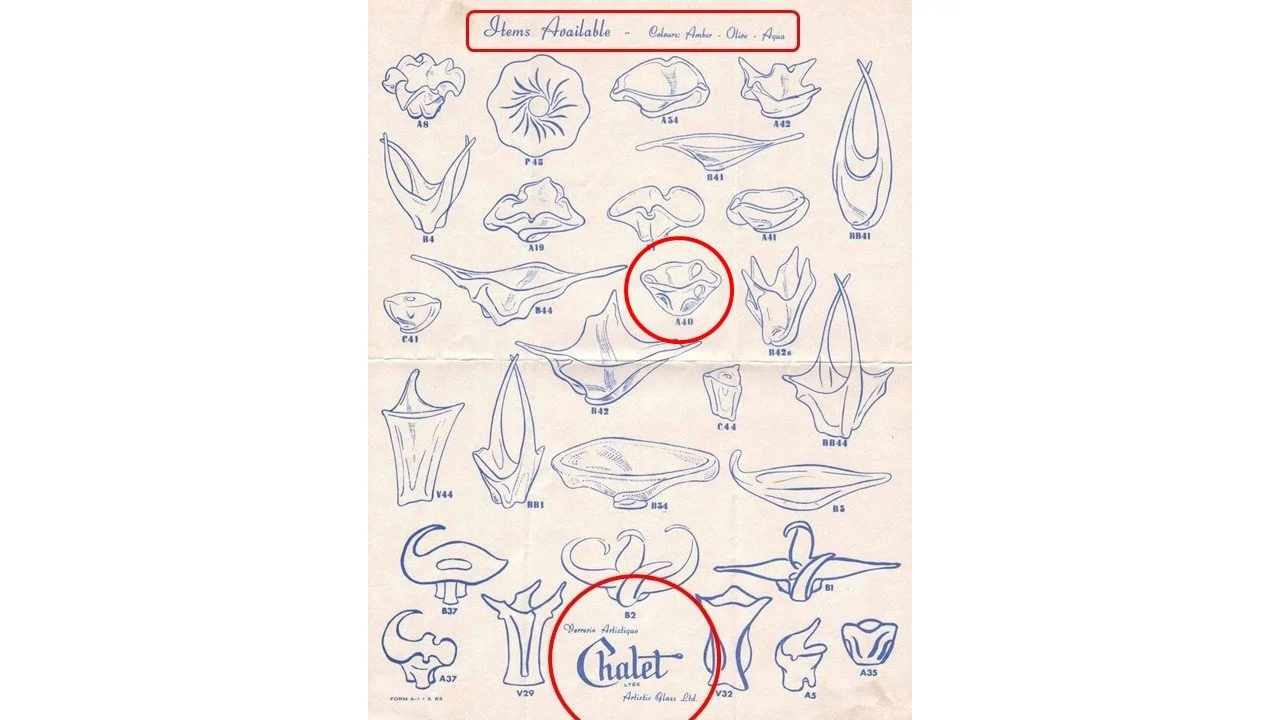
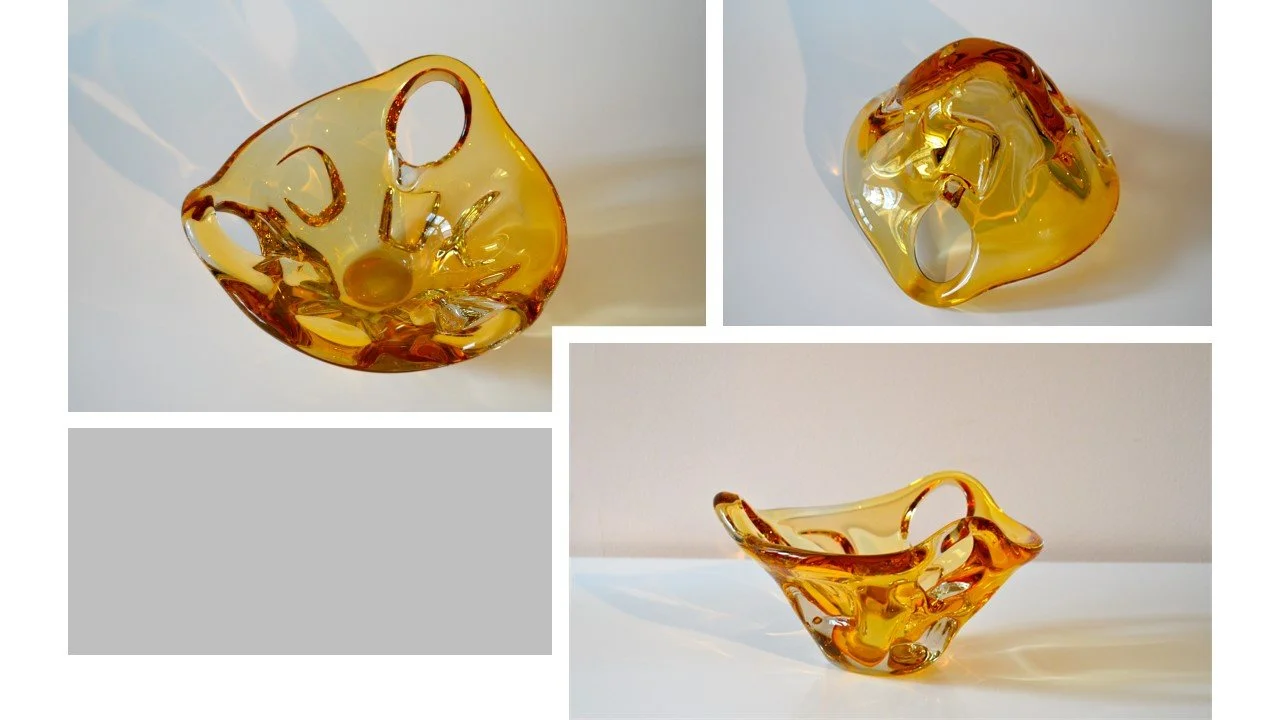
As per the colours noted on this page, A40 has been found in amber, olive and aqua. It is quite a large and heavy piece. Typically with diameters of 9 1/4” and a height of 5 1/2” at the highest pull and weighing approximately 5 pounds.The rim is smooth and unbroken with no butt indents.
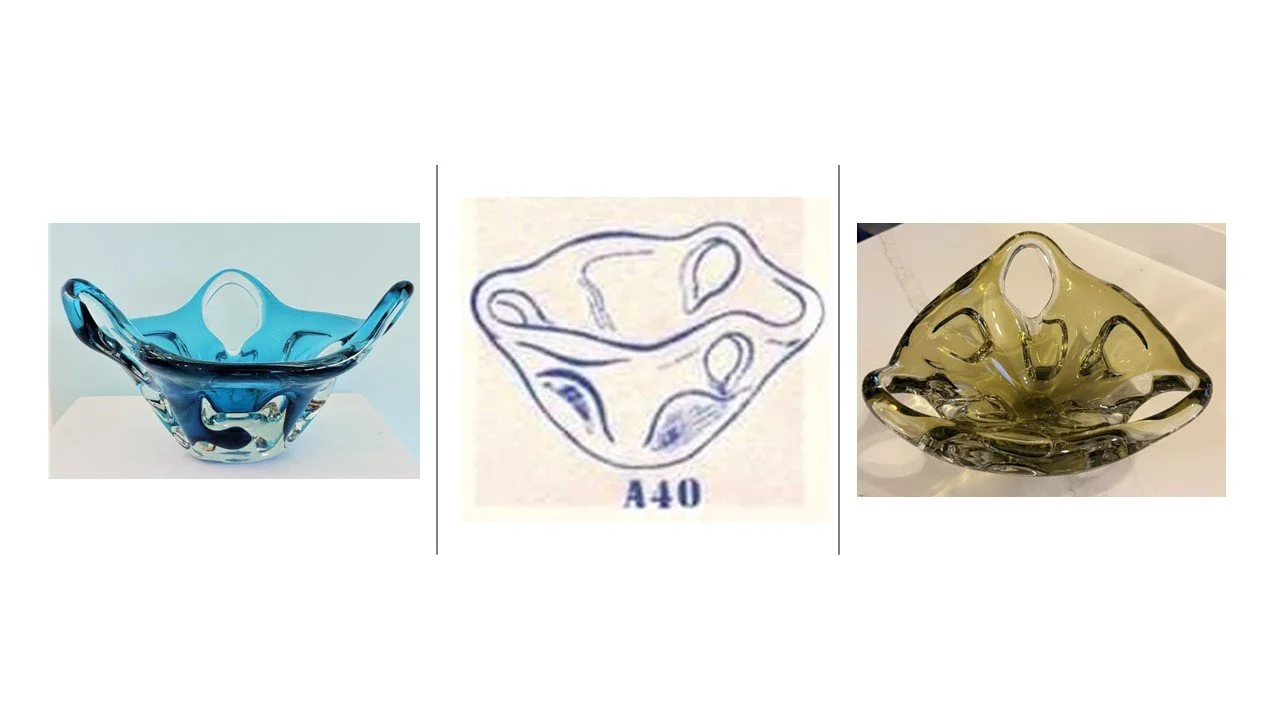
Blue at left now in the collection of 50 Shades member Pina Pina. Photograph courtesy of Deborah Patterson.
From the collection of Pierre Denis.
On display:
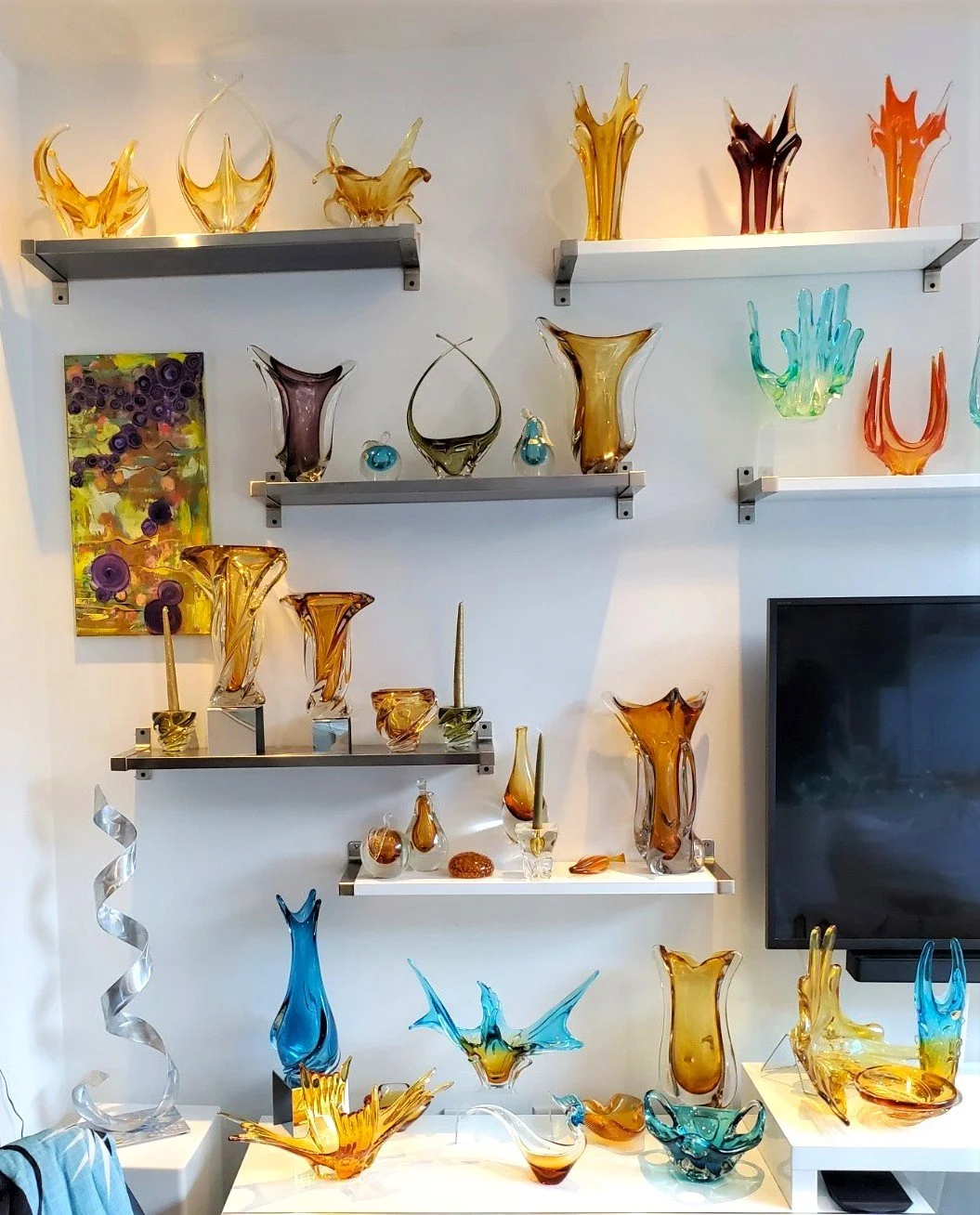
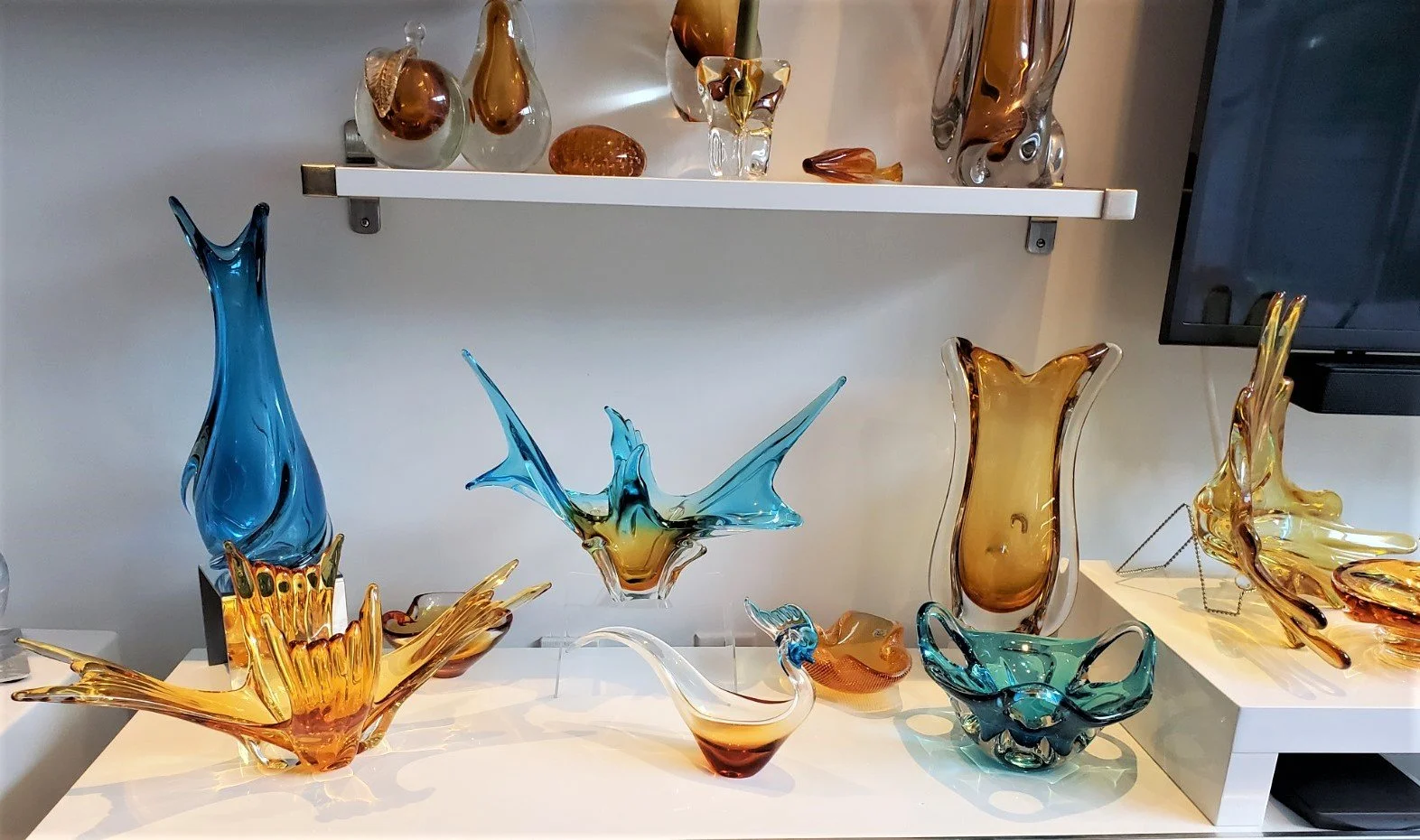
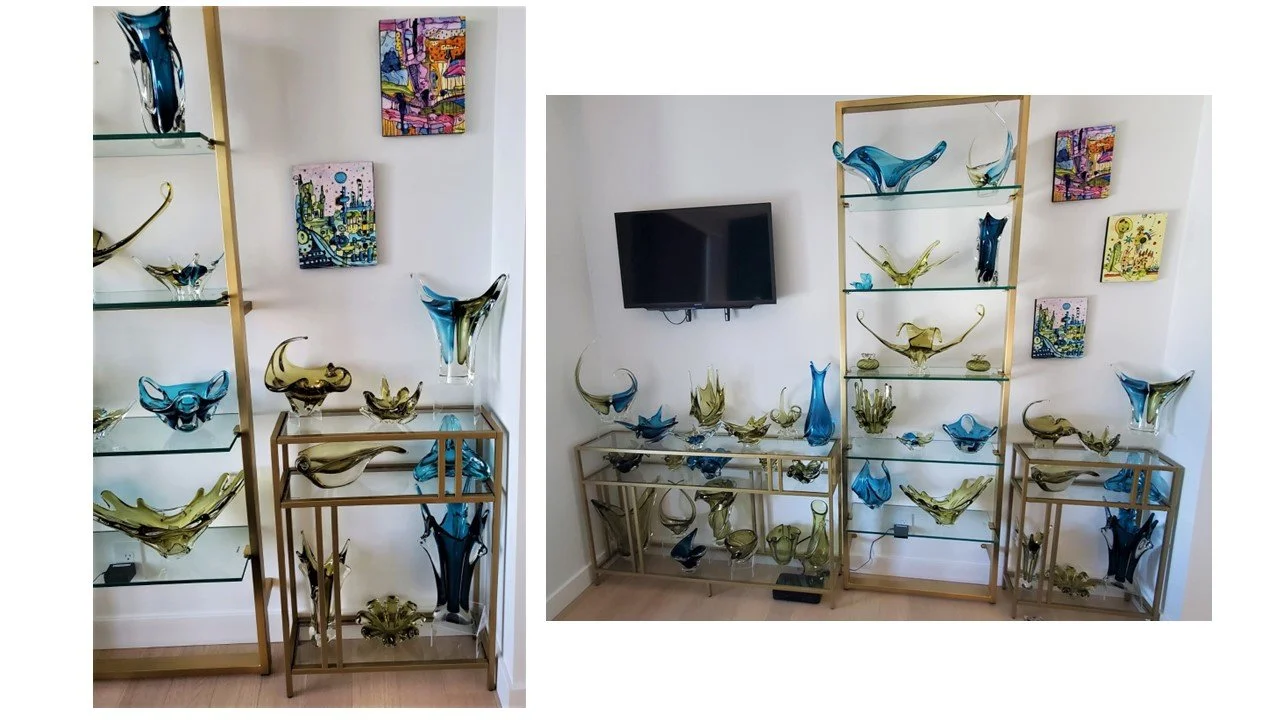
From the collection of Deborah Patterson.
I am sure you raised your eyebrows seeing the EDAG form at 2nd row top left on the EDAG catalogue page at right. This EDAG perforato/forato design is A-140. Another EDAG forato form (a very familiar one in 2nd row at right) is also shown above on this catalogue page with more designs on other pages as well. Inclusion on catalogue pages is evidence that EDAG pierced forms were routinely included in EDAG production runs.
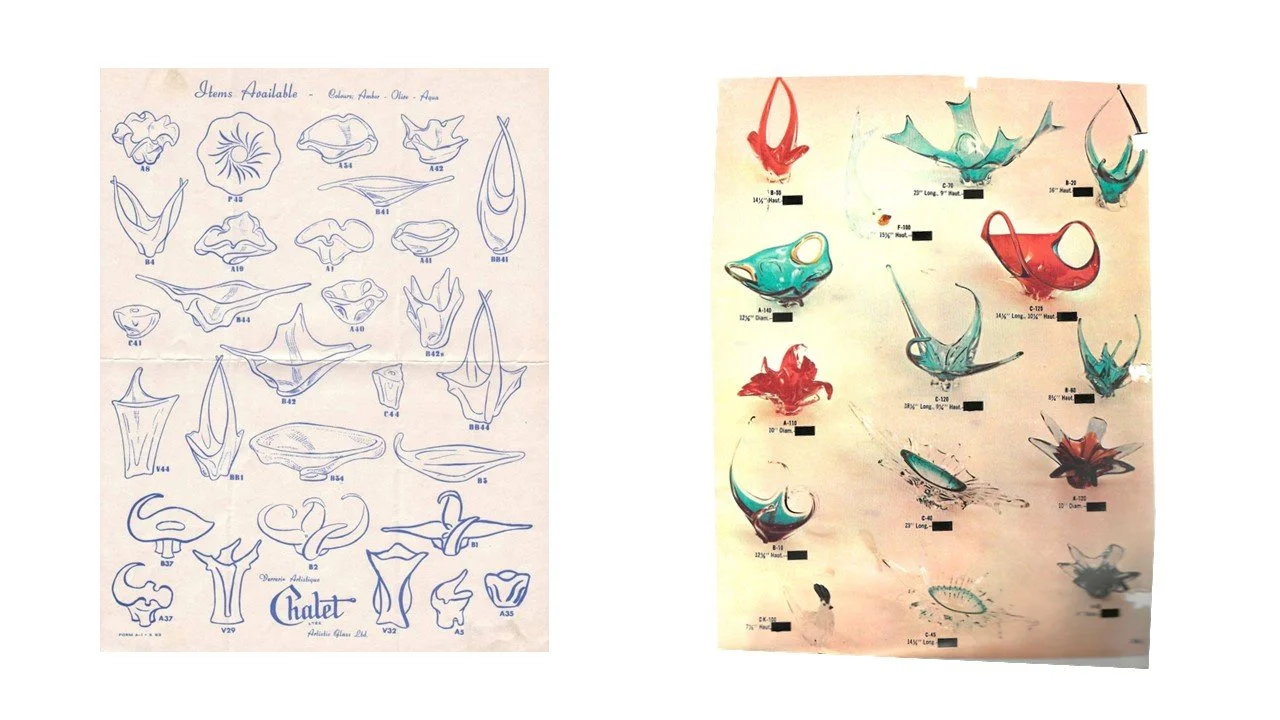
A Chalet A40 and an EDAG A-140 comparison. Which glasshouse is the “influencer” and which is the “influenced?” The Chalet “Items Available” catalogue page, which features the Chalet piece, is dated 1963 while EDAG did not begin production until 1964. The amber piece (shown above) is Chalet made while the blue with amber is an EDAG. The EDAG piece has a diameter listed at 12 1/2” so is a larger piece.
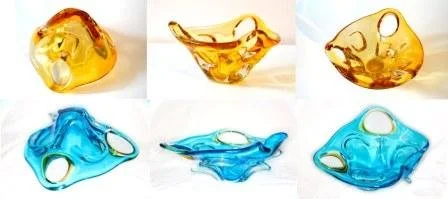
Now 2 Chalet blue with amber coloured-rimming! A variation of A40?
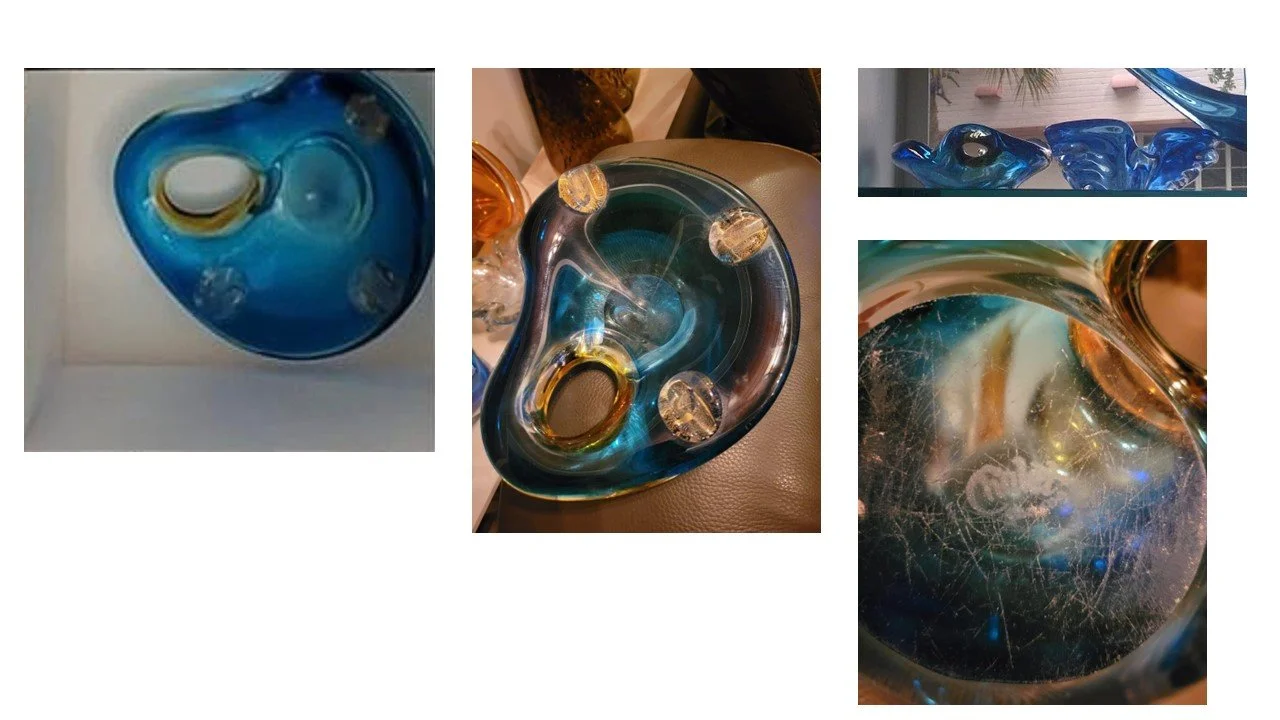
The A40s and the blue pieces are not the only styles of “pierced” Chalet that have been discovered. To date, there are two more exceedingly rare styles that have turned up. Both shown below and are definitely “Never Say Never” Chalet!
This pierced Chalet centerpiece was found by 50 Shades member Angie Gyor:
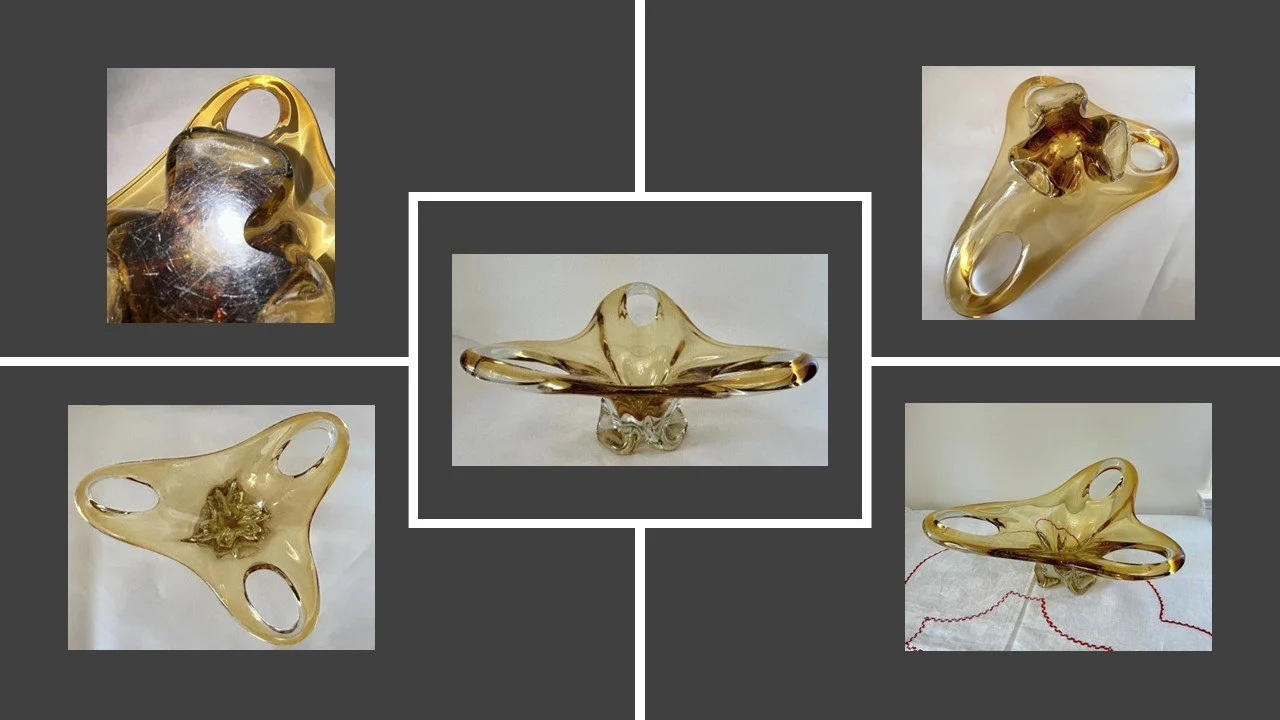
To date, this is a Chalet one-of-kind piece. Bears the hand engraved Chalet “Canada Art” signature. For comprehensive details regarding Chalet’s “Canada Art” branding, please see pages 155-168 in “Chalet Crystal Clear Continued.”
Another hand engraved Chalet “Canada Art” signature piece. To date, this piece is also unique.
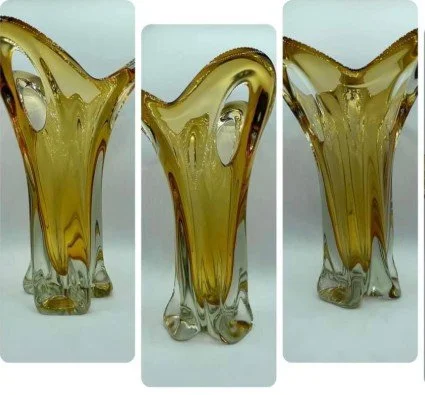
Picture courtesy of Sabrina Brunetti.
At time of writing, there is no evidence that Altaglass, Mosaic Artistic Glass, Lorraine Glass Industries or the Rossi glasshouses produced perforato/forato art glass. A gallery of more EDAG perferato:
Photographs courtesy of Deborah Patterson.
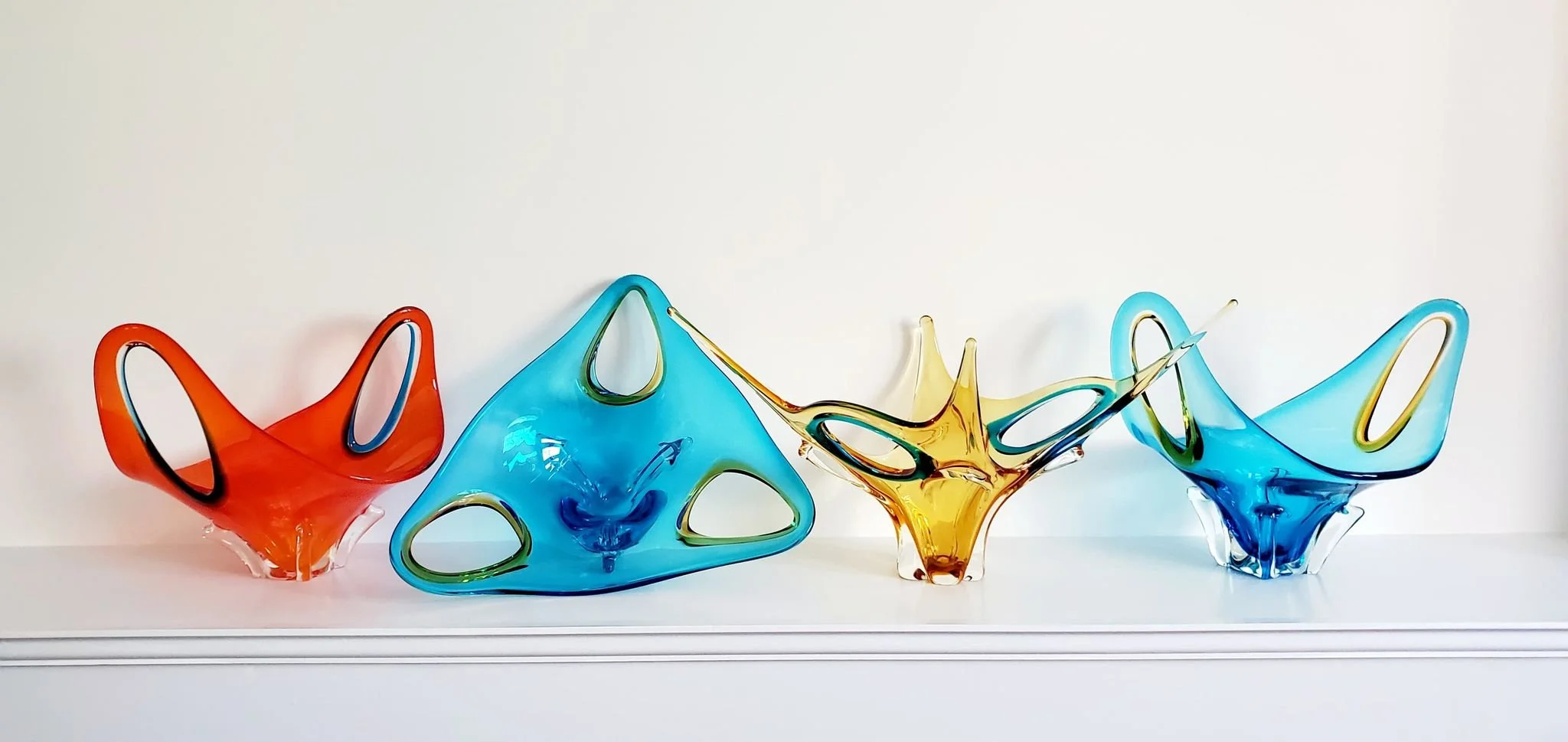
Photograph courtesy of Bruce Buden.
Never enough EDAG perferato:
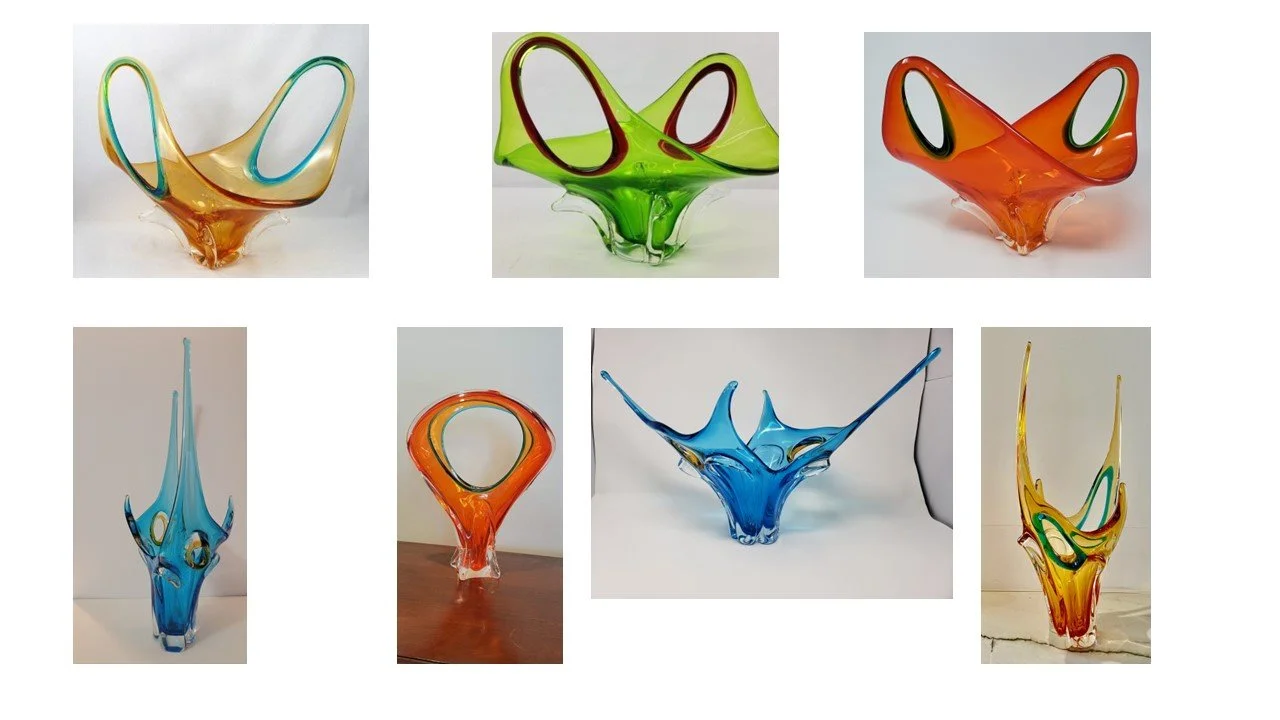
Photographs top row, left to right: Bruce Buden, Cathy Antonyshyn, Darlene Spence. Photographs bottom row, left to right: Gionny Gueli, Melody Carter, Darlene Spence and Jonathon Tremblay.
